
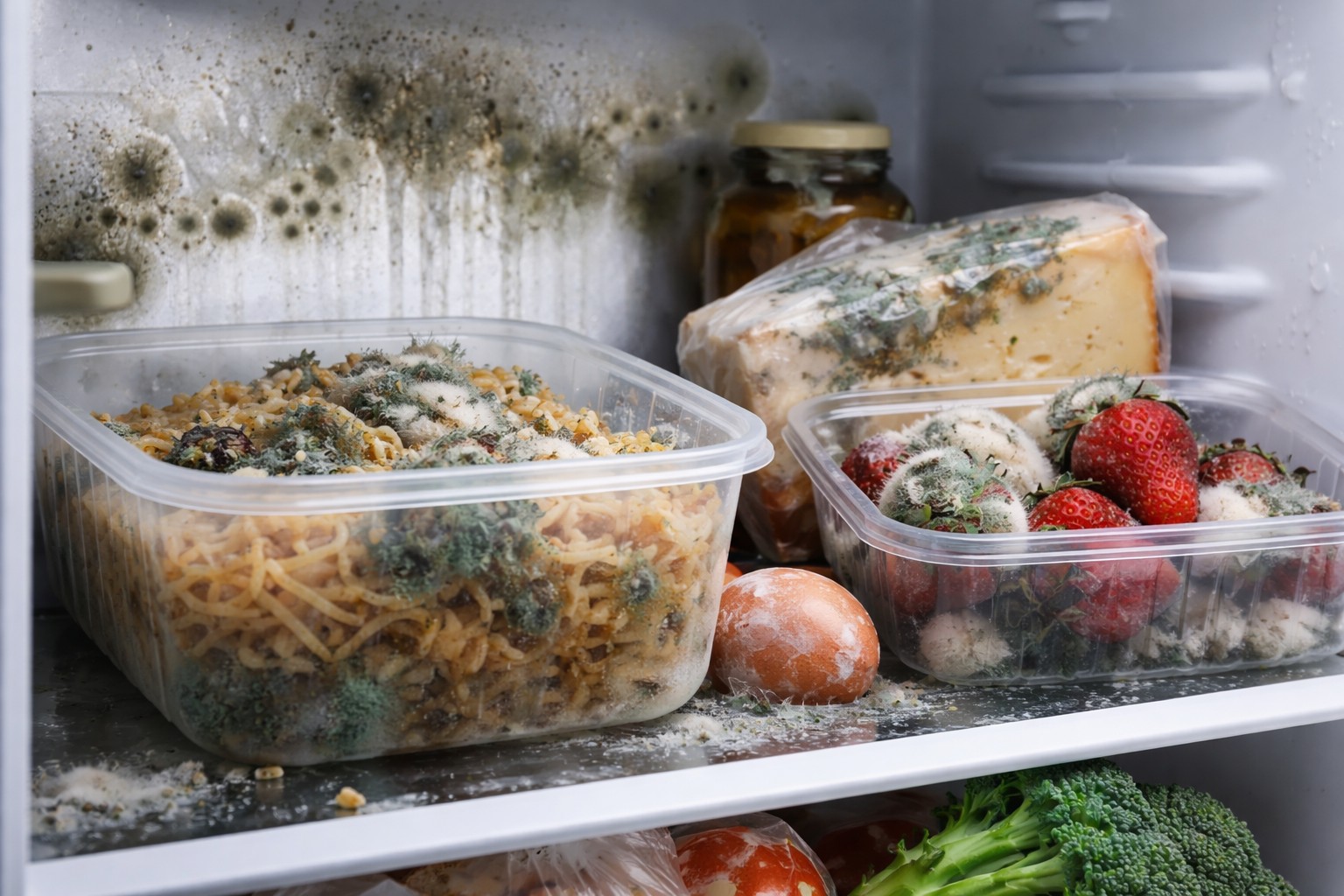
Many housewives are faced with a paradoxical situation: the shelves are washed, the food is fresh, but unpleasant musty smell and the blackheads come back again. Cold does not kill fungal spores, but only slows down their development, so the slightest disturbance in the microclimate turns the chamber into an ideal incubator for microorganisms. Understanding the true causes of this problem will help you get rid of uninvited guests forever.
Poor air circulation and high humidity
Mold loves dampness, and it is excess moisture becomes the main trigger for its growth. Condensation forms naturally in the refrigerator, but it must evaporate or go down the drain. If you place food close to the back wall, water droplets cannot flow down. This creates wet areas where spores instantly take hold. Overloading of shelves also becomes a problem: when there is too little air, ventilation is disruptedand fungus begins to develop in stagnant zones.
Drain hole clogged
This is the most treacherous place that is often forgotten. At the bottom of the rear wall of the refrigerator compartment there is technical hole for condensate drainage. Over time, crumbs, pieces of greenery or fat get there, forming a dense plug. The water stops draining and accumulates in the gutter and under the vegetable drawers. This standing water is a real resort for mold. If you notice puddles under your bottom drawers, the first thing to check and clean is this channel.
Wear of the rubber seal
Even the most modern refrigerator is not immune to depressurization. Over time rubber cuff on the door loses elasticity, cracks or deforms. Warm air from the room constantly penetrates through the micro-slits. When faced with cold, it causes abundant condensation on the walls and shelves. Constant humidity combined with a warm influx creates conditions under which mold grows like an avalanche, hiding in the folds of that same seal.
Errors when storing food
The habit of putting pots of still warm soup or wet vegetables into the refrigerator immediately after washing provokes a sharp jump in humidity. Fumes from warm food settle on icy surfaces in the form of water. In addition, storing food open or in bags without air access promotes rotting. One spoiled tomato can infect the entire space of the refrigerator with spores in a couple of days, even if visually the rest of the products seem clean.
Regularly checking the drainage system, monitoring door tightness and proper packaging of products will help maintain a healthy microclimate inside your household appliances.
About the Author