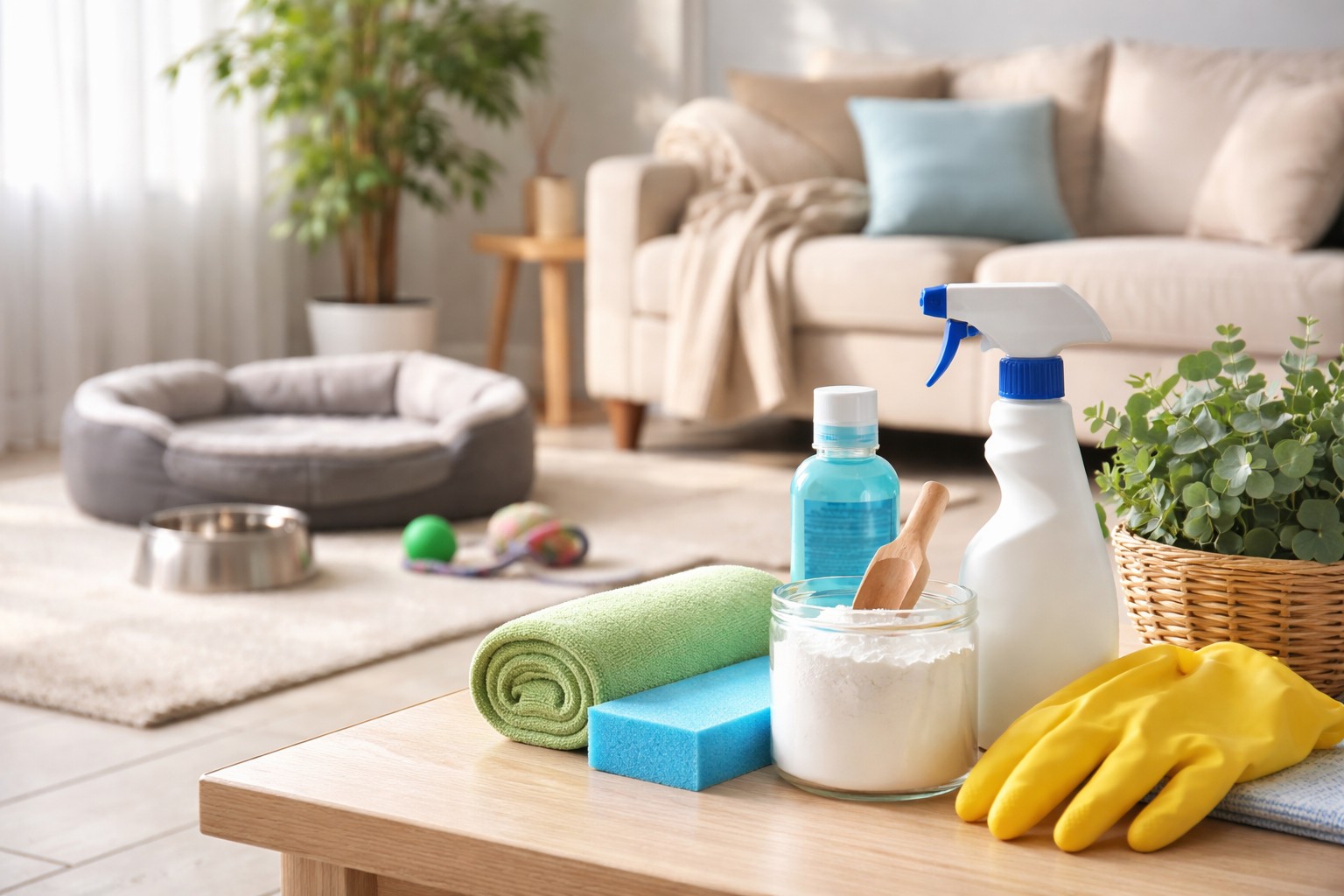
The love of pets is often accompanied by a struggle with unpleasant odors that can ingrain into furniture, carpets and even walls. Regular cleaning does not always help, since detergents often only mask the problem rather than eliminate its cause. In order for the house to be filled with freshness again, it is necessary to act comprehensively, destroying odor molecules at the chemical level.
Finding hidden sources of pollution
The first step should always be to locate the exact location of the “accident”. Often we smell, but do not see the stain, especially if it has already dried. In this case, an indispensable assistant will be ultraviolet flashlight. In the dark, traces of biological fluids (urine, saliva) will glow with bright neon light.
Having marked the boundaries of contamination, you can begin processing. It’s important to remember that chlorine-containing products use is strictly prohibited. Chlorine enhances the odor of ammonia contained in animal urine and can make the aroma even stronger and more persistent, as well as harm your pet’s sense of smell.
Why regular soap doesn’t work
The main cause of persistent odor is uric acid. It is insoluble in water and crystallizes when dried. Conventional household products wash away only visible dirt and urea, but uric acid crystals remain in the fabric fibers. As air humidity increases, they again begin to emit a pungent aroma.
To completely eliminate the problem you need enzyme cleaners. These are special products containing enzymes (proteins) that break down uric acid into carbon dioxide and ammonia, after which they easily evaporate. When using enzymes, it is important to strictly follow the instructions: often the product needs to be allowed to “work” for 15 minutes to several hours, preventing the stain from drying out quickly.
Folk remedies for emergency help
If you don’t have professional chemistry at hand, you can use a proven home method that works through a chemical oxidation reaction.
The algorithm of actions is as follows:
-
Mix table vinegar with water in a ratio of 1:3 and apply to the stain. Wait until completely dry.
-
Sprinkle the treated area generously baking soda.
-
Mix 100ml hydrogen peroxide with half a teaspoon of dish soap and spray over the baking soda.
-
An active foam is formed that will displace any remaining dirt. Leave the mixture for a couple of hours, then vacuum.
Processing of textiles and upholstered furniture
Odors often accumulate in blankets, beds and curtains. Regular washing may not be enough to remove them. It is recommended to use the mode additional rinse and add half a glass of vinegar or a special odor neutralizer for washing to the conditioner compartment.
Ideal for upholstered furniture and mattresses that cannot be washed washing vacuum cleaner or extractor. If you don’t have such equipment, professional dry cleaning will help out. Superficial cleaning with a damp cloth will drive uric acid crystals deeper into the sofa’s padding, where it will be almost impossible to get them out without disassembling the furniture.
Indoor air purification
Sometimes the source is eliminated, but the heavy spirit still hangs in the apartment. Ventilation helps only temporarily. Used for deep air purification photocatalytic filters or air wash.
A radical method of combating odor ingrained into walls and wallpaper is ozonation. The ozonizer produces ozone, a powerful oxidizing agent that destroys odor-causing bacteria and fungi. However, this procedure must be carried out strictly in the absence of people and animals, followed by long-term ventilation.
Detecting stains early and using the right uric acid-breaking products will ensure that any space is restored to freshness.
About the Author