Many people are accustomed to considering a shower curtain an eternal accessory that can simply be washed once every six months. However, this piece of furniture has its own best before dateand ignoring it can lead to unpleasant consequences for health and hygiene. Even a seemingly clean canvas over time turns into a real breeding ground for problems.
Why washing is not enough
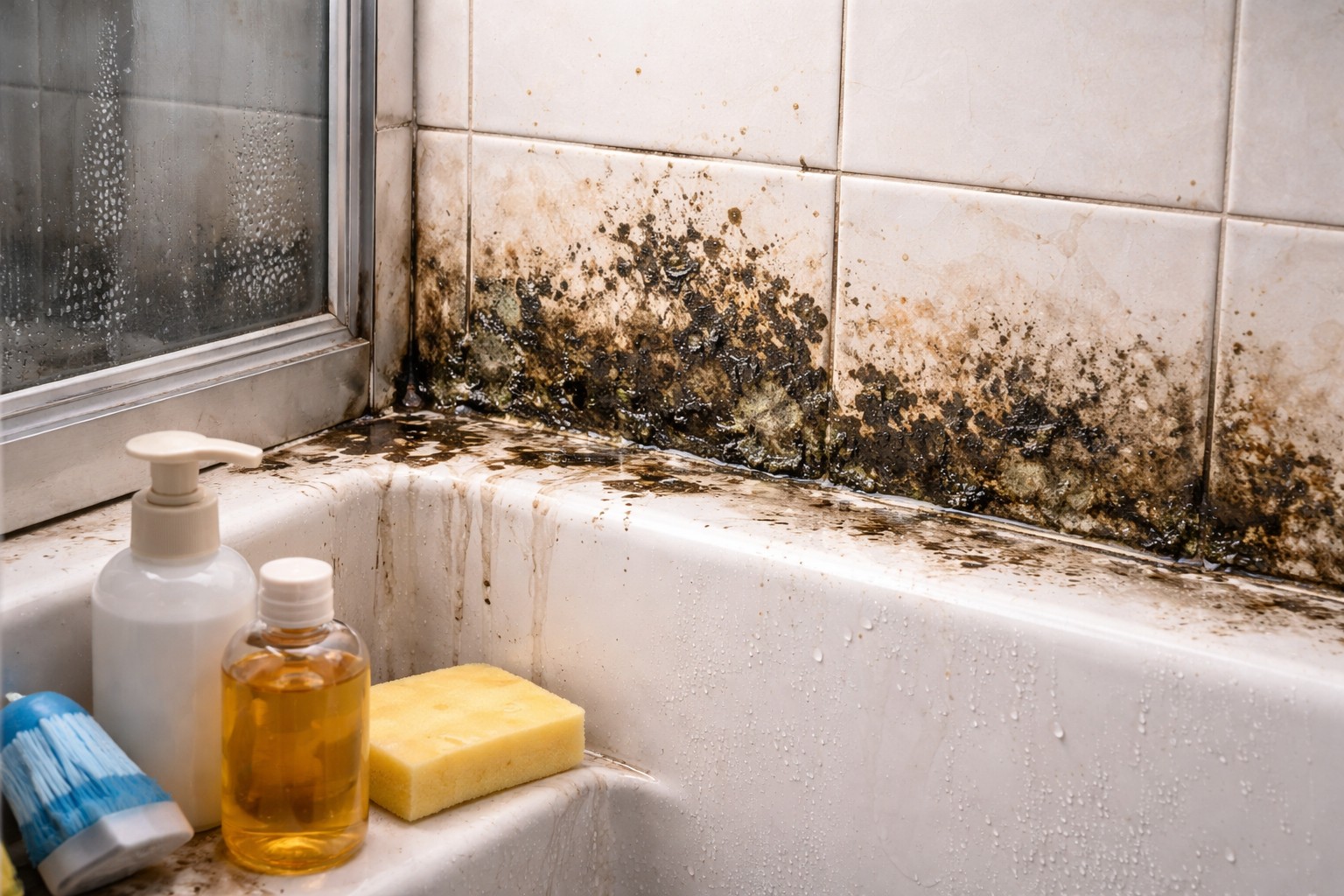
The bathroom is an ideal environment for the proliferation of microorganisms: it is always warm and humid. The curtain, especially its lower edge, is constantly in contact with water and soap scum. Over time, they accumulate in the porous structure of the material. bacteria and funguswhich cannot be removed by regular machine washing. Even if you don’t see blackheads, microscopic spores may already be present on the surface, becoming airborne with every movement of the curtain.
Dangerous plastic and chemicals
Budget curtains are often made from polyvinyl chloride (PVC). Under the influence of hot water and steam, the cheap material begins to break down, releasing into the air volatile organic compounds. Over time, such a curtain becomes rigid and brittle, which indicates a violation of the polymer structure. Using old plastic that has lost its elasticity can contribute to the accumulation of toxic substances in the confined space of the bathroom.
Signs that replacement is needed
You can determine that it’s time to throw away an accessory based on several obvious signs:
-
A stable bad smellwhich does not disappear after washing.
-
The material shows discoloration, yellowing or limescaleingrained into the structure.
-
The bottom edge of the curtain has become rough or has begun to peel.
Regular updating of this element not only refreshes the interior, but also maintains a safe indoor microclimate. Experts recommend changing the curtain every 3-6 months, even if visually it seems quite suitable for use. A clean bathroom starts with paying attention to those subtle but important details.
About the Author