
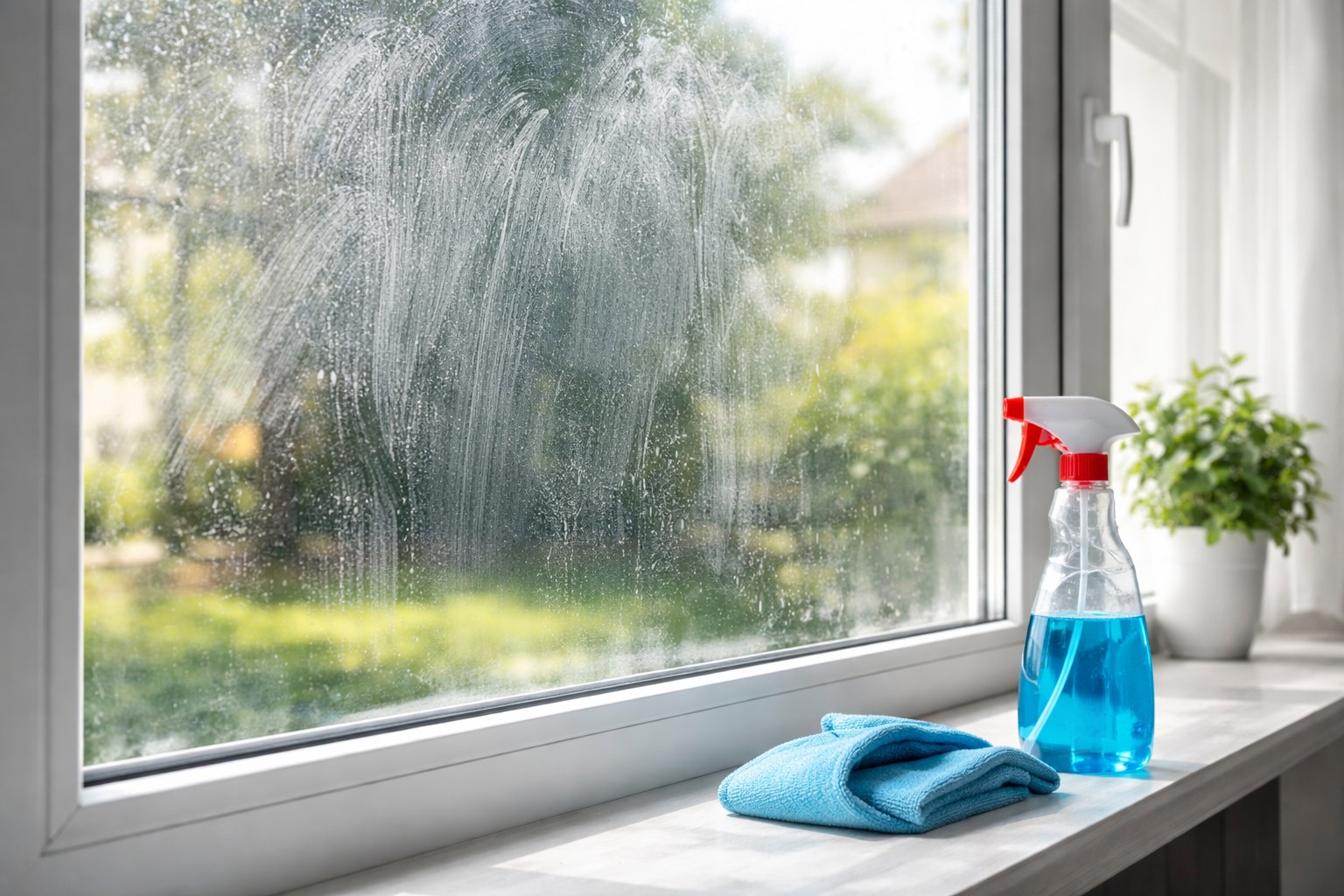
Window cleaning often turns into an endless battle for clarity. It seems that the surface is perfectly clean, but as soon as the sun comes out, telltale stripes and spots become noticeable. Stains on glass appear for a reason – this is the result of physical processes and the chemical composition of the products used. Understanding the true reasons will help you forget about double work forever.
Moisture dries out too quickly
One of the most common mistakes is washing windows in sunny or windy weather. When the glass is heated by rays or blown by a draft, the water and cleaning solution evaporate instantly. You simply do not have time to wash off the dirt and polish the surface before the liquid turns into a dry residue. It is these dried microparticles of detergent and dissolved dust that form a visible whitish coating.
Using the wrong cloth
Old cotton T-shirts or regular rags are often left behind tiny fiberswhich stick to a wet surface. In addition, if the fabric is not hygroscopic enough, it does not absorb dirty water, but simply spreads it in a thin layer on the glass. When the water evaporates, the dirt remains in place in the form of streaks. Best suited for perfect results microfiber or special rubberized napkins that work like a water squeegee.
Excess detergent
In an effort to clean glass as best as possible, many people apply too much foam or spray. This creates surfactant film (surfactant), which is very difficult to wash off completely. Chemicals left on the surface attract new dust and create a cloudy glass effect. Professionals recommend using a minimal amount of chemicals or completely replacing them with a solution of water and vinegar or ammonia.
Chaotic movements when wiping
Washing technique is critical. If you wipe the glass in a circular motion or randomly move the cloth from side to side, you risk transferring dirt from already washed areas to dirty ones and back again. The static charge created by rubbing with a dry cloth can also attract dust back to the glass. It is considered the most effective S-shape method or top-down movements that systematically drive dirty water to the edge of the frame.
Insufficiently clean water
Sometimes the reason lies in the simplest thing – water. If you don’t change the water in the bucket often enough, you end up cleaning the glass. dirty solution. Even if the rag is clean, cloudy water will leave a gray residue when it dries. It is also worth considering the hardness of tap water: the high content of calcium and magnesium salts (limescale) itself provokes the appearance of white spots that are difficult to remove without acidic agents.
To achieve crystal purity, you need to strike a balance between the right tool, a moderate amount of chemicals and weather conditions.
About the Author