
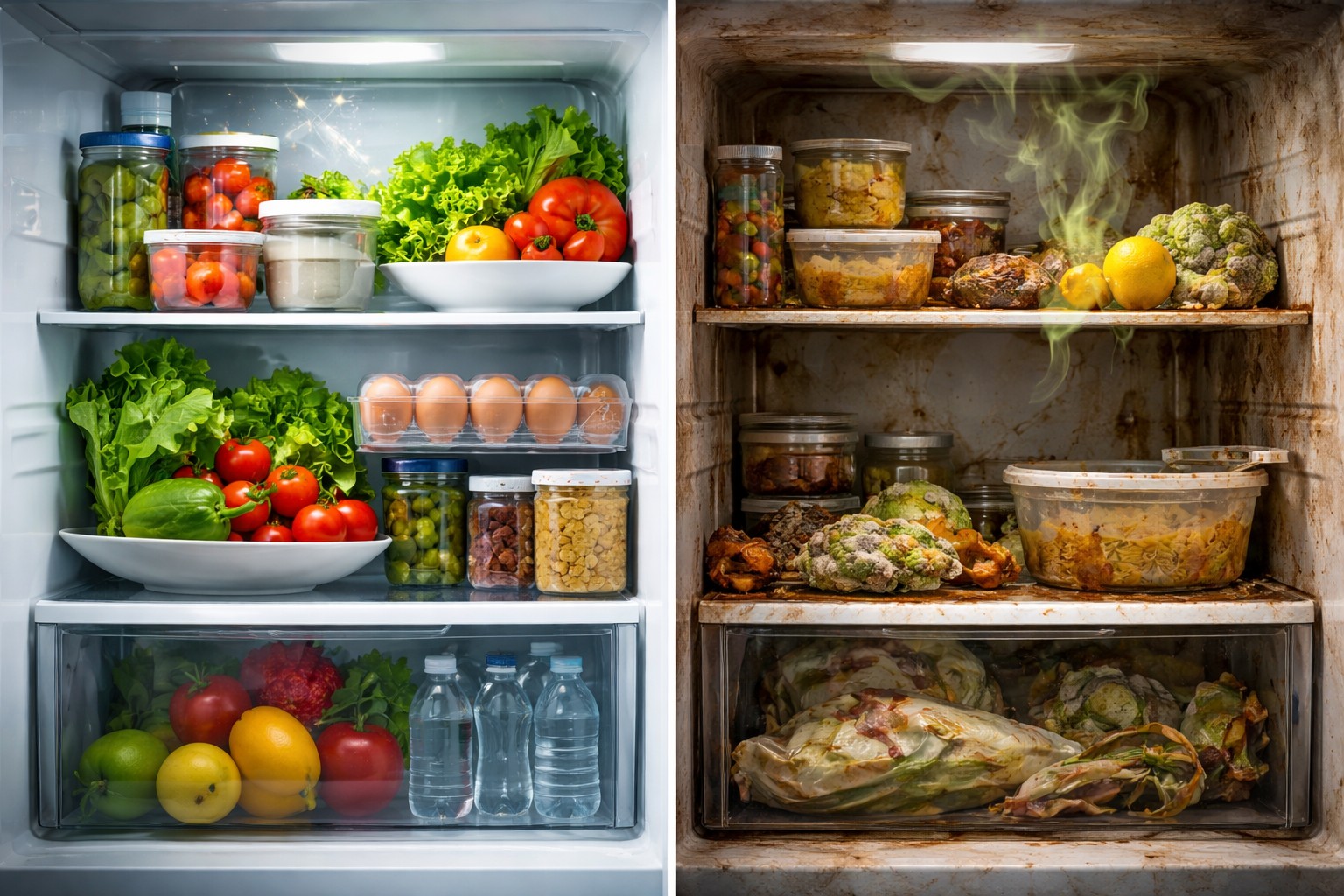
Many people believe that the refrigerator is the cleanest place in the kitchen, because the low temperature inhibits the proliferation of microorganisms. However, this is a dangerous misconception. Without regular maintenance, shelves and drawers become an ideal environment for the development of mold and invisible bacteria. Regular cleaning is not just a matter of aesthetics, but an important step towards maintaining the freshness of food and the safety of the whole family.
Even if the shelves seem visually clean, they can be inhabited by listeria and other pathogens that thrive in the cold. Spilled sauce, a drop of milk or crumbs create a breeding ground for germs. A monthly audit allows these pockets of contamination to be detected and eliminated in a timely manner, preventing cross-contamination of fresh products.
Clogged vents, dust on the condenser and ice on the walls cause the compressor to wear out. This leads to increased energy consumption and risk of breakage. By wiping down interior surfaces and checking drainage systems, you reduce the load on the unit, which directly impacts your energy bills and the longevity of the appliance itself.
A full unload of groceries once a month helps with inventory. Often forgotten jars or vegetables that have already begun to spoil are hidden in the depths of the shelves. By removing them on time, you save neighboring products from rotting and mold. This approach creates conscious consumptionallowing you to throw away less food and plan your purchases more rationally.
The specific “refrigerator aroma” does not appear immediately. It accumulates in plastic parts, rubber seals and even in the air circulation system. Usage soda solution or special detergents once a month neutralizes odors at the molecular level, returning the camera a feeling of freshness that cannot be achieved simply by using odor absorbers.
A clean refrigerator runs quieter, cools more efficiently, and ensures your food stays safe and delicious longer.
About the Author