Even the most careful housewives’ favorite dishes lose their original appearance over time. A darkened bottom, limescale from water or accidental carbon deposits can ruin your mood, but this is not a reason to run to the store for aggressive cleaning products. Simple steps will help return your pots to perfect cleanliness: home remedieswhich can be found in any kitchen and cost pennies.
Classic method with baking soda and vinegar
This combination works flawlessly thanks to a chemical reaction that literally “undermines” the dirt from the inside. The method is ideal for cleaning stainless steel and enamel surfaces from old grease and dark stains.
-
Mix table vinegar (9%) and water in a 1:1 ratio directly in a dirty pan.
-
Place the container on the fire and bring the solution to a boil.
-
Remove from heat and add 2-3 tablespoons baking soda. Be careful, the mixture will begin to foam actively.
-
Leave the solution to cool for 15–20 minutes, then drain the liquid and rinse the dishes with the hard side of the sponge.
If the dirt is outside, you can make a thick paste of baking soda and vinegar, apply it to the walls and leave for half an hour.
Citric acid against scale and yellowness
If the main problem is limescale or darkening of the enamel, regular citric acid will work best. It carefully dissolves mineral deposits without damaging the surface of the dishes.
-
Fill the pan with enough water to cover the darkened areas.
-
Add 20 grams citric acid and stir.
-
Boil the water over low heat for 20–30 minutes.
-
After cooling, the plaque will easily come off with normal washing, and the enamel will become noticeably whiter.
To prevent shine on stainless steel, you can simply wipe the clean surface with a slice of fresh lemon.
Activated carbon for burnt milk
Few people know, but pharmaceutical charcoal copes well with complex stains, especially if milk or porridge has “stuck” to the bottom. This method is safe and suitable for all types of coatings.
-
Grind 5-7 tablets activated carbon into powder.
-
Cover the burnt area with the resulting crumbs.
-
Add some warm water to make a thick paste and leave for 40 minutes.
-
The dirt will soften and can be easily removed with a sponge without unnecessary friction.
Salt solution for cast iron and aluminum
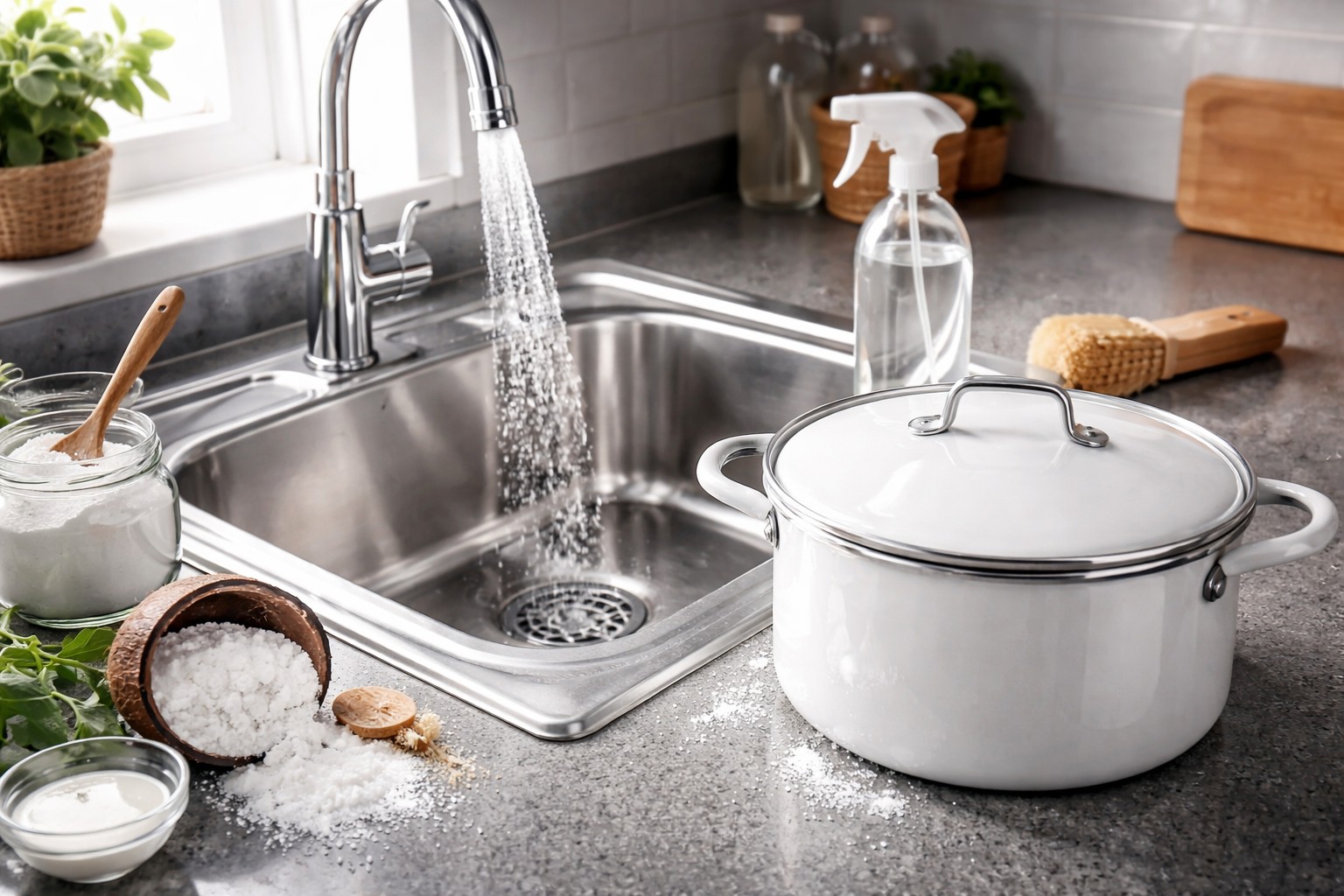
For cookware without a non-stick coating, annealing with salt works well. This is an old method that helps remove carbon deposits and disinfect the surface. However, it is worth remembering that salt should not be used on stainless steel for a long time, as this can cause the metal to darken.
-
Place a thick layer on the bottom coarse salt.
-
Add a few drops of water.
-
Leave the pan for a few hours and then simply rinse.
Timely cleaning of dishes with mild detergents extends their service life.
About the Author