It seems that if there are no visible stains on the sheet, then it remains clean. However, microbiologists and dermatologists say the opposite. The bed is the place where we spend a third of our lives, and during this time the fabric accumulates not only dust, but also many biological traces invisible to the eye. Regular change of linen is not just a household routine, but critical habit to maintain health.
An ideal environment for bacteria and fungi
Every night the human body releases moisture and heat. Even if it seems to you that you are not sweating, the body still loses fluid in the process of thermoregulation. Combined with the warmth from the blanket, this creates greenhouse effect.
Damp and warm fabric becomes an ideal incubator for the growth of bacteria and fungal spores. Studies show that after just a week of use, a pillowcase contains more bacteria than a toilet seat. If you do not interrupt this cycle by washing, you risk getting fungal infections or skin irritation.
Invisible neighbors: dust mites
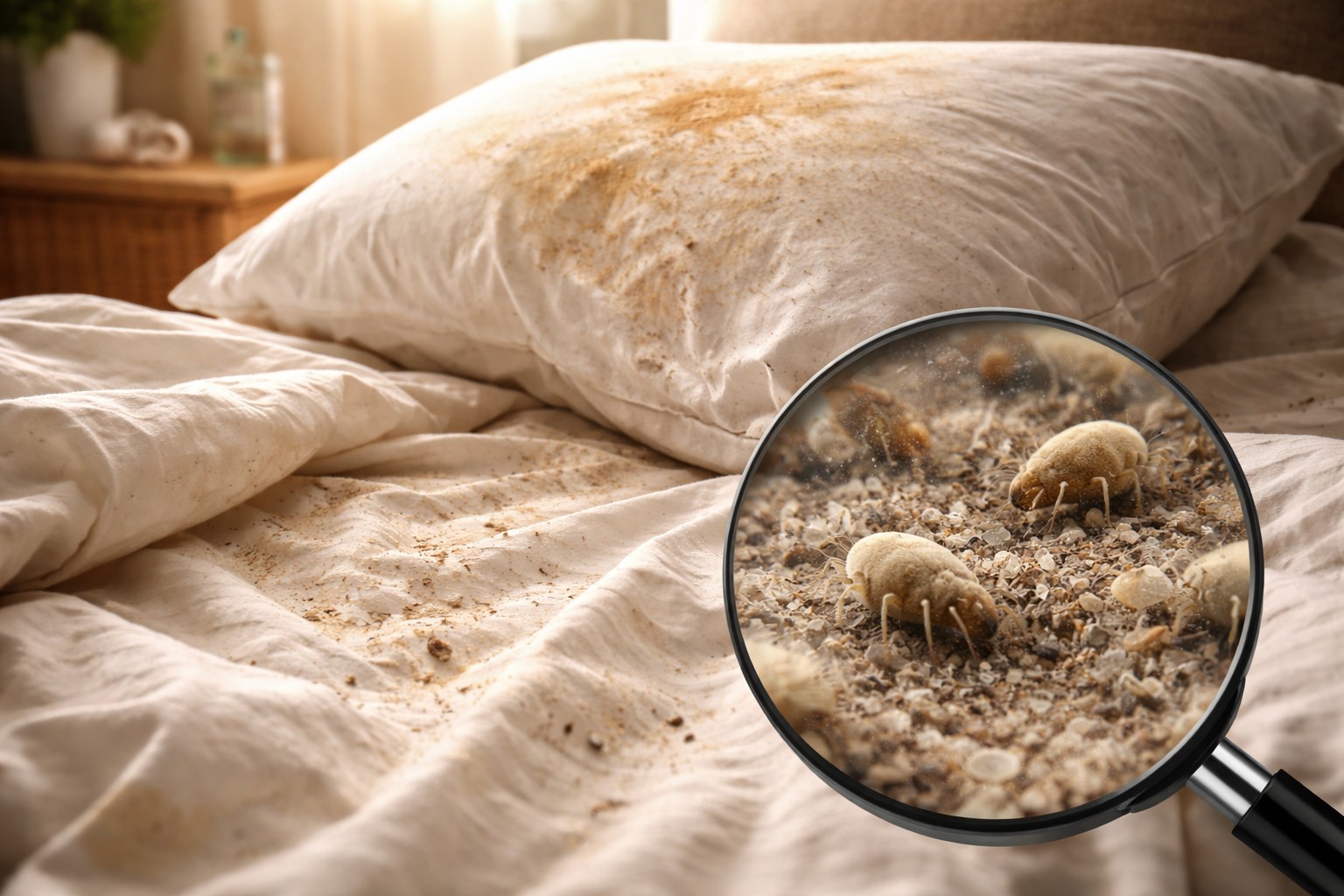
This is perhaps the most compelling reason to keep your sleeping area clean. Dust mites are microscopic organisms that feed dead skin cells. A person loses millions of skin flakes every day, and most of them remain in bed.
Ticks themselves do not bite, but their waste products are a powerful allergen. The accumulation of these substances in tissue can provoke:
-
Nasal congestion in the morning.
-
Chronic cough.
-
Exacerbation bronchial asthma.
-
Allergic dermatitis.
The main enemy of clear skin
If you spend a lot of money on facials but continue to sleep on the same pillowcase for two weeks, your efforts may be in vain. The fabric absorbs not only sweat, but also the remnants of night creams, lotions and sebum (sebum).
When you lie down on a stale pillow again, this “cocktail” clogs your pores. This leads to the appearance acneblackheads and inflammation. Dermatologists recommend changing pillowcases every 2-3 days for people with problem skin to prevent facial contact with accumulated dirt.
Impact on sleep quality
Cleanliness of linen affects not only physical health, but also psychological state. There is a direct connection between feeling fresh and how quickly you fall asleep. Crispy, clean fabric promotes better thermoregulationallowing the body to relax faster.
Old smells, even subtle ones, send signals of discomfort to the brain, which can make sleep shallow and interrupted. Regular washing helps you maintain good sleep hygiene and wake up more rested.
The freshness of the bed is not just a matter of aesthetics or a pleasant aroma, but the fundamental basis of personal hygiene, which directly affects the immune system and the overall tone of the body.
About the Author