Quality sleep directly depends on the condition of the bedding, but we often forget that the pillow requires special attention. Over time, the filler gets lost, loses its elasticity, and dust accumulates inside. So that your favorite thing lasts up to 5 years and longer, it is enough to follow a few simple rules of care that will preserve its shape and freshness.
Daily Routine The easiest way to maintain volume is daily whipping. Every morning, with light hand movements, return the airiness to the filler. This helps distribute the material evenly inside the cover and prevents the formation of hard lumps. It is also helpful to leave your bed unmade for 15–20 minutes after waking up to allow any excess moisture absorbed overnight to evaporate.
Using a protective cover A regular pillowcase protects only from light dirt, but it allows sweat, sebum and epidermal particles to pass through the product. The solution will be extra bedstead or a protective cover with a zipper. It creates a barrier to moisture and dust, significantly reducing the frequency of necessary washing of the pillow itself. You need to wash such a cover once a month, which is much easier than caring for the entire voluminous product.
Washing rules Most modern fillings can and should be washed, but the approach depends on the material.
-
Synthetic pillows (holofiber, padding polyester) can easily be machine washed at temperatures 30–40 degrees on delicate mode.
-
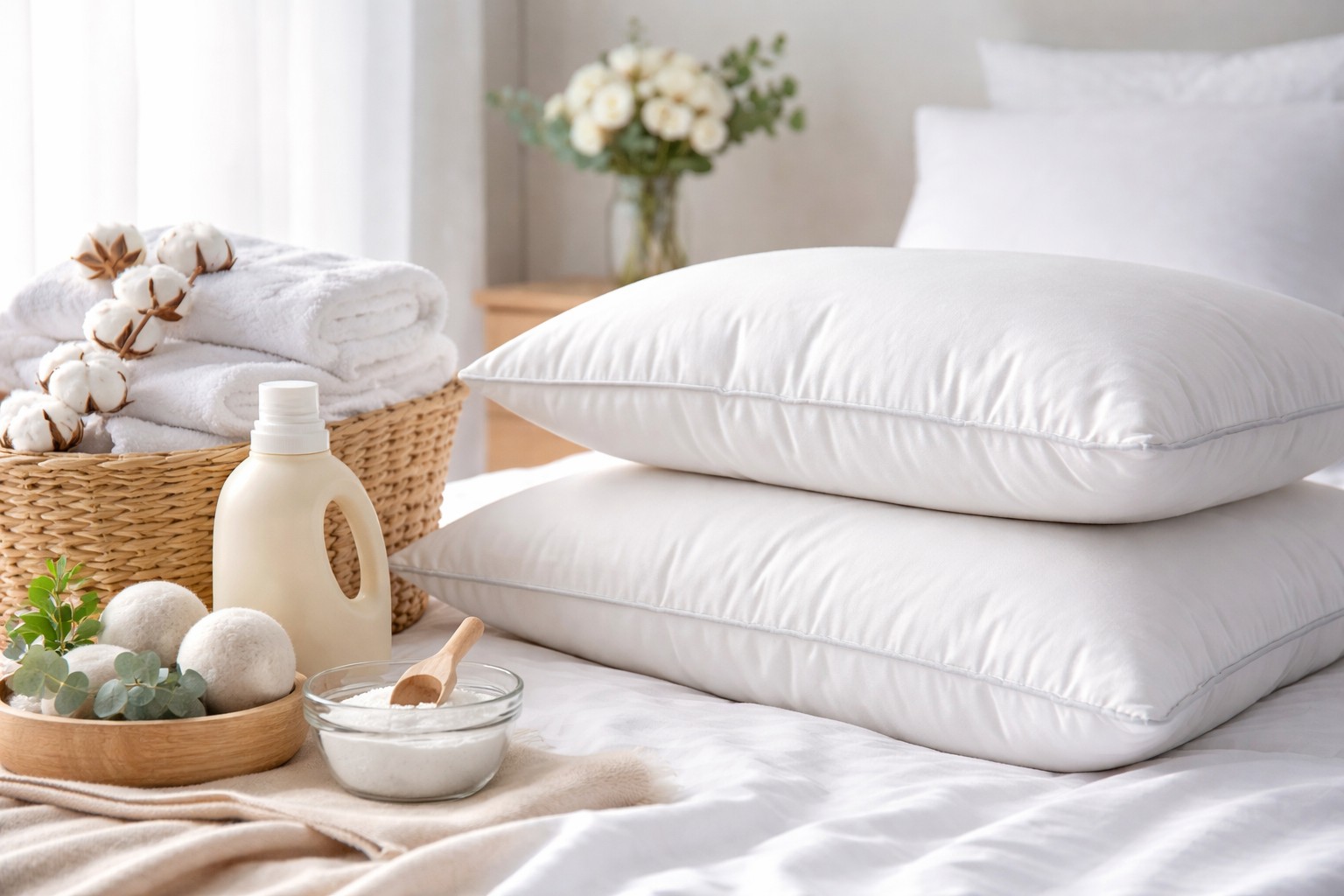
Fluff and feathers require liquid detergents and special laundry balls (or regular tennis balls) that will break up the lint in the drum, preventing it from matting.
-
Products with memory effect It is strictly forbidden to machine wash or latex ones – water destroys their structure. Only dry cleaning or light wiping with a damp sponge is suitable for them.
Drying and ventilation A critically important stage on which the absence of unpleasant odors and mold depends. Pillows should be dried in a horizontal position on the dryer, allowing air access from all sides. Turn and fluff them occasionally as they dry. In sunny weather, it is useful to take bedding out into the fresh air – ultraviolet light is a natural disinfectant.
Timely replacement of the pillowcase Sometimes the problem lies not in the filler, but in the fabric that holds it. If the material has become thin or is leaking fluff, do not rush to throw away the pillow. Replacing the fabric shell in a specialized workshop or at home will return the product to its density and neat appearance.
Proper care not only extends the life of things, but also ensures the hygiene of the sleeping place. A clean and elastic pillow guarantees the correct position of the neck during sleep and the absence of allergic reactions to dust. Taking care of your bedding is an investment in your own health and well-being every morning.
About the Author