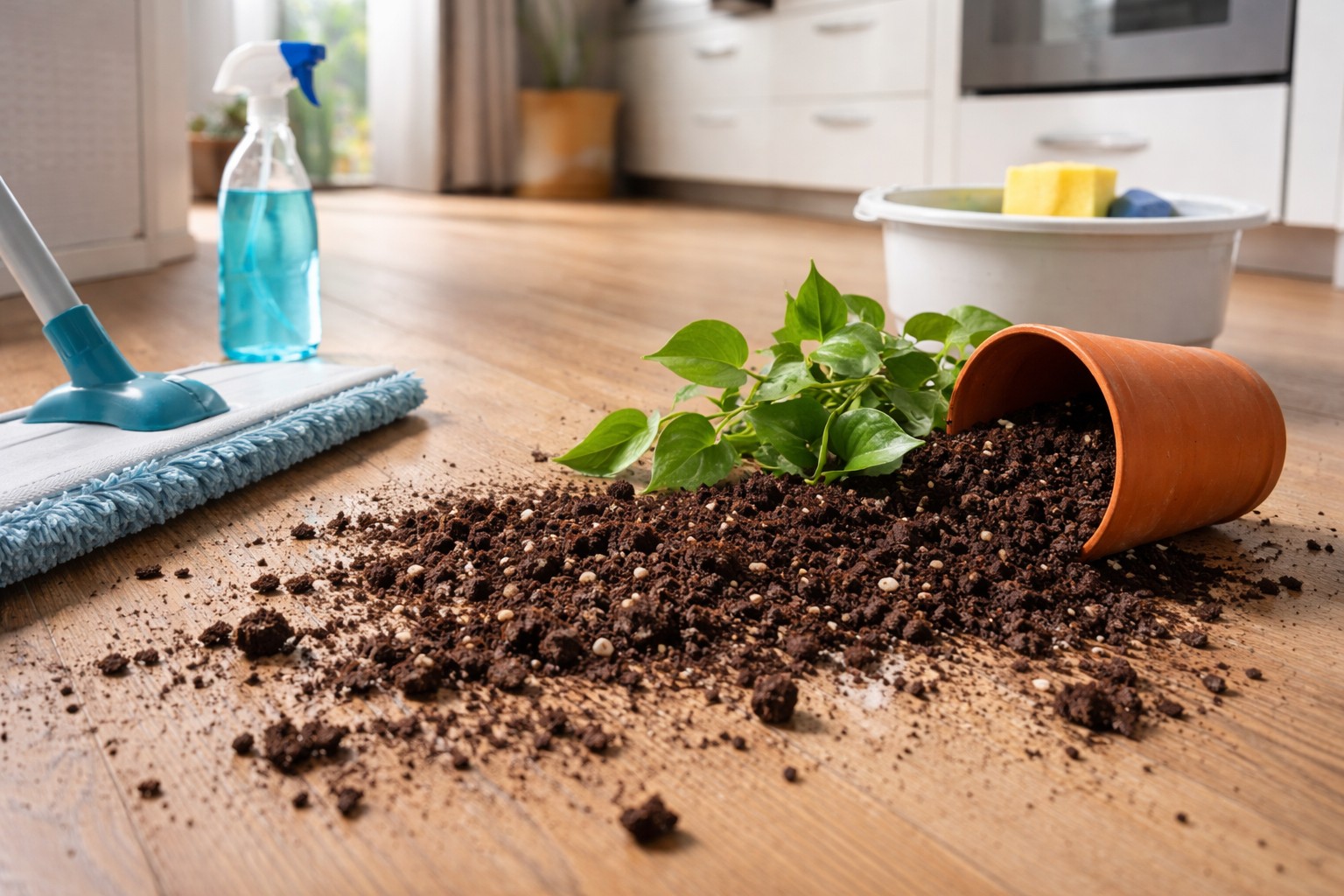
Spilled soil from a flower pot or dirt carried on shoes require a special approach to cleaning. The main mistake that many people make is trying to immediately wipe off the soil with a wet rag. This action instantly turns dry soil into liquid mudwhich gets clogged into laminate joints, tile seams and microcracks in linoleum. Instead of quick cleaning, you get dark stains and the need to change the water in the bucket several times.
To effectively clean the surface, it is important to follow the correct sequence of actions.
Dry cleaning is the first and main stage
Before you start mopping, you need to completely remove any dry particles. If the ground is dry, don’t get her wet. The moisture will cause soil particles to stick to the floor, making them much more difficult to collect. When rubbed with a wet cloth, abrasive soil particles can scratch delicate surfacessuch as parquet or glossy tiles.
Use vacuum cleaner with the brush or special crevice tool removed. This will pull the soil out of the joints and corners. If you don’t have a vacuum cleaner at hand, carefully sweep the bulk of the debris into the dustpan with a broom, being careful not to raise dust into the air. Move from the edges of the contamination to the center so as not to spread debris throughout the clean area.
Subtleties of collecting small particles
After the main cleaning, a thin layer of dust or small lumps of earth are often left on the floor, which are difficult to sweep up. In this case it helps a lot wide tape or a sticky roller for clothes. Apply duct tape to areas where there are traces of soil. This method allows you to collect the smallest grains of sand that creak under your feet without smearing them on the surface.
Another option is to use wet paper towels. Not wet, but slightly damp. Gently blot the contaminated area with them, collecting dust, and throw away immediately. This will prevent soil from getting into the water bucket in the next step.
Wet cleaning without streaks
Only when there are no visible grains left on the floor can you start washing. Use microfiberas it holds dirt inside the fibers better than regular cotton rags. It is important to rinse the rags frequently under running water to avoid dragging dirt across the floor.
If the soil was oily (for example, fertilized soil for flowers), add a little to the water floor cleaning products or a drop of dish gel. This will help break down organic residues and prevent cloudy films from appearing on the surface. You should wipe not only the place where the soil was, but also a small area around it.
The floor remains clean longer if you remove dirt gradually and do not rush to use water.
About the Author