
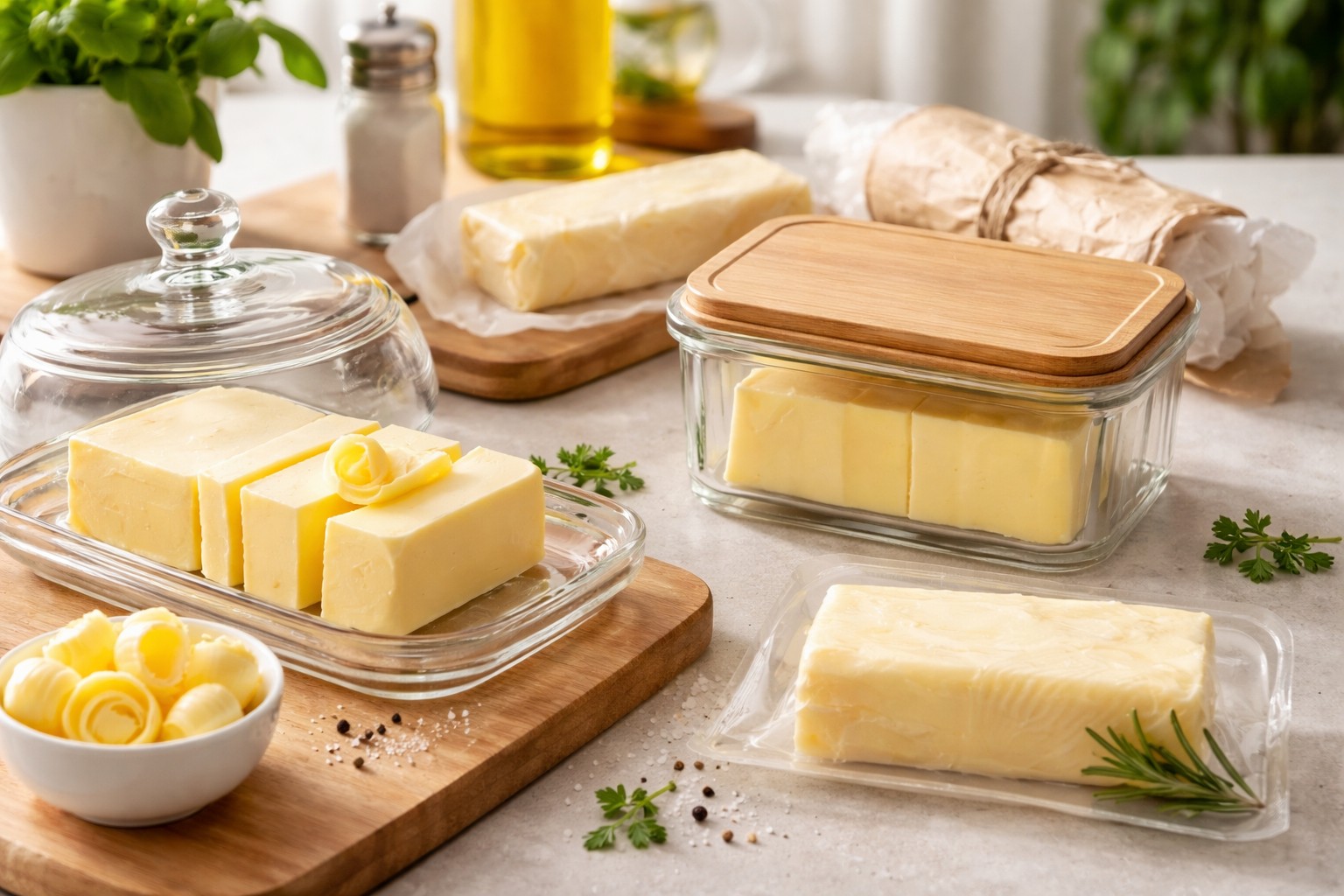
Butter is a delicate product that reacts instantly to its environment. It is capable of absorbing foreign odorschange color upon contact with air and lose their taste due to incorrect temperature. To keep your product safe and palatable, it is important to follow a few basic storage principles.
Choosing the right packaging
The most common mistake is to leave the oil in an open original package or transfer it to a transparent plastic bag. Light and oxygen start the process oxidationwhich causes a dark yellow coating to form on the surface, which experts call “staff.” This layer not only looks unappetizing, but can also taste bitter.
Best suited for storage:
-
Foil. It does not transmit light and reliably protects against oxygen.
-
Opaque oiler. The ideal option is ceramic, porcelain or stainless steel with a tight-fitting lid.
-
Parchment paper. It retains the properties of the product well, but does not protect as well from the strong odors of neighboring products.
Optimal place in the refrigerator
Many people are accustomed to putting the pack on the refrigerator door, where there is often a special compartment. However, this is the worst place. Constantly opening the door creates temperature changeswhich leads to the melting and re-solidification of fats. This disrupts the texture and shortens shelf life.
The most suitable place is the middle or top shelf in the back of the refrigerator compartment. A stable temperature is maintained there from +2 to +6 degrees, which is ideal for daily use. It is important to ensure that there are no products with a strong aroma lying nearby: smoked meats, fish, cheese or chopped onions. Fat acts as an absorbent and instantly absorbs neighbors’ scents.
Long-term storage in the freezer
If you bought a large supply of butter, it is better to freeze it. At a temperature of -18 degrees, the product can be stored for 9 to 12 months without loss of quality. Before sending to freezer Divide a large piece into portions that are convenient to use at a time.
Each portion should be tightly wrapped in foil or special baking paper, and then placed in a tight ziplock bag. This will prevent moisture from freezing and the appearance of a “refrigeration” smell. It is best to defrost such a product gradually, transferring it overnight to a regular compartment of the refrigerator.
Expiration date and signs of spoilage
In standard packaging in the refrigerator, the oil is stored for about 30–35 days. Loose oil spoils faster – it is best to use it within 10-14 days. If you notice that the surface of the piece has changed color to bright yellow or an unpleasant sour smell has appeared, the product has begun to deteriorate.
The top yellowed layer can be carefully cut off with a knife, and the remaining part can be used for heat treatmentfor example, in baking or frying. However, if the smell or taste of the entire piece has changed, it is unsafe to eat. Compliance with the rules of product proximity and the use of sealed containers will help avoid premature spoilage of the product.
About the Author