
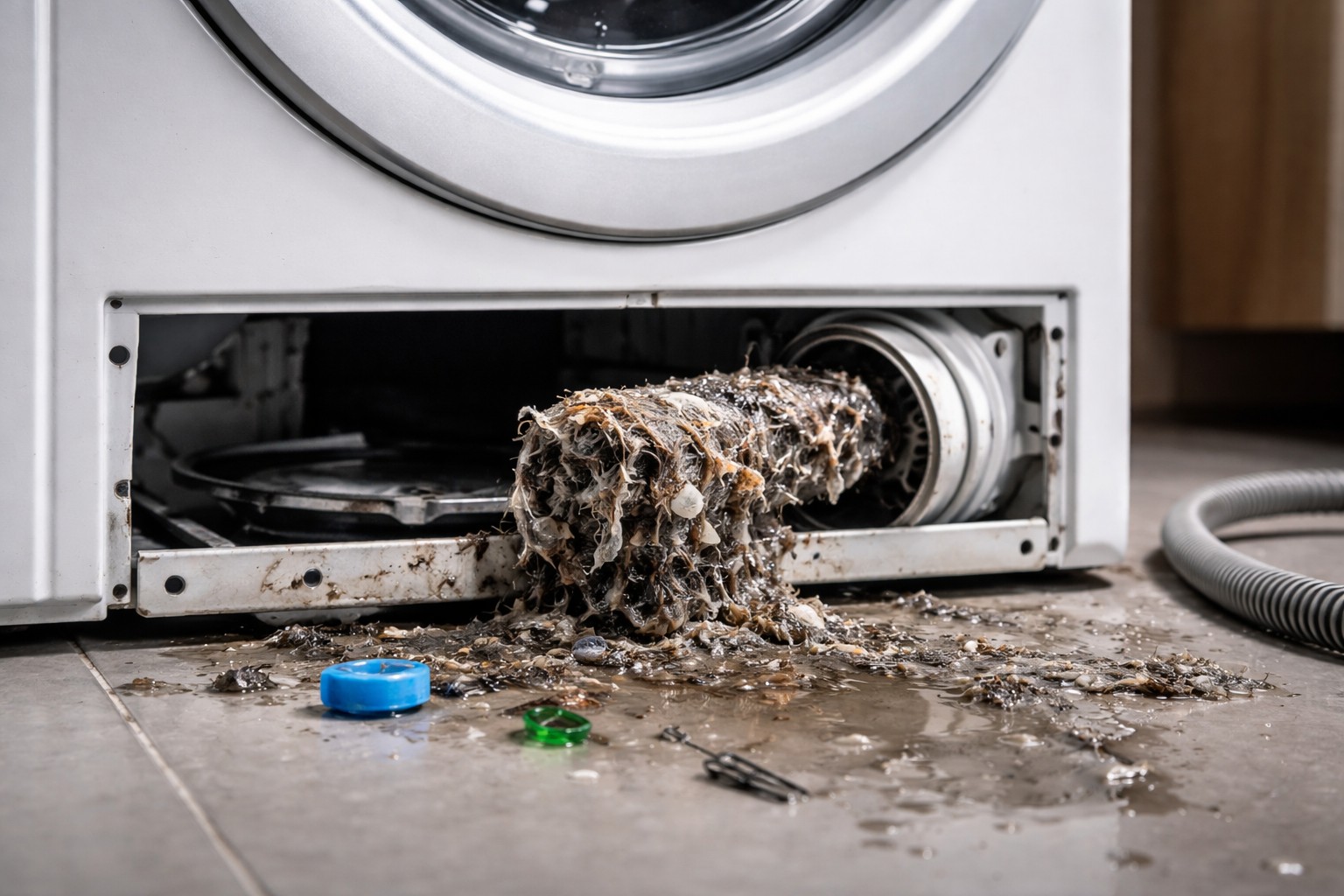
Many owners of household appliances are faced with a situation where washing machine suddenly stops draining water or begins to emit an unpleasant odor. Often the first thought is to call a technician or buy a new unit, although the root of the problem may be hidden in a small but important element – drain pump filter. Ignoring this detail leads to consequences that are much more expensive than simple prevention.
The main function of the filter is to catch small debris so that it does not get into the pump impeller. During washing, not only things get into the drum, but also animal hair, lint, coins, buttons and the contents of the pockets. If you don’t clean it regularly, this debris builds up and creates a tight blockage. As a result, the load on the drain pump increases critically, which can lead to its complete burnout and the need for costly replacement.
Another common problem associated with clogs is the appearance persistent musty odor. Moisture remaining in a dirty filter becomes an ideal breeding ground for bacteria and mold. Even after washing with high-quality powder, the laundry may smell damp, since the water does not leave completely and stagnates in the system. Cleaning the filter eliminates the source of stench and returns freshness to things.
In addition, a clogged drain directly affects rinse quality. When the water drains too slowly, the machine may not have time to completely remove detergent residue from the fabric. This often causes allergic reactions on the skin and leaves white streaks on clothes, especially dark ones. A clear drainage system ensures that the wash cycle is completed correctly.
Regular maintenance of this part takes only a few minutes, but allows you to avoid serious failures in the operation of electronics and mechanics. A clean filter ensures free circulation of water, protects the pump from overload and extends the life of your household appliances for many years.
About the Author