
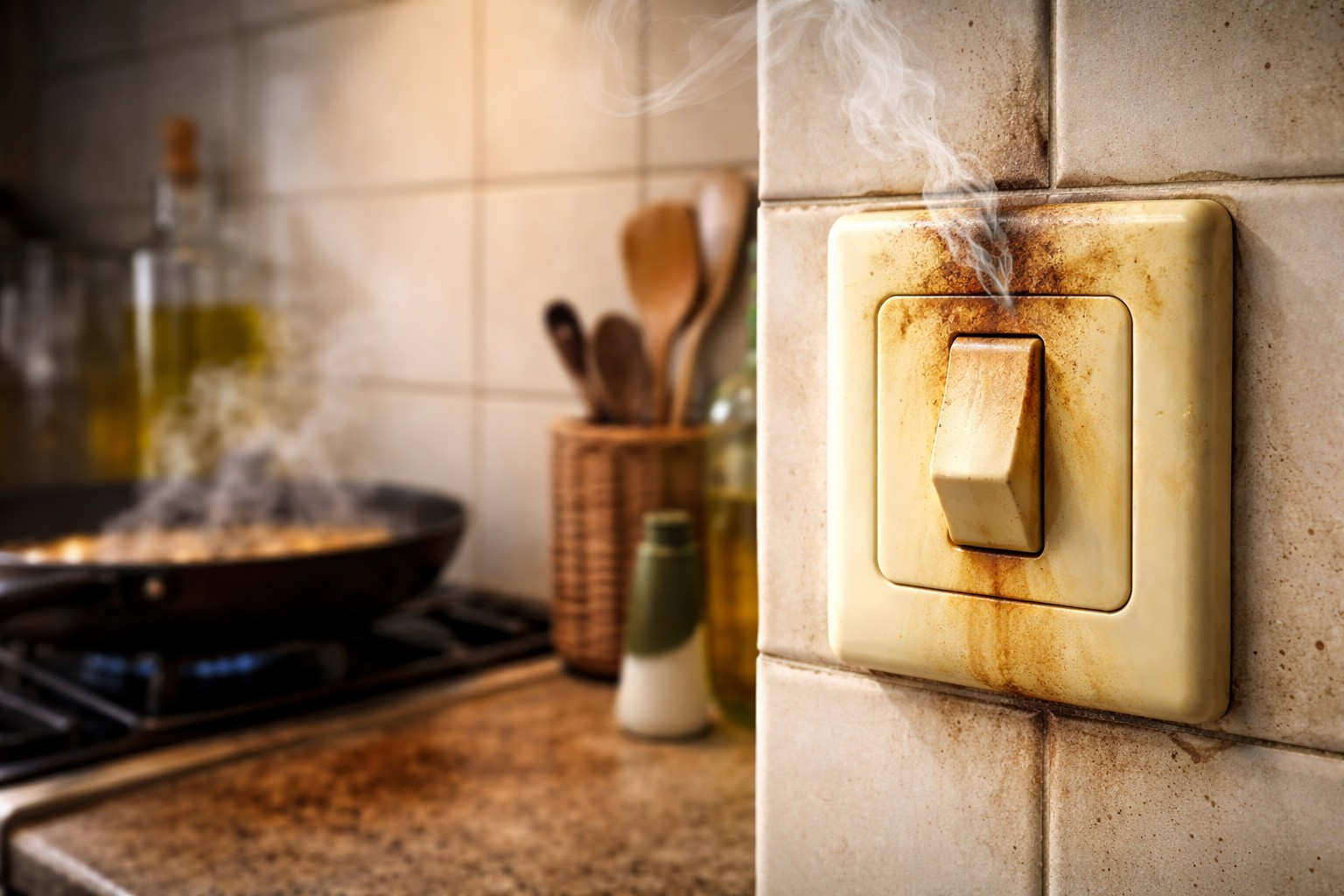
Many have noticed that over time, snow-white sockets, switches and housings of household appliances acquire an unpleasant yellow or even brown tint. This happens even in the cleanest homes where cleaning is done regularly. The problem lies not so much in the dirt, but in the complex chemical composition of the materials from which the electrics are made.
The role of the chemical composition of plastic
The main reason for color change is the use of manufacturers ABS plastic (acrylonitrile butadiene styrene). This material is cheap, durable and easy to process, making it the standard for budget and mid-priced electrical installation products.
However, plastic itself is flammable. To comply with fire safety standards, special substances are added to the composition – flame retardants. Most often this role is played by bromine. It is this element that is responsible for the “aging” of color.
The process goes like this:
-
Under the influence ultraviolet (sunlight) and oxygen, the bromine molecules in the plastic structure become unstable.
-
A photo-oxidation reaction occurs.
-
Bromine migrates to the surface of the product, creating a characteristic yellow coating.
This process is irreversible under natural conditions and affects the entire depth of the material, and not just the top layer.
External influencing factors
Although material chemistry plays a major role, the environment can accelerate the degradation process. If the switch is on a wall where straight lines regularly fall sun raysit will turn yellow much faster than the one installed in a dark corridor.
In addition, color is influenced by:
-
Thermal impact. If the contacts inside the socket are poorly tightened and get hot, the plastic around them will begin to change color due to a thermal reaction.
-
Tobacco smoke. Tar and nicotine settle on the surface, forming a sticky film that eats into the porous structure of the plastic.
-
Aggressive household chemicals. Using products with chlorine or abrasives can damage the protective gloss layer, making the plastic more vulnerable to dirt and oxidation.
Is it possible to return whiteness
If the yellowing is caused by grease or soot, regular soapy water or an alcohol wipe will solve the problem. However, if the cause is a chemical reaction from bromine, simply washing it will not help.
There is a method known as Retrobright (retrobright). It involves the use of concentrated hydrogen peroxide and ultraviolet lamp. Peroxide is applied to the dismantled plastic, wrapped in film and left under UV rays. The chemical reaction temporarily displaces the bromine, returning the product to its white color.
How to choose switches that don’t turn yellow
The only way to be guaranteed to avoid this problem is to initially choose products from a different material. More expensive and high-quality lines of sockets are made from polycarbonate (PC).
Advantages of polycarbonate:
-
It has high UV resistance.
-
The material does not require the addition of brominated flame retardants, since it is self-extinguishing.
-
The surface has a glossy shine and high strength.
When purchasing electrical accessories, you should pay attention to the markings of the plastic or check the material with the seller. Products made from polycarbonate are more expensive, but retain their original appearance for decades.
If your switches have already yellowed, the most effective and safest solution is to completely replace them with modern models made from sustainable materials. This will not only update the interior, but will also allow you to audit contacts to improve the fire safety of your home.
About the Author