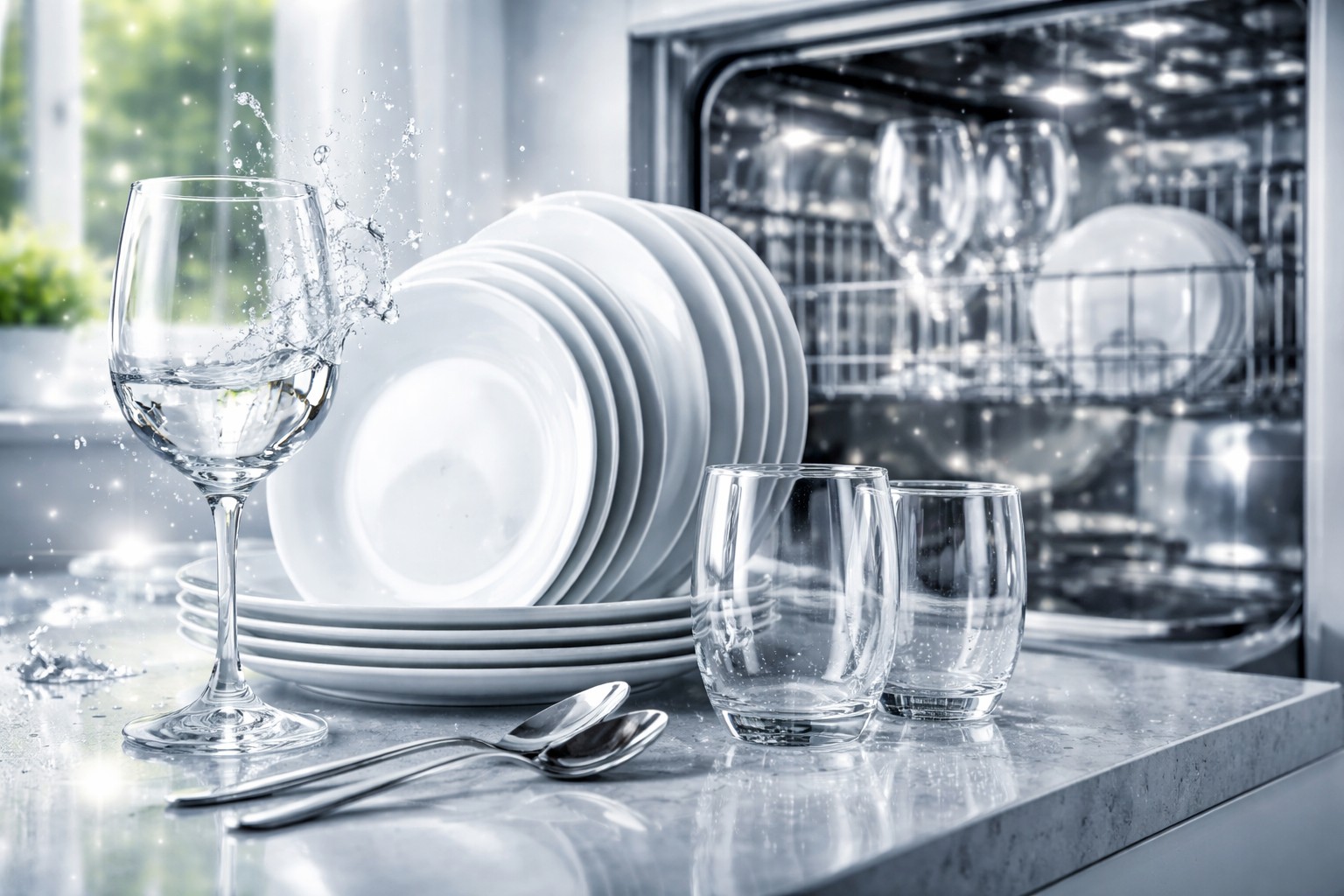
Even the most expensive kitchen utensils lose their original luster over time. The reason for this is often hard waterwhich leaves unpleasant white streaks and a rough layer. Ordinary cleaning gels do not always cope with this task, but you can return plates and glasses to their ideal appearance using simple improvised means.
Citric acid is considered one of the most effective and safe methods of combating mineral deposits. It not only splits limescalebut also gives glass and ceramics a radiant shine. To clean, simply dissolve a packet of acid in hot water and soak the affected items in this solution for half an hour. After this procedure, the plaque comes off easily even with light rubbing with a sponge.
The second proven assistant is ordinary table vinegar. The acidic environment instantly reacts with calcium salts, dissolving them without residue.
-
Soak a cloth in vinegar.
-
Wrap it around heavily soiled areas or simply wipe the surface.
-
Leave for 10-15 minutes to work.
-
Rinse the dishes thoroughly with running water to remove the specific odor.
For those who prefer delicate cleaning, a gruel made from baking soda. This method is good for fresh stains that have not yet hardened. Baking soda acts as a mild abrasive, mechanically removing dirt without scratching the surface when used carefully. It is important to remember that for cookware with a non-stick coating or delicate decor, it is better to choose liquid solutions rather than powders.
To ensure that the problem returns as rarely as possible, you should get into the habit of wiping the dishes dry immediately after washing. When the remaining drops of water dry out, they turn into those very unpleasant stains that, over time, layer on top of each other. Timely care allows you to keep kitchen utensils in perfect condition for many years.
About the Author