When cleaning, we often pay attention to the floors, shelves and bathroom fixtures, but completely ignore the items we touch most often. Door handles and door panels remain the dirtiest places in the apartment, even if visually they seem clean. This mistake can cost not only the aesthetic appearance of the interior, but also the health of all household members.
Invisible bacteria storage
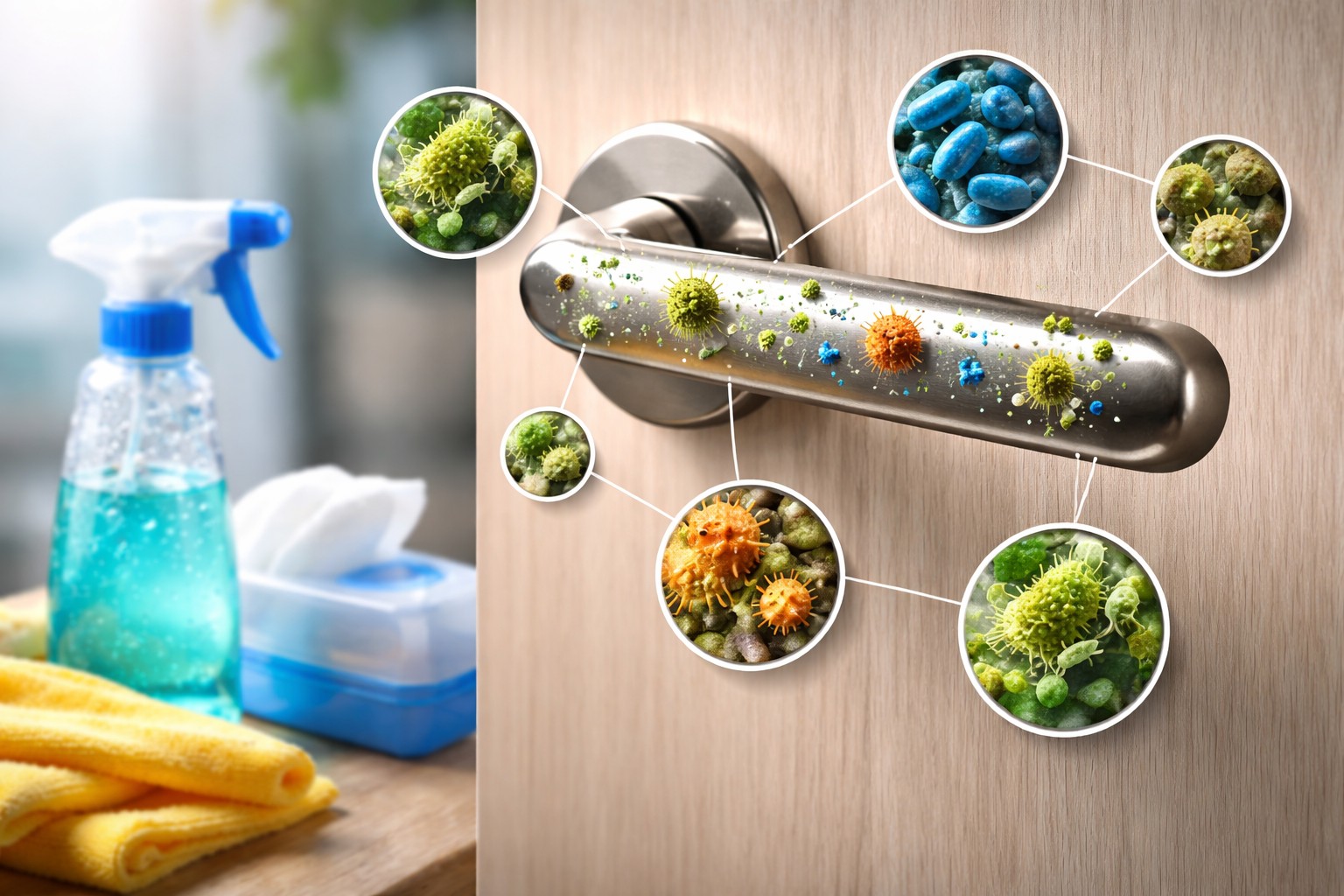
The door handle is the main route of transmission of infections inside the house. We touch them immediately after returning from the street, after visiting the toilet or cooking raw meat. Research shows that more bacteria can accumulate on one handle than under the rim of a toilet bowl.
-
Flu and cold viruses live on hard surfaces for up to 48 hours.
-
Bacteria such as staphylococcus or E. coli, actively reproduce in a warm home environment.
-
Regular disinfection breaks the chain of disease transmission between family members.
The destructive effects of fat
In addition to germs, our hands leave surfaces sebum and sweat particles. Over time, this invisible layer oxidizes and turns into a dense, sticky film.
-
The sticky layer works as a magnet for household dust and animal hair.
-
Old grease is extremely difficult to wash off without aggressive chemicals, which can damage the door coating.
-
Fingerprints are created on glossy and matte surfaces. visual noisewhich makes the room look untidy immediately after cleaning.
Protection of fittings from corrosion
Few people realize that human sweat contains salts and acids that have an aggressive effect on metal. If these contaminants are not removed, expensive fittings begin to fade, become stained, or even rust.
-
Brass and copper handles oxidize the fastest.
-
Chrome coatings may begin to peel off due to constant contact with an aggressive environment.
-
A simple wipe with a soft cloth prolongs service life of mechanisms for several years.
The cleanliness of door handles and door panels is an indicator of a detailed approach to home hygiene and helps keep the renovation in its original condition. Regular care of these interior elements prevents the spread of seasonal diseases and saves money on replacing damaged fittings.
About the Author