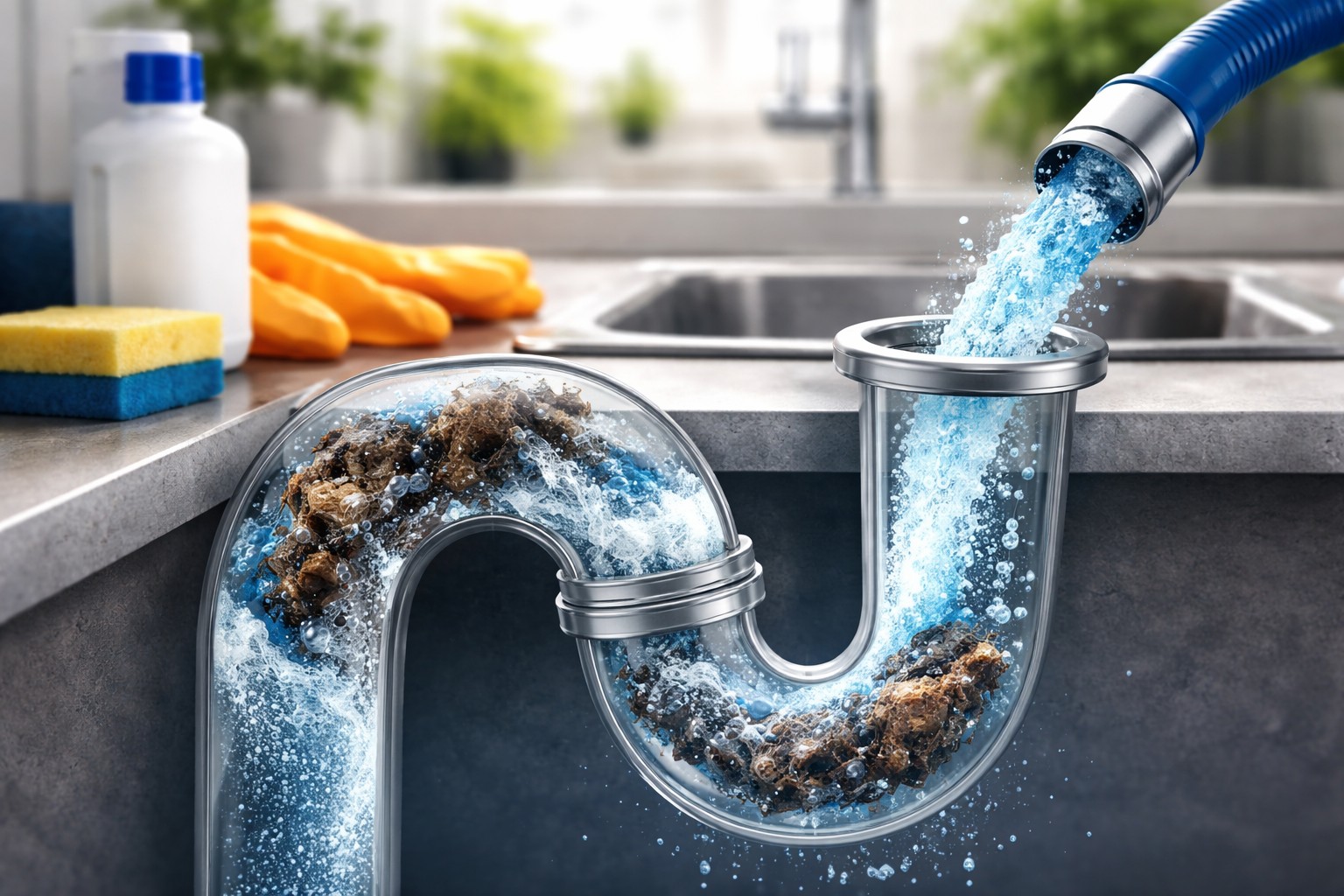
Often, in pursuit of quick results, we pour into the drain aggressive chemistrywithout thinking about the consequences. Caustic alkalis and acids actually dissolve blockages, but together with them they can damage plastic siphons, corrode rubber seals and even break the tightness of connections. If you want to keep your pipes intact and avoid costly repairs, you should pay attention to more delicate but effective methods.
Why you should give up “mole” and boiling water
Many people believe that boiling water is a universal remedy. However, for modern plumbing this can be fatal. Cheap plastic and thin corrugated pipes become deformed when exposed to extreme temperatures, leading to leaks. Caustic chemicals They act even more harshly: with frequent reactions, they thin the walls of the pipes. The safest approach remains the use of mild reagents or mechanical impact.
Homemade classics without the risk
One of the most reliable methods that works to break down fat plugs is a combination soda and vinegar. This method is safe for both cast iron and plastic.
-
Pour half a cup of baking soda down the drain.
-
Pour half a glass of table vinegar there.
-
Be sure to cover the drain hole with a plug or rag so that the foam flows down toward the clog and not out.
-
After 30–40 minutes, flush the system with plenty of warm (not boiling) water.
This reaction creates pressure and loosens organic deposits without causing mechanical or chemical damage to the line itself.
Pressure and vacuum force
If the blockage is dense, chemicals (even gentle ones) may not be able to cope. In this case, pipes become the best friend regular plunger. The main thing is to use it correctly. To create a powerful hydraulic shock, you need to fill the sink with a little water so that it covers the bowl of the plunger, and make sharp rhythmic movements. This pushes debris out without direct contact with the pipe walls, completely eliminating scratches or corrosion.
Biological agents
For those who prefer ready-made solutions, there are enzyme cleaners. They are based on bacteria that literally “eat” organic matter – hair, fat and food debris. They act slower than their chemical counterparts (usually they are poured overnight), but have a huge advantage: they are absolutely neutral to pipe materials. This is an ideal choice for owners of private houses with septic tanks, where chlorine and alkali can kill beneficial sewer microflora.
Regular preventative maintenance with mild means avoids the formation of stone blockages and keeps your plumbing fixtures in pristine condition for many years.
About the Author