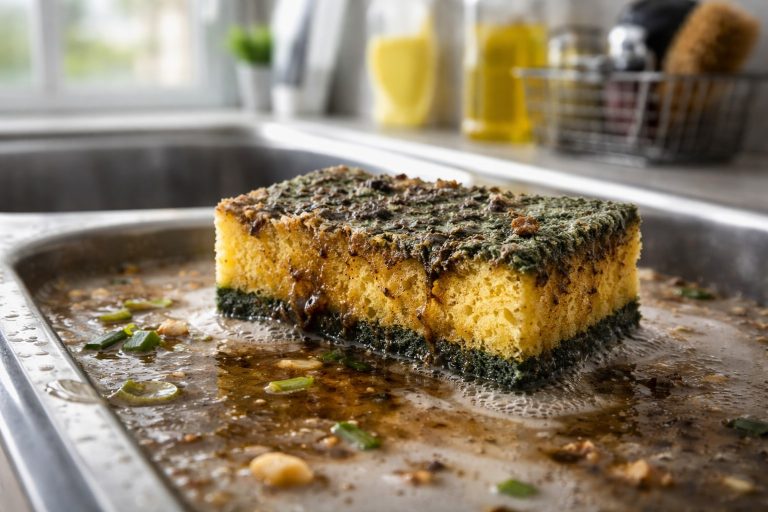
A kitchen sponge is rightfully considered the dirtiest item in the house, often surpassing even the toilet rim in terms of bacteria. The porous structure, constant humidity and food debris create an ideal environment for the proliferation of microbes. This is why many resort to the procedure boilingtrying to extend the life of this accessory and protect your family.
The main goal is disinfection
The main reason why sponges are heat treated is to destroy pathogenic microorganisms. It is believed that exposure to boiling water for a few minutes can kill a significant portion of bacteria, including salmonella and E. coli.
In addition, this process helps to get rid of accumulated fatwhich eats deeply into the pores of the foam rubber and is not washed out with ordinary dishwashing detergent. After “boiling,” the porous structure is cleaned and the sponge begins to foam better.
Fighting unpleasant odor
The specific musty aroma emanating from the sponge is a direct signal of the active activity of bacteria (most often Moraxella osloensis). Regular rinsing under the tap does not help here. High temperature when boiled, it destroys the decay products of microorganisms, returning the product to relative freshness. This allows you to use the accessory for several more days without disgust.
How to do it right
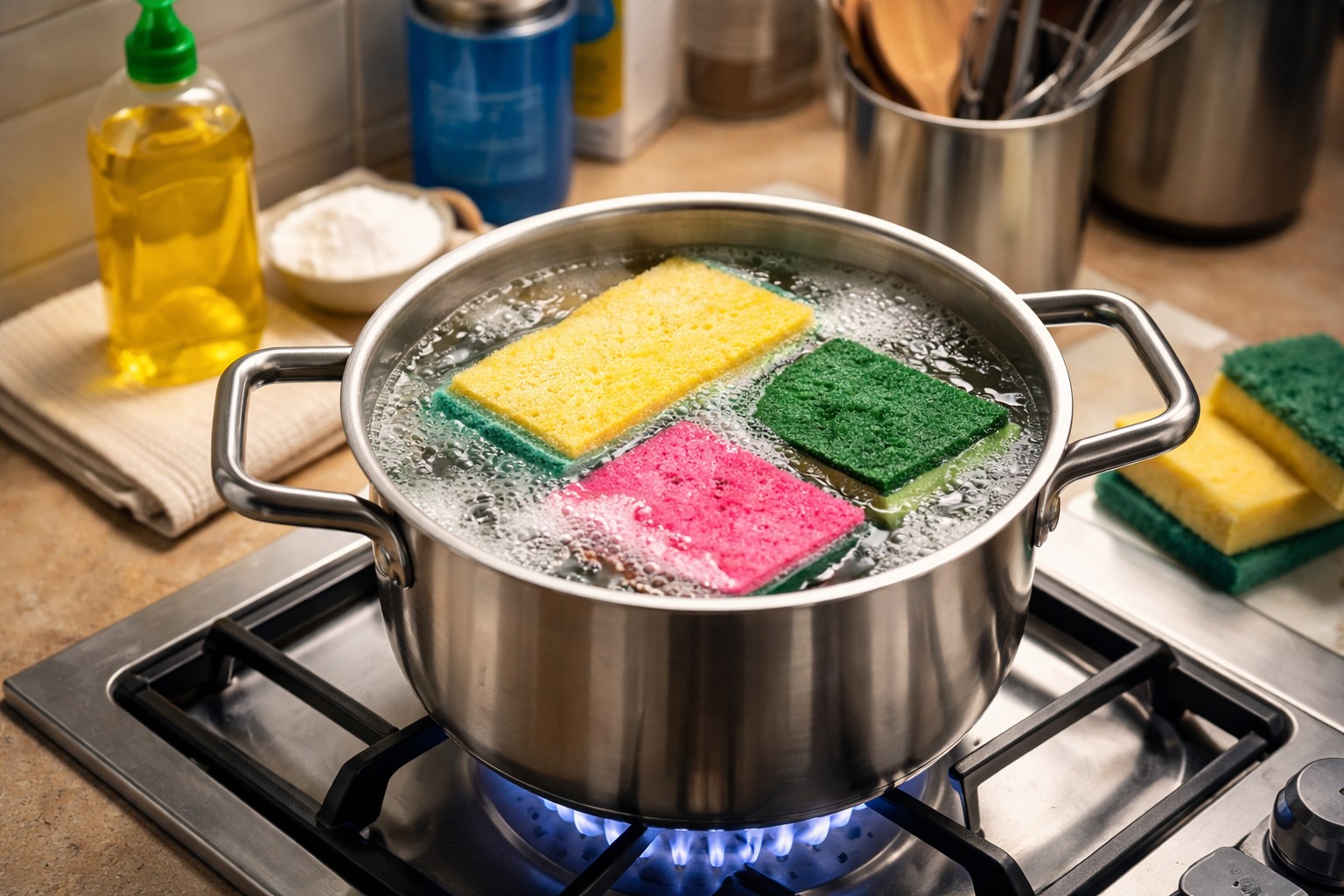
For the procedure to make sense, it is not enough to simply pour boiling water over the foam from a kettle. To achieve the sterilization effect, certain conditions must be met:
-
Use a pan with clean water.
-
Bring the water to a vigorous boil.
-
Immerse the sponge completely and “cook” it for at least 5–10 minutes.
-
After the procedure, thoroughly squeeze and dry the product.
Some housewives add a spoon to the water salt or soda to enhance the antibacterial effect and further cleanse the fibers of dirt.
The downside of the method
It is important to understand that boiling has a significant drawback, which modern microbiologists talk about. Although hot water kills weak bacteria, the most resistant strains can survive and begin to reproduce with a vengeance, since the competitive environment has been cleared. Foam rubber after heat treatment can deteriorate faster, losing its abrasive properties.
Experts agree that boiling is a temporary measure that is suitable for emergency disinfection, but does not replace the need to completely change cleaning equipment. Even the cleanest looking sponge must be disposed of after a week of active use for the sake of hygienic safety.
The best solution for keeping your kitchen clean is to regularly replace the sponge with a new one every seven days.
About the Author