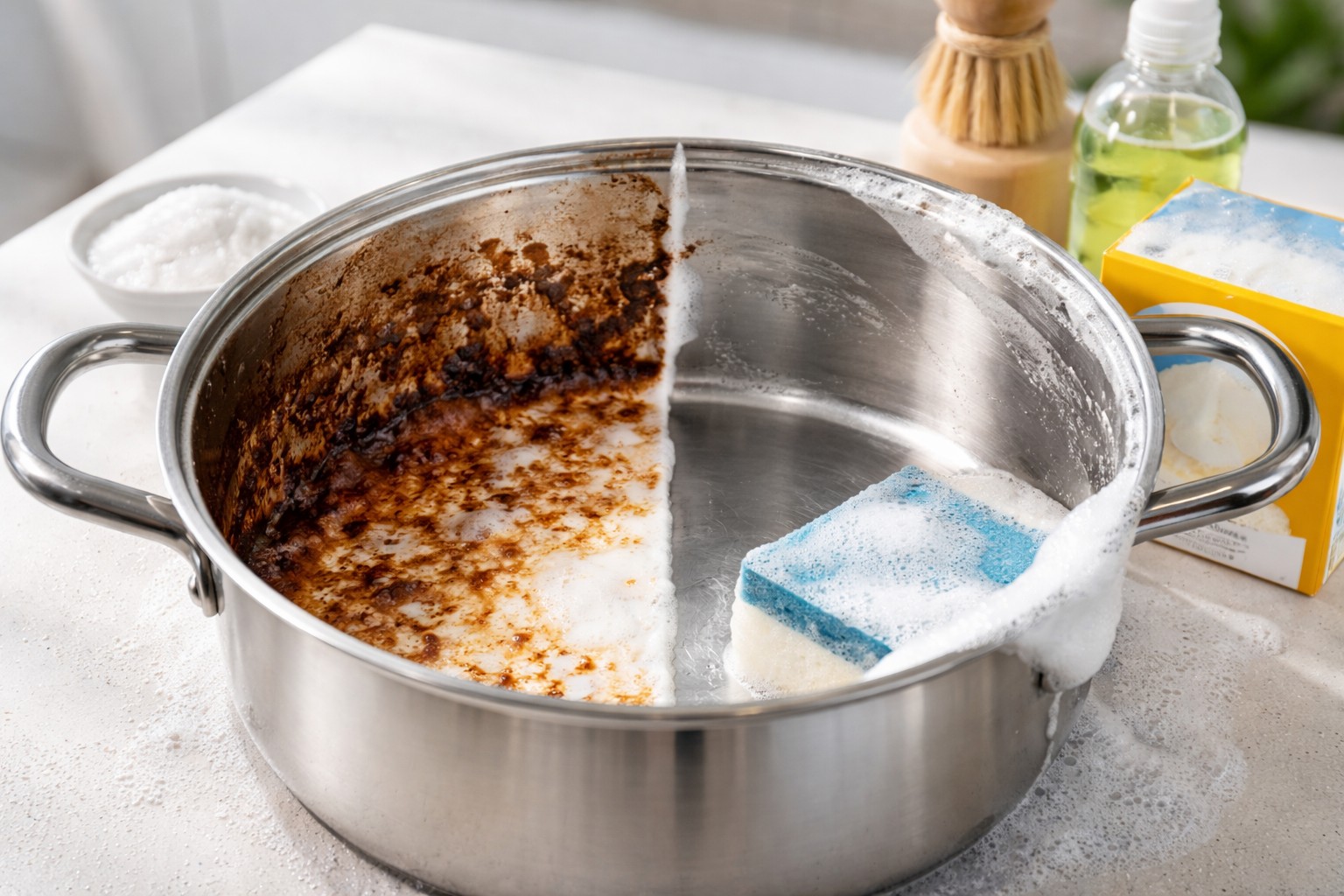
Escaped milk is a real nightmare in the kitchen, leaving behind not only a pungent odor, but also a dense, hard-to-remove carbon deposits. Many people, in a panic, begin to scrub the bottom with hard metal brushes, which often leads to damage to the enamel or non-stick layer. However, you can return the dishes to their original appearance using simple means at handwithout resorting to aggressive household chemicals.
Baking soda
This is the most popular and safest method for any cookware, including enamel and aluminum. Soda reacts with fats and milk proteins, softening the burnt crust.
-
Cover the bottom of the pan with a thick layer of baking soda (about 3–5 tablespoons).
-
Add a little water to make a thick paste and leave for 30 minutes.
-
If the soot is strong, add water, put on fire and boil the solution within 10–15 minutes. The deposits will begin to come off on their own.
Activated carbon
This method is great for “capricious” coatings, as it works very delicately. Activated carbon It has absorbent properties and literally absorbs dirt.
-
Grind 3–5 charcoal tablets into powder.
-
Sprinkle thickly on burnt areas.
-
Fill with cold water and leave for 40–60 minutes. After this, the dirt can be easily removed with a regular sponge.
Vinegar or citric acid
An acidic environment perfectly breaks down milk protein. This method is especially good for stainless steel or aluminum cookware, since the acid additionally brings back shine and removes darkening.
-
Pour into the pan 9% table vinegarso that it completely covers the burning.
-
Cover with a lid and leave for a couple of hours.
-
To speed up the process, you can slightly heat the vinegar, but do not bring it to a boil to avoid caustic fumes. You can use a solution instead of vinegar citric acid (1 sachet per glass of water).
Whey
Oddly enough, dairy products themselves can help in the fight against soot. The whey contains acids and bacteria that soften burnt organic matter.
-
Fill the burnt area serum.
-
Leave the pan in a warm place for a day.
-
This method takes time, but it is absolutely safe for enamel and does not require physical effort.
Salt and cold water
If the milk has just burnt, you need to act quickly. However, it is important to remember: a hot enamel pan should not be immediately filled with ice water, as the enamel may crack.
-
Let the dishes cool slightly.
-
Fill the bottom generously coarse salt.
-
Fill with cold water and leave for 2-3 hours. Salt works as a mild abrasive and leavening agent.
What is not recommended to do
When trying to wash dishes, it is important not to completely ruin them. Usage knives and scrapers Only permissible on uncoated cast iron pans. For Teflon, ceramics and enamel, mechanical action is destructive. Also, you should not use aggressive cleaning agents for stoves and ovens inside food utensils unless there is appropriate permission on the packaging, since microparticles of chemicals may remain in the pores of the material.
Timely soaking of dishes immediately after an incident significantly increases the chances of their complete restoration without damaging the surface.
About the Author