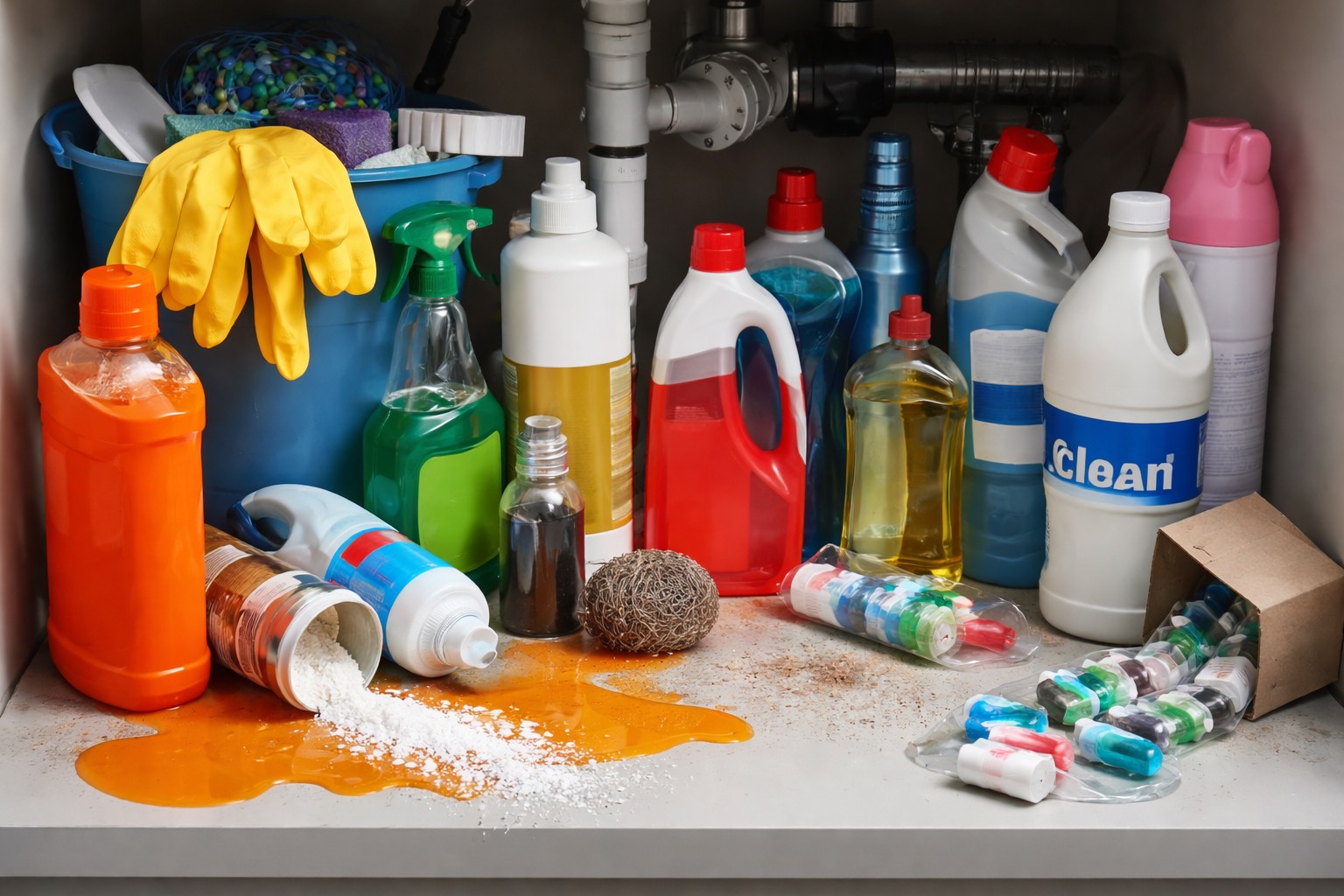
We often put cleaning products under the sink or in the nearest empty cabinet without thinking about the consequences. However improper storage may not only reduce the effectiveness of powders and gels, but also cause dangerous chemical reactions. Organizing space for household chemicals requires compliance with strict rules that guarantee the safety of all residents of the house.
Temperature and humidity
Most products are sensitive to temperature changes and high humidity. Storing washing powders in the bathroom often leads to them clumping and loss of cleaning properties due to dampness. Liquid products and gels should not be placed near batteries or in direct sunlight, as heat may change them chemical formula. It is best to set aside a dry, cool, dark place for supplies, such as a separate shelf in the pantry or a closed closet in the hallway.
Dangerous neighborhood
Never store all your products together. It is critical to separate acid and alkaline compoundsas well as chlorine-containing substances. If the packages are accidentally damaged and the contents are mixed, toxic gas may be released. It is also strictly forbidden to place household chemicals near food, medicine or animal feed. Volatile components can settle on food even through microscopic gaps in lids.
Original packaging
Pouring funds into beautiful, identical dispensers looks aesthetically pleasing, but is fraught with risks. Factory packaging made of plastic designed for a specific aggressive composition. An ordinary bottle can melt or crack when exposed to chemicals. In addition, the original packaging always indicates instructionsdosage, shelf life and effects in case of accidental ingestion. If you do refill the product, be sure to attach a label with the name and expiration date.
Protection from children and animals
This is perhaps the most important point. Brightly colored laundry bottles and capsules often attract children’s attention, reminiscent of toys or candy. All chemistry must be on upper shelveswhere the child cannot physically reach. If the only storage location is the bottom cabinet, be sure to install special blockers or locks. This simple action will prevent serious accidents.
Regular inventory audits will help maintain order and safety. Check expiration dates every six months and ruthlessly throw away expired, dried out or discolored products. Timely disposal of old chemicals will free up space and protect surfaces from damage by spoiled compounds. Proper storage of household chemicals is the key to a clean and safe home.
About the Author