
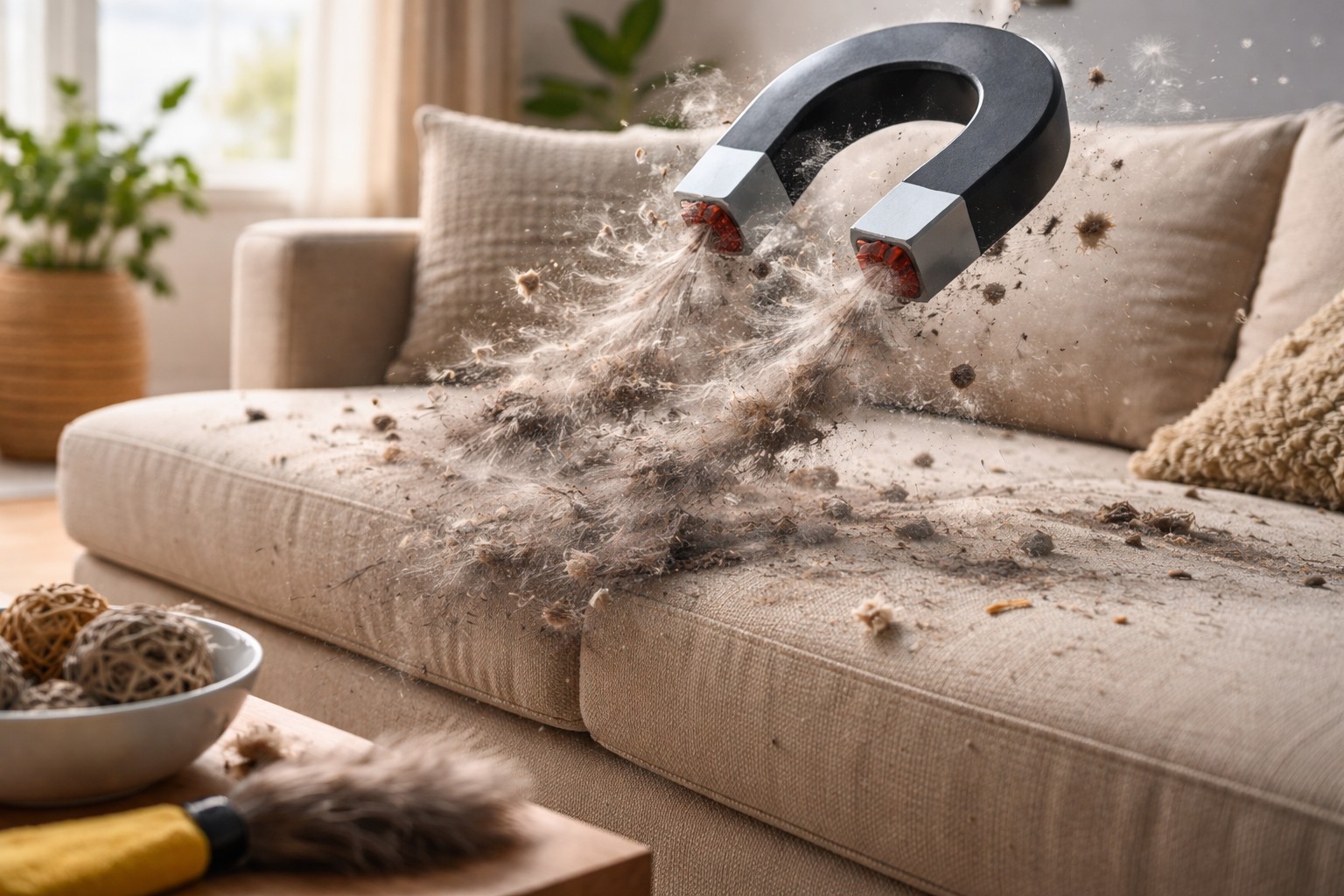
Many people are familiar with the situation when only a couple of days pass after general cleaning, and the upholstered furniture again looks untidy. Sofa upholstery works like a huge filter that traps the smallest particles from the air. This does not happen by chance, but due to the physical properties of materials and the characteristics of the microclimate in the room.
One of the main reasons is static electricity. Most modern upholstery fabrics contain synthetic fibers, which accumulate a charge when rubbed. As a result, the surface literally pulls out of thin air:
-
Particles of dead skin;
-
Pet hair;
-
Microscopic fibers from clothing;
-
Street pollen.
The second factor lies in texture of the material. Fabrics with pile, such as velor, velvet or chenille, have a complex structure. Ideal “pockets” are formed between the villi for the accumulation of dirt. Smooth fabrics collect less dust on the surface, but it can accumulate in folds and corners, creating dense clumps of dirt.
Don’t forget about internal filling. Over time, foam rubber and other padding materials begin to deteriorate from use. The smallest dust seeps out through the upholstery, creating a feeling of dust, even if the room is perfectly clean. This process is intensified if the furniture is located next to a radiator or in direct sunlight, which dries out the filler.
The rate of pollution is also affected by air circulation. If the sofa is located in a draft or under an air conditioner, it becomes a barrier to air flows carrying dust. Regular dry vacuuming and the use of antistatic agents will help significantly reduce the rate of dust accumulation.
About the Author