
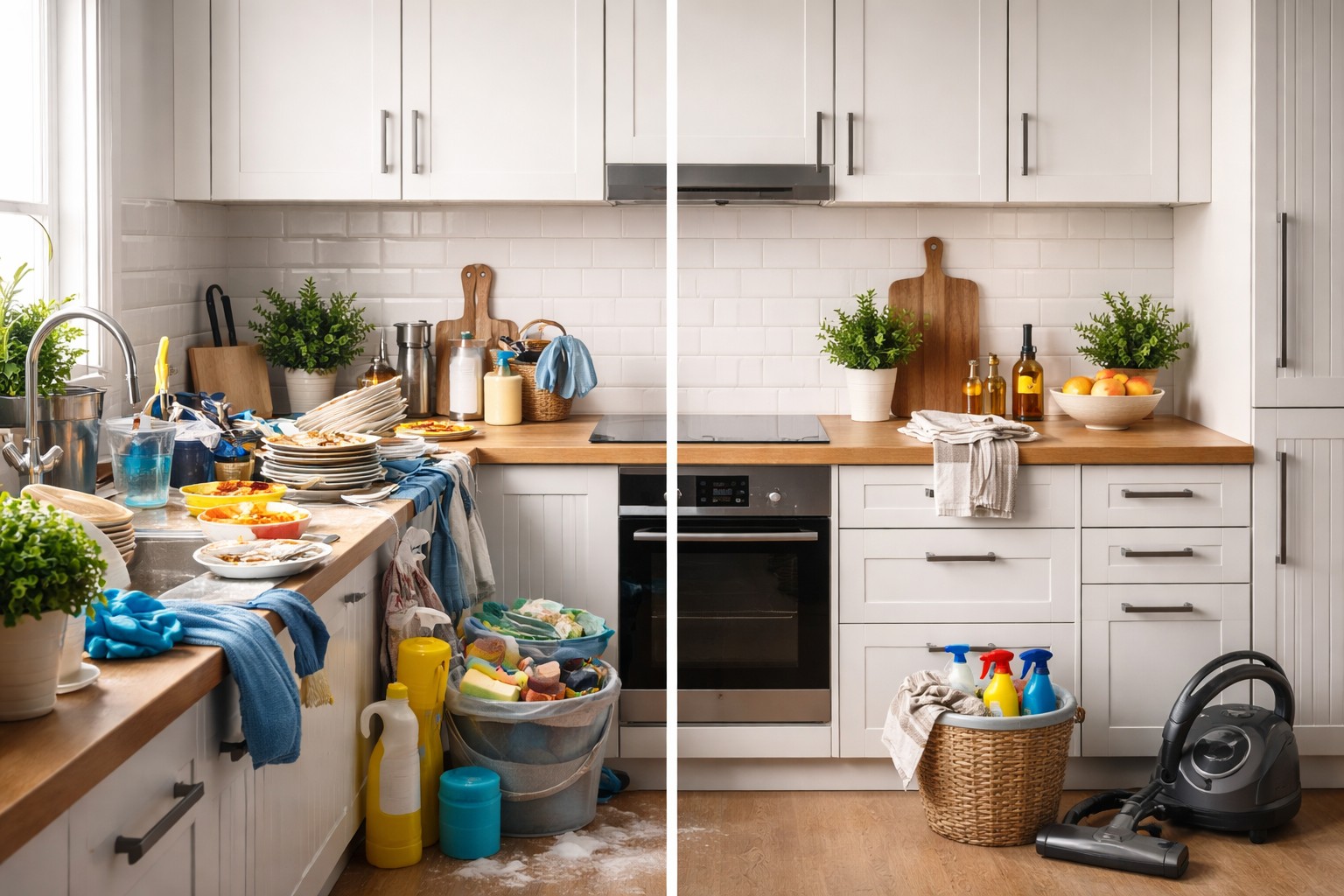
Many of us are accustomed to living in a weekend-to-weekend scenario, where Saturday inevitably becomes the day of reckoning for the clutter that has accumulated during the week. We spend precious hours of rest clearing debris, washing floors and washing mountains of clothes. However, psychologists and space management experts argue that the principle of “clean where there is no litter” outdated. In fact, it is clean where they clean little by little, but regularly.
Illusion of control and stress levels
Our brain perceives clutter as an unfinished task. When things are scattered around, the subconscious constantly scans the space and records “mistakes,” which increases the level of cortisol – stress hormone. Spring cleaning once a week is often perceived as an unbearable burden, causing procrastination and feelings of guilt.
Cleaning “little by little” works differently. Spending just 10-15 minutes a day on one zone will give you an instant boost dopamine from a completed task. This creates a feeling of control over your life and space without exhausting effort.
Combating visual noise
The main problem with a cluttered home is visual noise. Colorful labels, scattered papers, clothes on a chair – all this overloads our sensory system. If you put things away right away or take five minutes in the evening to “extinguish hot spots” (places where clutter accumulates), your brain stops being overstrained.
Regular micro-actions prevent the effect broken windows: One unwashed cup in the sink attracts other dishes, turning into a mountain by the end of the day. If you remove this cup immediately, the chain is broken and the kitchen remains clean automatically.
Saving weekends
The math is simple: 15 minutes of cleaning per day adds up to less than two hours per week. General cleaning often stretches for 4-5 hours, taking up half of the day off. By distributing the load, you regain your legal right to good rest.
Instead of scrubbing your apartment until it shines once a week, it is enough to maintain a “sanitary minimum.” This allows you to always be ready for the arrival of guests and not feel ashamed about the state of your home.
A system of small steps forms a useful habit, which over time is performed automatically, without requiring willpower. Order in the house becomes not a goal for which you need to sacrifice time, but a natural background for a comfortable life.
About the Author