
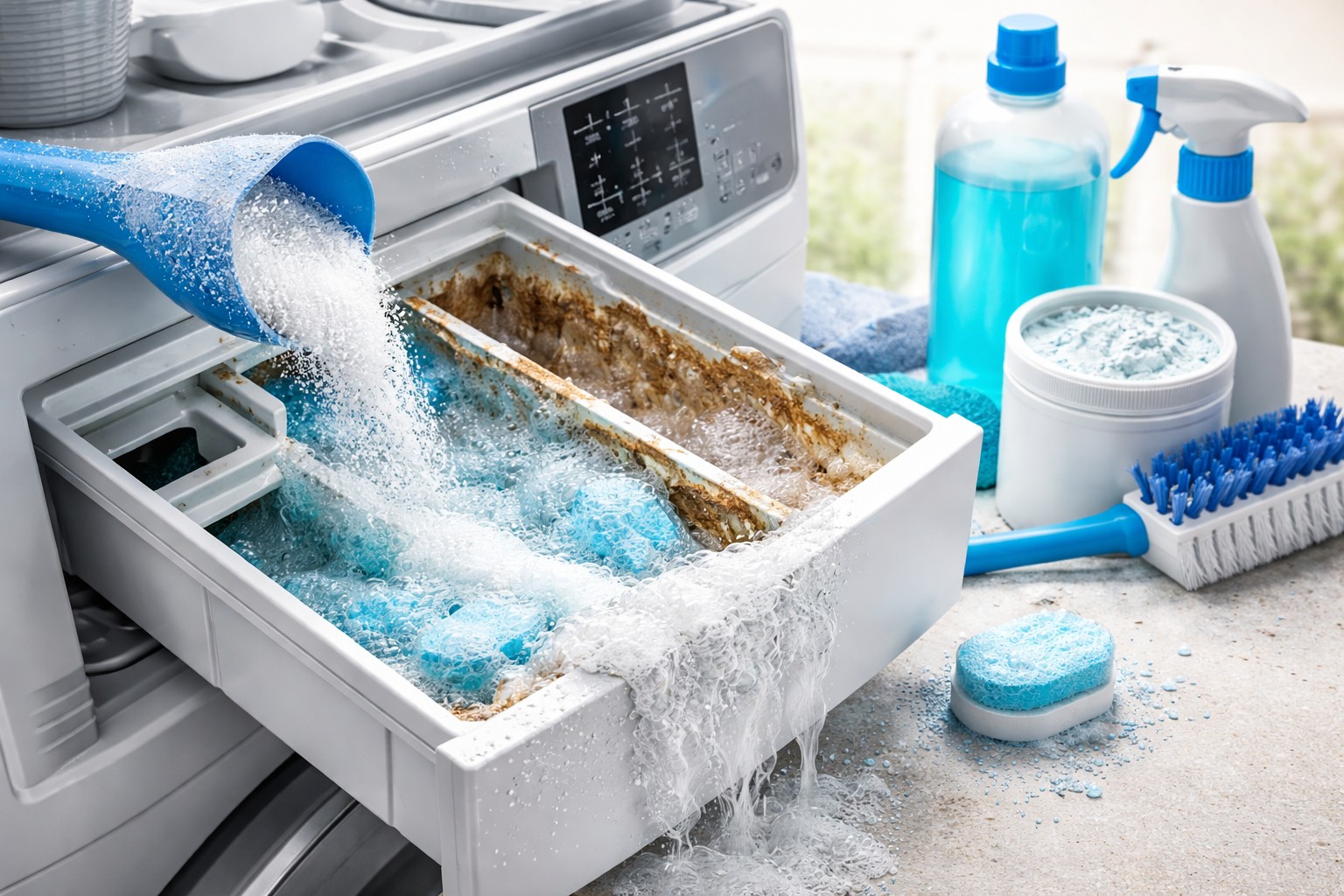
Even when using expensive detergents powder compartment Over time, it becomes covered with dark plaque, mold and hard lime deposits. This occurs due to constant humidity and chemical residues that are not completely washed away. If you ignore the problem, the fungus will quickly spread inside the pipes, and fresh laundry will begin to smell damp.
To restore the tray to its original purity, it is not necessary to buy aggressive specialized chemicals. Simple tools that can be found in almost every kitchen will help you cope with the task.
Citric acid against limestone
This is one of the most effective means for combating solid deposits. Citric acid perfectly dissolves scale and fossilized washing powder. To clean, you must remove the tray from the washing machine.
Hot water (about 70–80 degrees) is poured into a basin and a packet of acid is dissolved in it. The tray is completely immersed in the solution and left for 1–2 hours. After soaking, the softened plaque can be easily removed with the hard side of a sponge or an old toothbrush.
Baking soda and vinegar for disinfection
If the main problem is black mold and bad odor, it is better to use a quench reaction. Sprinkle the wet tray generously baking sodatrying to get into all the recesses and compartments for the rinse aid. Gently pour the regular one on top table vinegar (9%).
An active hiss will begin, which helps to peel off dirt from the plastic. The mixture is left to act for 30–40 minutes. This composition not only cleans the surface, but also kills fungal spores, preventing their reappearance in the near future.
Use of chlorine-containing products
In the most advanced cases, when fungus has eaten into the plastic, it is worth using chlorine-containing gels or regular “Whiteness”. The tray is also soaked in a 1:1 solution of chlorine and water. It is important to remember that chlorine has a strong odor and can be aggressive, so you should work with gloves and in a ventilated area.
Chlorine is guaranteed to destroy any organic matter and bleach yellowed plastic, returning the parts to the appearance of a new spare part. After the procedure, the part must be thoroughly rinsed with running water so that chemical residues do not get on the clothes the next time you wash them.
To maintain cleanliness, it is enough to leave the tray slightly open to dry after each wash and rinse it with warm water once a month. Regular care will help prevent the formation of stubborn stones and maintain hygienic washing.
About the Author