Silicone bakeware is convenient and practical, but over time it develops an unpleasant sticky coatingwhich cannot be washed off with a regular sponge. This layer of fat not only spoils the appearance, but can also affect the taste of the prepared dishes. There is a proven method that will help restore cleanliness to products without the use of aggressive store-bought chemicals.
Why regular washing doesn’t help
The structure of silicone is porous, therefore fat and oil penetrate deep into the material when heated. Regular dish soap only removes dirt from the surface, leaving behind a stubborn film. Over time, this layer polymerizes, turning into a persistent carbon deposit that makes the molds cloudy and unpleasant to the touch. To get rid of the problem, you need a product that can break down the fat inside the pores.
Effective soaking with soda
To remove fresh plaque, soaking in a hot solution is excellent. This method is safe for the material and does not deform the product. You will need:
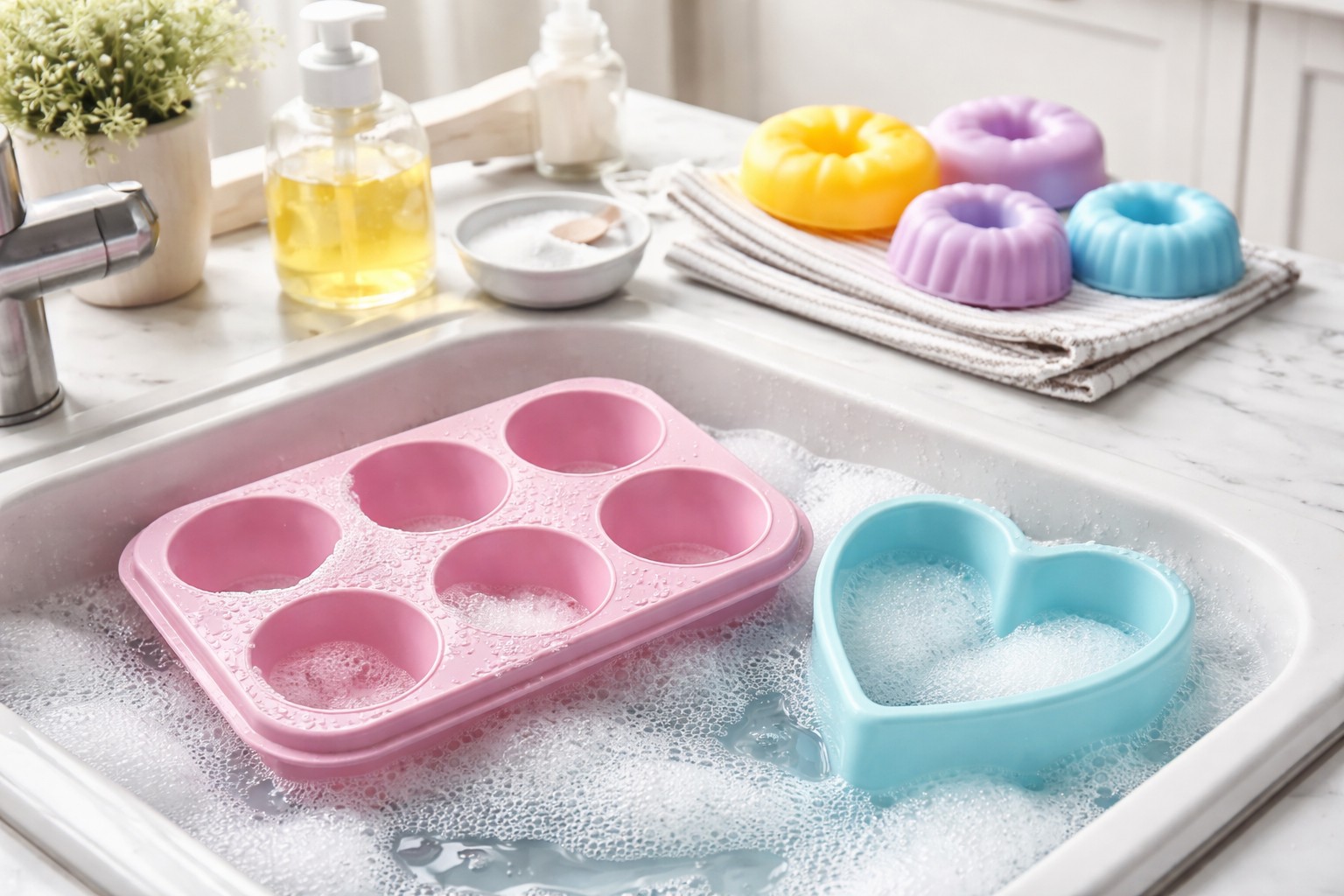
Dissolve two tablespoons of baking soda and a spoonful of detergent in hot water. Immerse the molds completely in the solution and leave for 20-30 minutes. The alkaline environment of the soda will react with the fat and soften it. After soaking, simply wipe the products with a soft sponge and rinse thoroughly with running water.
Boiling method for old carbon deposits
If the molds are covered in old brown stains, simply soaking may not be enough. In this case it will help digestion. Mix water with soda ash or baking soda (at the rate of 3 tablespoons per liter of water) and add a little liquid soap.
Place the molds in a saucepan with the solution, bring to a boil and simmer over low heat for about 10 minutes. After the water has cooled, the carbon deposits will come off easily with light friction. This method allows you to remove even the most stubborn stains from grooves and grooved patterns.
What you should absolutely not do
In order not to spoil the silicone, it is important to avoid mechanical damage. Never use:
-
Hard metal scourers
-
Abrasive cleaning powders
-
Knives or sharp objects for scraping off carbon deposits
Scratches on the surface of the silicone cause the baked goods to burn, and it becomes even more difficult to wash the mold.
Proper care involves washing the molds immediately after cooling, so that the fat does not have time to absorb deeply into the structure of the material. Regular cleaning with mild detergents will preserve the non-stick properties and aesthetic appearance of your kitchen utensils for many years.
About the Author