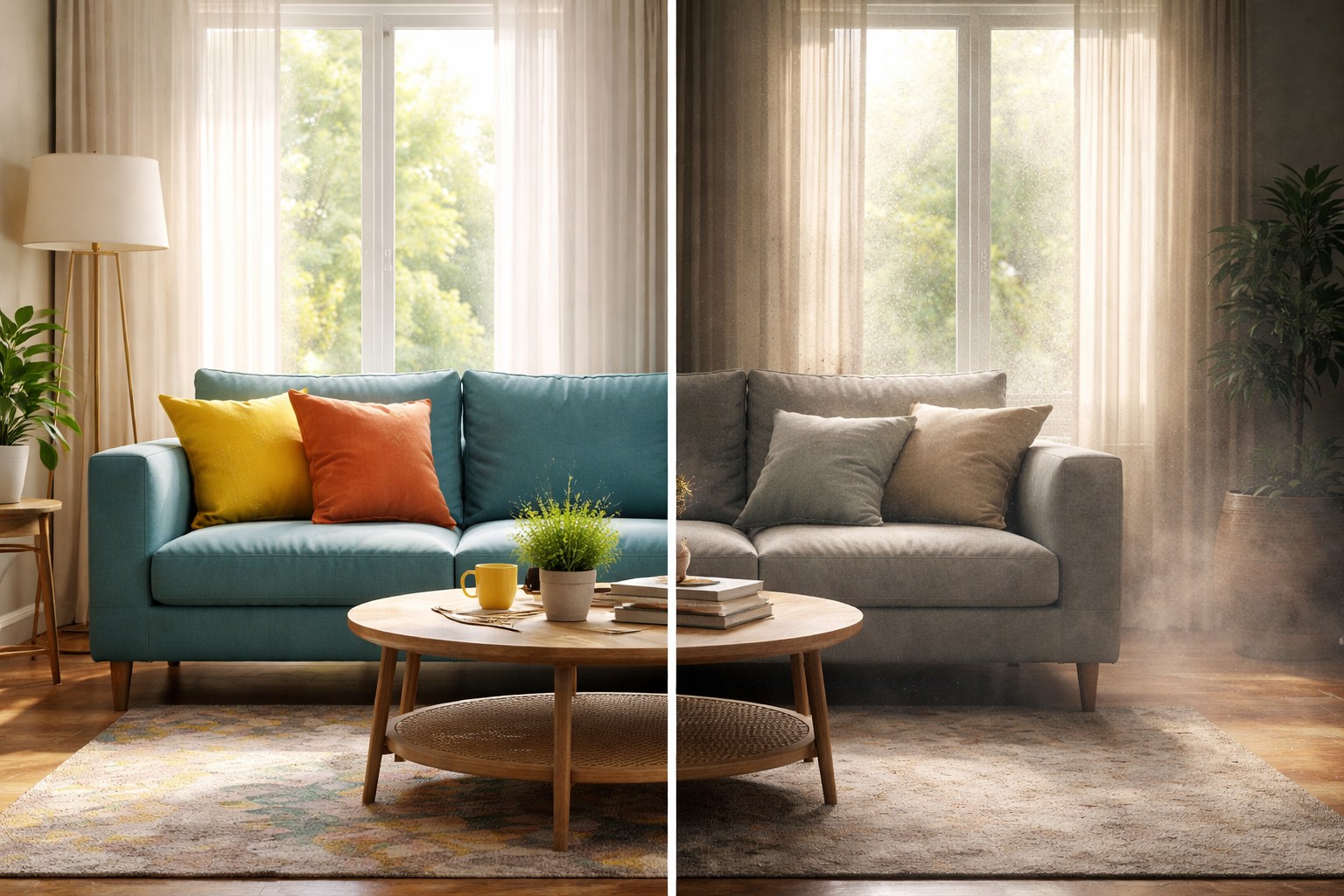
Over time, even the most expensive interior items lose their original luster. Upholstery becomes dull and wood surfaces change color. Many people believe that this is a natural aging process, but in fact, the destruction of pigment is caused by very specific external factors. Understanding the physics of this process will help maintain comfort in your home for many years.
Effect of ultraviolet
The main enemy of saturated color is ultraviolet radiation. It operates unnoticed, but constantly. The sun’s rays penetrating through the window glass trigger a process called photodegradation. When exposed to photons of light, chemical bonds in fabric dyes or paint coatings are destroyed.
It is important to understand that this process does not require direct sunlight. Diffused daylight also has destructive power, it just acts more slowly. Natural fabrics such as cotton, linen and silk, as well as dark types of wood, which can not only lighten, but also acquire a yellowish tint, are especially sensitive to ultraviolet radiation.
Thermal impact
The second most important factor is temperature. If the furniture is too close to radiators, fireplaces or heaters, the fading process will accelerate. Heat causes fabric and wood fibers to dry out.
When a material loses its natural moisture, it becomes more vulnerable to light. The fibers become brittle and the surface texture changes, causing light to be reflected differently and making the object appear paler. For wooden furniture, constant temperature changes are fraught not only with loss of color, but also with cracking of the varnish coating.
Artificial lighting
Few people think about it, but home lamps also contribute to color loss. Although artificial light weaker than the sun, some of its types emit in a spectrum that promotes burnout.
-
Halogen lamps emit significant amounts of heat and ultraviolet radiation.
-
Fluorescent lamps also have peaks in the UV range.
-
Incandescent lamps heat surfaces, increasing the thermal effect.
The safest option for preserving the interior is considered to be modern light-emitting diode lamps (LED)since their spectrum practically does not contain destructive ultraviolet radiation, and heating is minimal.
Chemical reaction and pollution
Sometimes furniture becomes dull not because of the light, but because of improper care. Harsh cleaning products containing bleach or alcohol may react with upholstery dyes. Even ordinary dust, settling deep in the fabric pile, acts as an abrasive, damaging the structure of the fibers and making the color visually grayer and faded.
Protecting your favorite things requires an integrated approach, including lighting control and proper selection of cleaning products. Thick curtains, the use of protective sprays with UV filters and the correct location of sofas and cabinets relative to heat sources can significantly extend the life of the interior. Maintaining the saturation of shades directly depends on how carefully you control the microclimate in the room.
About the Author