A familiar situation: you have just wiped the table, but instead of cleanliness you feel a sharp, sour aroma that instantly spoils your appetite. Many housewives blame this on poor-quality detergent or the material of the product itself, but the real reason lies in the invisible processes occurring inside the fabric fibers. Understanding this mechanism will help you get rid of the unpleasant odor in the kitchen forever.
The main culprit is a bacterial colony
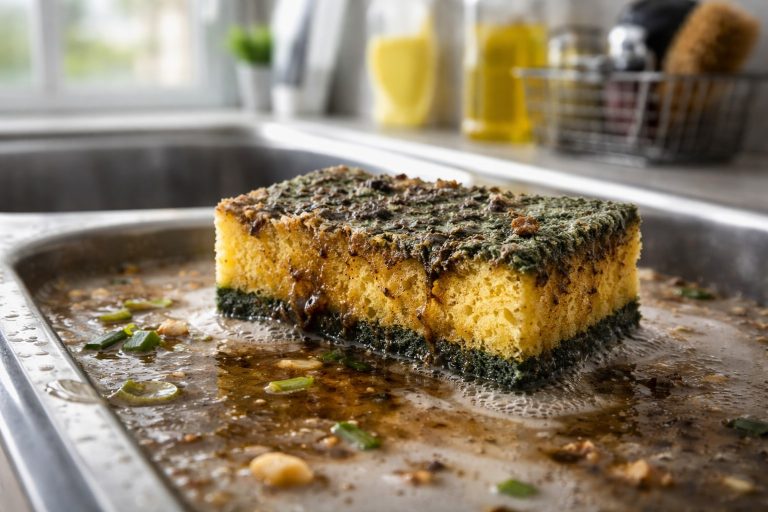
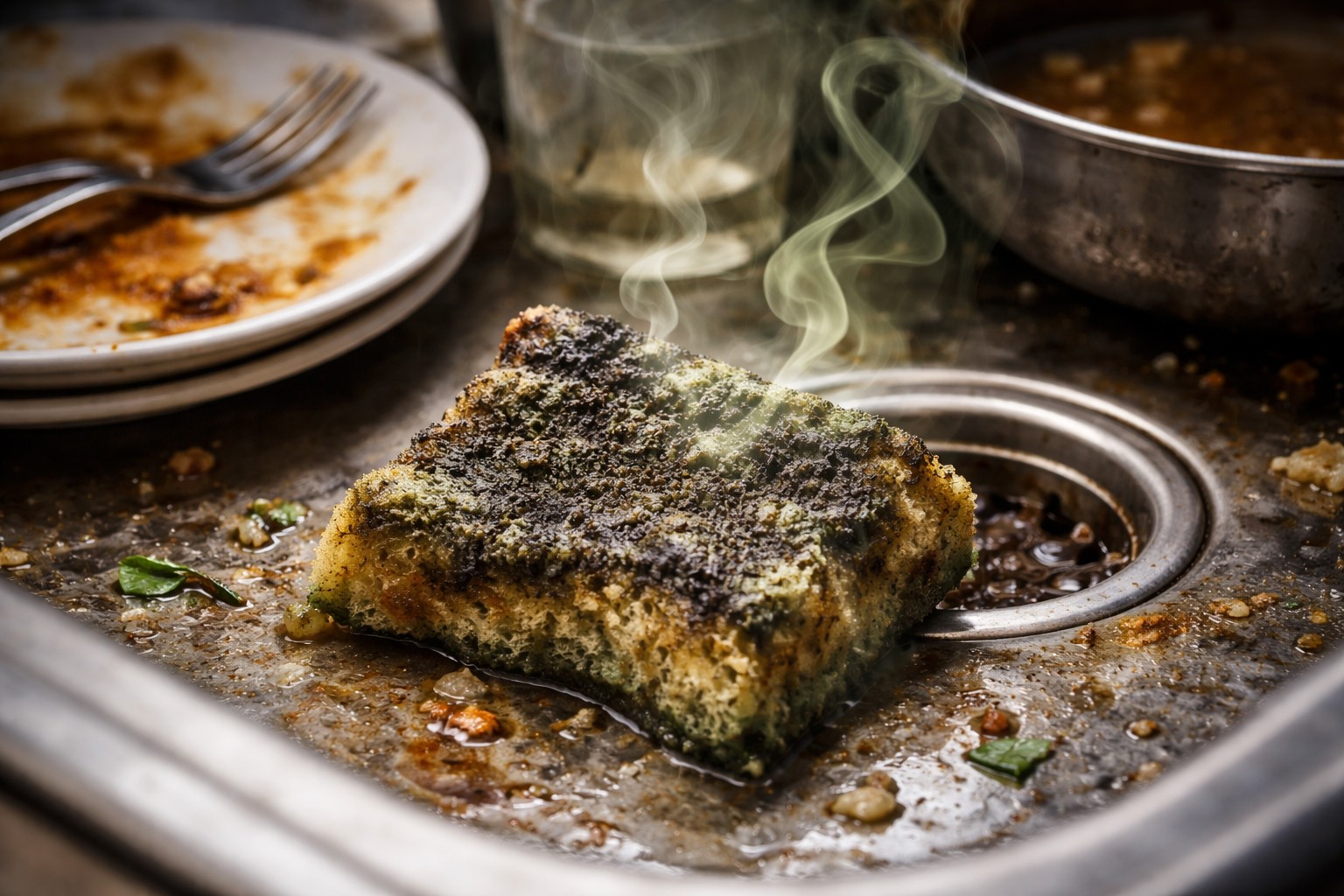
The specific smell of “wet dog” or mold is caused not by dirt or grease itself, but by the waste products of microorganisms. The main causative agent of stench is most often bacteria Moraxella osloensis. It surrounds us everywhere, but it is a damp kitchen sponge or rag that becomes the ideal incubator for it.
As soon as you leave a damp cloth in a warm room, bacteria begin to actively multiply. For rapid growth, they need three conditions that are always present in the kitchen:
-
Moisture – water that has not had time to evaporate from the fabric.
-
Nutrient medium – microscopic particles of food, fat and skin stuck in the fibers.
-
Warm – room temperature at the sink or stove.
Errors in drying and storage
Even if you rinse the cloth thoroughly after use, this is often not enough. The key problem is drying speed. If the fabric remains wet for more than a few hours, the bacterial colony has time to grow to a size where the smell becomes noticeable to the human nose.
The most common mistake is leaving the product crumpled on the edge of the sink or on the faucet. Moisture is retained in the folds of fabric for a very long time, creating a greenhouse effect. In addition, thick multi-layer napkins, which absorb water so well, dry much more slowly than their thin counterparts, which makes them more vulnerable to odor.
The problem of modern materials
Paradoxical, but popular and effective microfiber may smell stronger than regular cotton. The microfiber structure resembles microscopic hooks that brilliantly capture dirt and grease. However, it is extremely difficult to wash out these organic residues from the depths of synthetic fibers with ordinary water.
As a result, a “reserve” of food for bacteria accumulates inside the fabric, which is not washed out when hand washed. Over time, fibers form biofilm – a protective layer of the colony that makes bacteria resistant to light detergents and low temperatures.
How to prevent odor
It is difficult to combat an odor that has already appeared, as this is a signal that the fabric is deeply affected by bacteria. It is much more effective to reconsider the approach to caring for kitchen textiles.
To extend the life of rags and maintain freshness, you should follow several rules:
-
Always straighten the fabric after use and hang it to dry in a ventilated area rather than laying it on a flat surface.
-
Wash kitchen towels and rags at a temperature no lower than 60 degreessince warm water at 30-40 degrees only promotes the growth of bacteria.
-
Use oxygen bleaches or soaking in a vinegar solution, which breaks down the cell walls of bacteria and removes the limescale that holds dirt.
It is almost impossible to completely sterilize a dishcloth at home, so experts recommend changing them regularly, without waiting until the fabric is completely worn out. Timely replacement of the product remains the most reliable way to maintain hygiene.
About the Author