Anyone who has faced a lack of space in the kitchen knows that storing utensils in a “matryoshka” pattern is the most logical solution. However, stacking pots, pans and plates on top of each other without protection is a sure way to damage expensive utensils. The friction of the bottom of the upper container against the coating of the lower one inevitably leads to scratchesenamel chipping and damage non-stick layer. There are several proven materials that will help organize safe storage without extra costs.
Disposable paper plates
This is one of the most affordable and convenient options for separating kitchen utensils. Paper plates Ideal diameter for most frying pans and saucepans. They are dense enough to prevent direct metal-to-metal or ceramic contact, but they are also thin and do not take up unnecessary space in the cabinet. The edges of a paper plate are often raised slightly, which provides additional protection for the sides of the dish, not just the bottom.
Felt and felt dividers
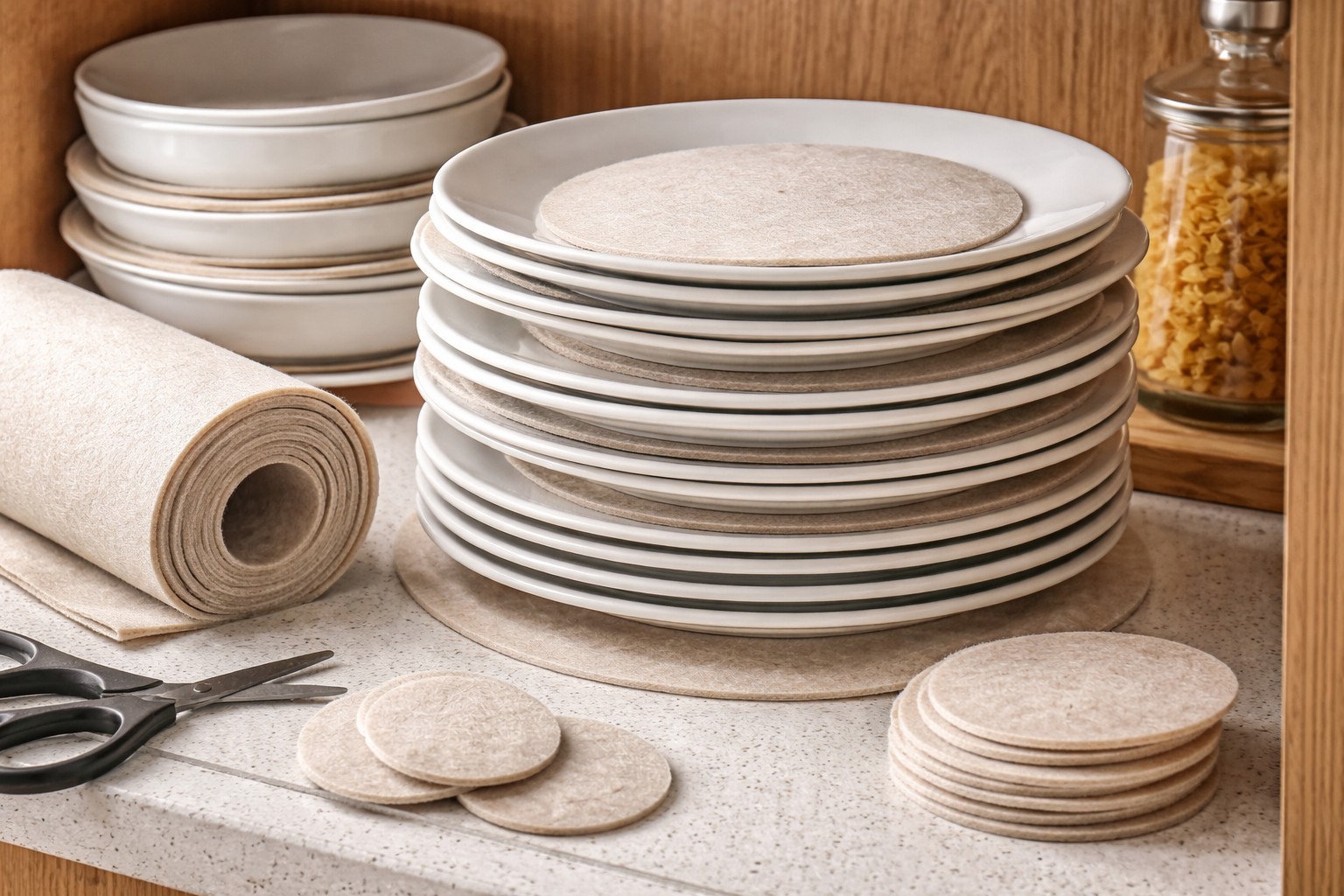
If you want a more aesthetic and durable solution, you should pay attention to felt. Stores sell ready-made sets of separators in the shape of stars or flowers that fit comfortably into any container. The fabric is soft but dense, it perfectly absorbs the weight of heavy cast iron pans. You can cut this liner yourself from a sheet handmade felt or an old thick coat, adjusting the size to a specific set.
Paper coffee filters
Great for storing smaller, more fragile items such as dessert plates, saucers, or salad bowls. coffee filters. They have a corrugated structure that creates an air gap and dampens vibrations when opening drawers. Filters cost pennies, but protect effectively porcelain and glaze against microcracks, which over time can lead to darkening of the dishes. Their bowl shape allows you to protect not only the bottom, but also the sides of the embedded items.
Textile napkins and towels
In every home there are kitchen towels or fabric napkins that have already lost their formal appearance, but have retained their functionality. They can be used to sandwich between large pans or baking dishes. The main advantage of the fabric is the ability to wrap the entire item. This is especially true for glass lids or molds made of heat resistant glasswhich can break if they hit each other in a cramped box.
Bubble film
Leftover packaging material is a great way to seasonally store utensils that you rarely use. Air bubble film Provides maximum cushioning. Cut out circles of the required diameter and line the festive service with them. This will prevent the plates from sliding around in the stack and will protect the most fragile edges from accidental impacts when rearranging. However, it is worth remembering that the film does not breathe, so before use, the dishes may have to be rinsed to remove dust or plastic odors.
Proper storage organization does not require the purchase of expensive organizers; it is enough to use simple materials to create a protective layer that will preserve the integrity of the coating and the appearance of your utensils for a long time.
About the Author