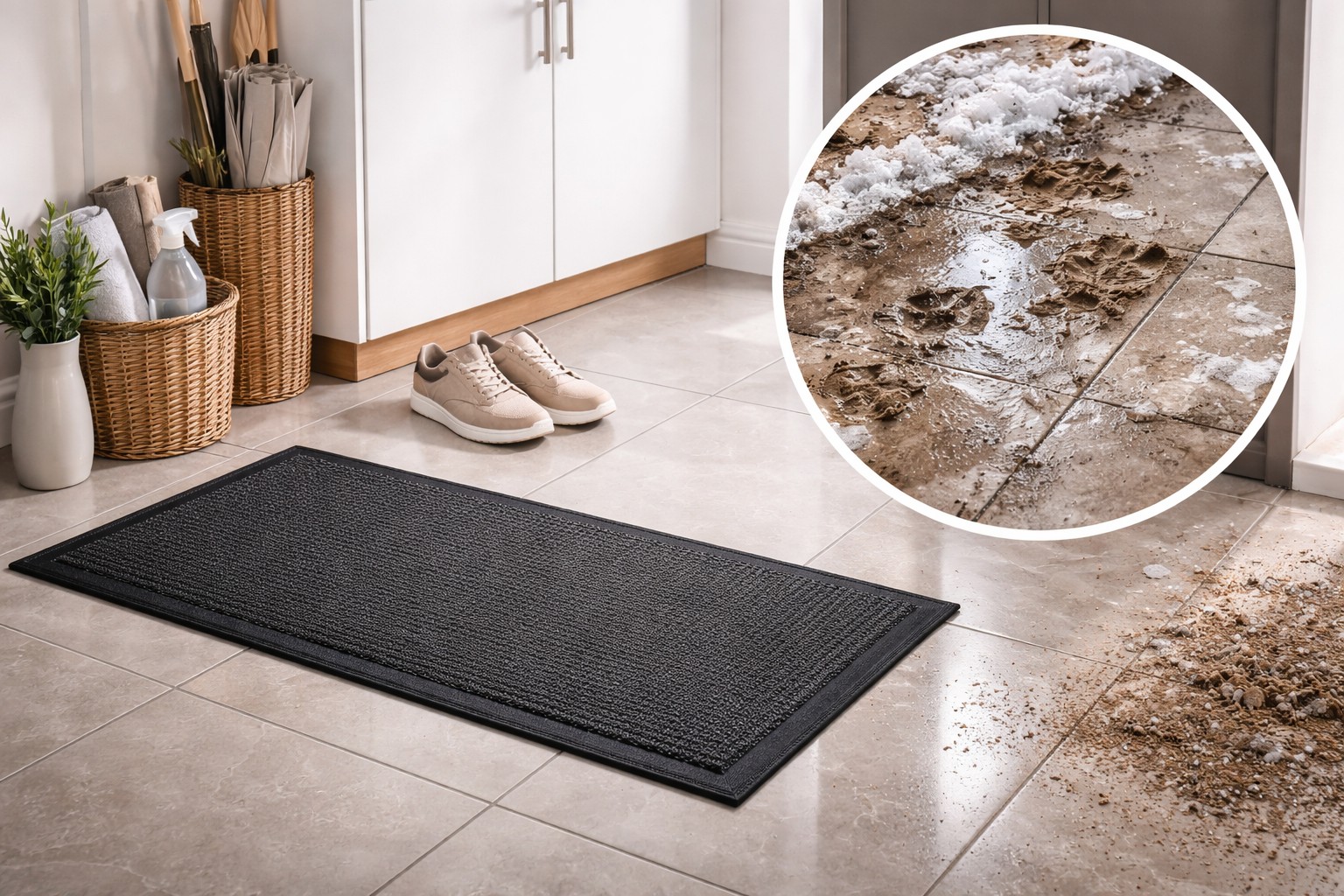
With the onset of the off-season and winter, the area near the front door becomes the most difficult area to clean. Snow porridge, sand and aggressive street chemicals instantly turn a clean floor into a dirty mess. Ordinary water often fails to cope with this task, leaving untidy marks after drying. white stains. In order for cleaning to be effective and the coating not to deteriorate ahead of time, it is necessary to change the approach to the composition of the cleaning solution.
Why regular water doesn’t work
The main enemy of cleanliness in the hallway is anti-ice reagents. Most are salt or alkaline based. When you wash the floor with just warm water, you do not neutralize the chemical, but only spread it in a thin layer over the surface. After the moisture evaporates, the salt crystallizes, appearing as a whitish coating. In addition, abrasive sand particles will scratch laminate or tile if the cloth is not wet enough or is not rinsed well.
Home neutralizer
The easiest and most affordable way to remove salt deposits is to use an acidic environment. A regular one is perfect for this. table vinegar. It reacts with the alkaline components of street dirt and completely dissolves them.
Recipe for mortar for tiles and linoleum:
-
For 5 liters of warm water, add 3-4 tablespoons of 9% vinegar.
-
Rinse the floor thoroughly, paying attention to the seams where the most dirt accumulates.
-
If necessary, wipe the surface again with clean water to remove the smell, although it will quickly dissipate on its own.
If you have laminate or parquetyou need to be careful with vinegar: it is better to reduce the concentration by half and make sure that the rag is wrung out well – excess moisture is detrimental to joints.
Professional approach
If traditional methods do not inspire confidence, you should pay attention to specialized chemistry. Products do an excellent job of post-construction cleaningdesigned for removing cement and salt stains. Car shampoos for interiors are also highly effective – they are designed to combat complex stains and reagents, while being safe for delicate surfaces.
Washing technique matters
Even the best solution will not help if you use dirty equipment. For the area at the entrance, it is better to have a separate mop with a nozzle made of microfiber. This material, unlike cotton, literally pulls dirt into the fibers rather than spreading it around the edges.
It is important to follow the “two buckets” rule or simply rinse the nozzle very often under running water. First you collect the main sand and slurry, then rinse the rag and go over it clean with your chosen product. The final stage is wiping it dry, which adds shine and prevents slipping.
Cleanliness at the entrance depends not so much on the frequency of cleaning, but on the competent neutralization of street reagents with the right compounds. Regular maintenance using suitable products will preserve the presentable appearance of the floor covering for many years.
About the Author