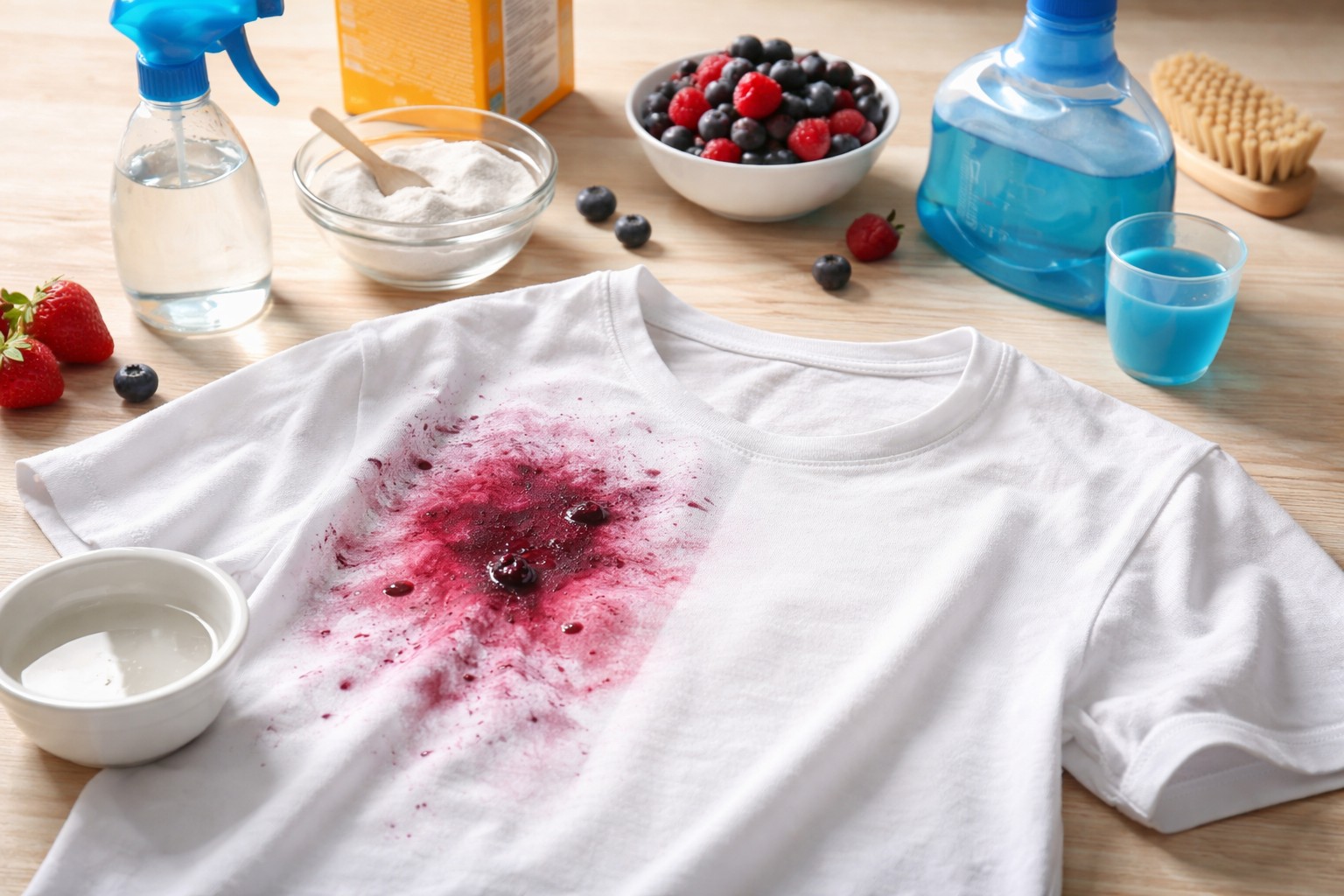
Summer brings not only delicious vitamins, but also complex stains on your favorite things. Berry juice contains persistent natural pigments that are instantly absorbed into the fabric fibers, so the reaction speed plays a decisive role here. You shouldn’t immediately send the item for scrap, because there are several proven ways to save your wardrobe.
Emergency assistance with boiling water
One of the most effective methods for dealing with fresh traces is to use boiling water. This method is ideal for natural fabrics such as cotton or linen, but requires caution. Pull the stained area of fabric over a container (for example, a pan or bowl) and pour a thin stream of hot water over the stain. It is necessary to pour water in a spill so that dye was washed out of the fibers rather than being fixed in them.
Acid against pigment
If boiling water cannot be used due to the delicacy of the fabric, acids will come to the rescue. Ordinary lemon juice or table vinegar perfectly dissolve organic dyes. Mix vinegar with water in a 1:1 ratio or squeeze lemon juice directly onto the dirt. Leave the product to act for 15–20 minutes, after which the item must be thoroughly rinsed in cool water. For old stains you can use a solution citric acid.
Dairy method
An old method that often helps with blueberry or mulberry stains is to use fermented milk products. Kefir, curdled milk or even warm milk can neutralize berry juice. Soak the contaminated area in warmed milk for 30–40 minutes. The enzymes contained in the product will help break down the pigment, after which the clothes should be washed as usual.
Salt for quick reaction
If there are no special tools at hand, ordinary table salt can be an excellent absorbent. Mix salt with a small amount of water to a thick paste and apply to the stain. You need to rub the mixture in carefully, moving from the edges to the center so that the stain does not spread even more. The salt will absorb some of the moisture and dye, making subsequent washing easier.
The correct choice of cleaning method depends on the type of fabric and the time elapsed since contamination, which allows you to effectively remove marks without damaging the material.
About the Author