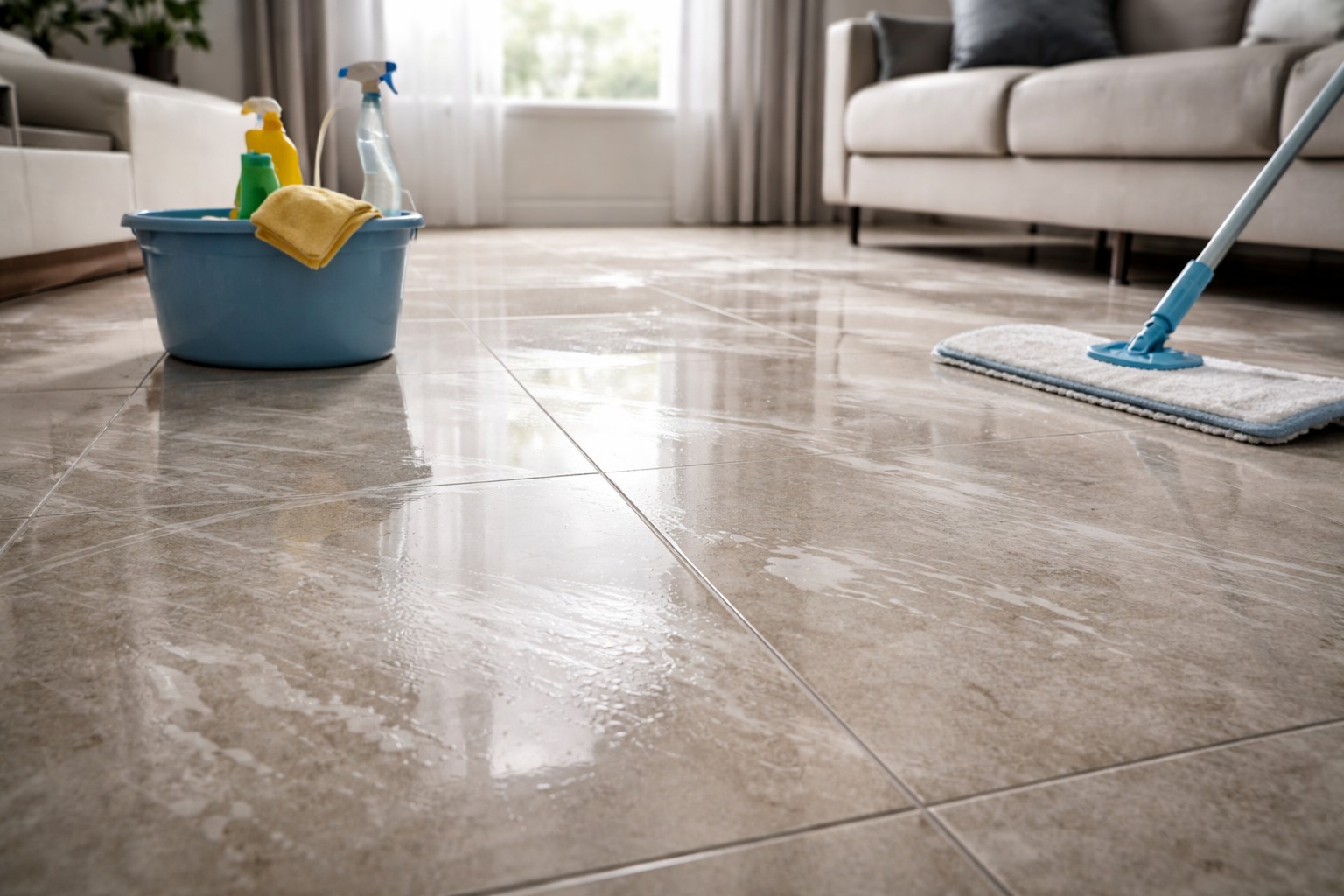
It seems that you did everything right: vacuumed, took an expensive mop and added a fragrant product. But as soon as the surface dries, the ideal picture disappears, giving way to unkempt marks. This is a common problem and most often the reason lies not in the quality of the coatingbut in violation of cleaning technology. To correct the situation, you need to understand the main factors that create visual noise on the floor.
Too much detergent
The most common mistake that almost everyone makes is the “more is better” principle. In fact, excess household chemicals works against cleanliness. When the concentration of gel or liquid in the bucket is too high, the water may not completely dissolve the product. As a result, a thin, invisible to the eye, forms on the floor surface. adhesive film.
This film attracts dust and small particles of dirt literally half an hour after cleaning. Moreover, it is the remains of the soap solution that, when dried, turn into those same whitish stains. For most modern coatings, ordinary water or a minimum dose of a specialized composition that strictly complies with the instructions is sufficient.
Dirty equipment and water
Cleanliness of the instrument is the key to the absence of streaks. Often housewives simply rinse the rag in a bucket, thinking that this is enough. However microfiber tends to accumulate dirt and grease deep inside the fibers. If you don’t rinse the mop head well or use dirty water, you simply spread the dissolved dirt in a thin layer around the room.
The water needs to be changed as often as possible, especially if you are cleaning a large area. As soon as the water in the bucket turns dark, it stops washing and begins to pollute. It is recommended to wash the microfiber head in a washing machine at high temperature after each full cleaning to remove any remaining grease and chemicals.
Incorrect washing technique and temperature
The physics of the process also matters. Floor cleaning hot water is an outdated myth. Hot water causes moisture to evaporate from the surface too quickly, before you can even mop up the dissolved dirt with a rag. Detergent and mineral residues from tap water instantly dry out, forming stains. It is better to use warm or even cool water.
The trajectory of the mop is also important. Chaotic movements back and forth often result in dirt moving from place to place. Cleaning professionals recommend using figure-of-eight movements or S-shaped maneuvers to gradually move contaminants toward the exit without having to go through the washed area twice.
Coating features
Different materials react to moisture differently. For example, glossy porcelain tiles and laminate require thorough wiping with a dry cloth immediately after wet cleaning. If you leave them to dry naturally, drops of water saturated with hardness salts will inevitably leave marks. For laminate flooring, it is critical to wring the cloth almost dry, since excess moisture not only creates streaks, but also spoils the joints of the panels.
Maintaining the correct dosage of chemicals, monitoring the purity of the water and final polishing with a dry cloth allows you to achieve an ideal result without unnecessary nerves.
About the Author