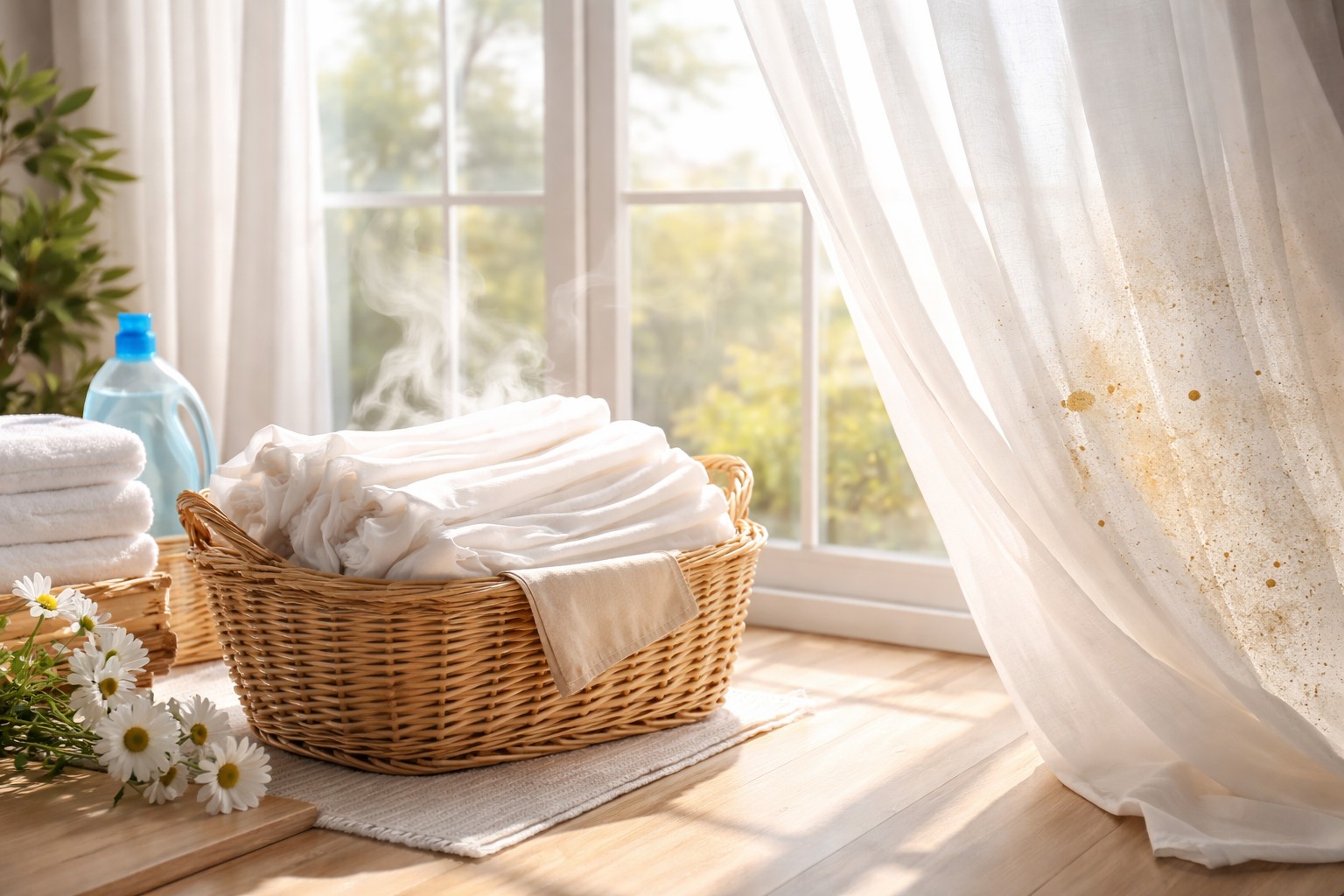
Many people are accustomed to washing curtains only during general cleaning, once or twice a year. However visual cleanliness textiles are often deceptive. Curtains act as a giant filter that traps pollution entering the house from the street and rising from the floor around the clock. Even if there are no visible stains on the fabric, it can hide kilograms of dust and microparticles.
The main reason for washing regularly is accumulation of allergens. The fabric attracts plant pollen, epidermal particles, pet hair and dust mites. These microscopic pests thrive in the folds of thick curtains and tulle. Over time, any movement of the curtains raises a cloud of invisible dust into the air, which all inhabitants of the apartment are forced to breathe.
Textiles on windows work like a powerful scent sponge. Curtains instantly absorb the aromas of cooking food, tobacco smoke and exhaust fumes from the street. Even if you regularly air the room, stale curtains can create a persistent unpleasant odor that cannot be eliminated by air fresheners. Clean fabric brings back the feeling of real freshness to the room.
Another important aspect concerns safety of the material. Dust settling between the fibers acts as an abrasive. Every time you open and close the curtains, microparticles of dirt rub the threads, making the fabric more fragile and dull. Regular care helps maintain the structure of the fabric, prevents graying and prolongs the life of your favorite curtains.
Timely washing also affects lighting quality. A thin layer of gray dust on tulle can block up to 30% of sunlight, making the room gloomy and uncomfortable. After washing, many are surprised at how much brighter and more spacious the room becomes. Keeping your window textiles clean is an easy way to improve your home’s climate and aesthetics without breaking the bank.
About the Author