Many people are accustomed to thinking that abundantly wetting the floor guarantees perfect cleanliness. It seems to us that a large amount of water dissolves dirt better and washes away dust. However, cleaning professionals and flooring manufacturers say the opposite. Excess moisture not only reduces the quality of cleaning, but can also cause premature repairs.
Impact on the material structure
The most obvious reason to avoid using a wet rag is safety of the coating. Most modern materials, such as laminate, parquet boards and even some types of linoleum, are extremely sensitive to moisture. Water entering joints and microcrackspenetrates into deep layers of material.
This leads to irreversible consequences:
-
Wood and MDF begin to absorb liquid and swell.
-
The edges of the planks rise, forming irregularities.
-
The locking joints are destroyed and the floor begins to creak.
Even moisture-resistant laminate is designed only for short-term contact with liquid, and not for regular “water procedures”.
An ideal environment for bacteria
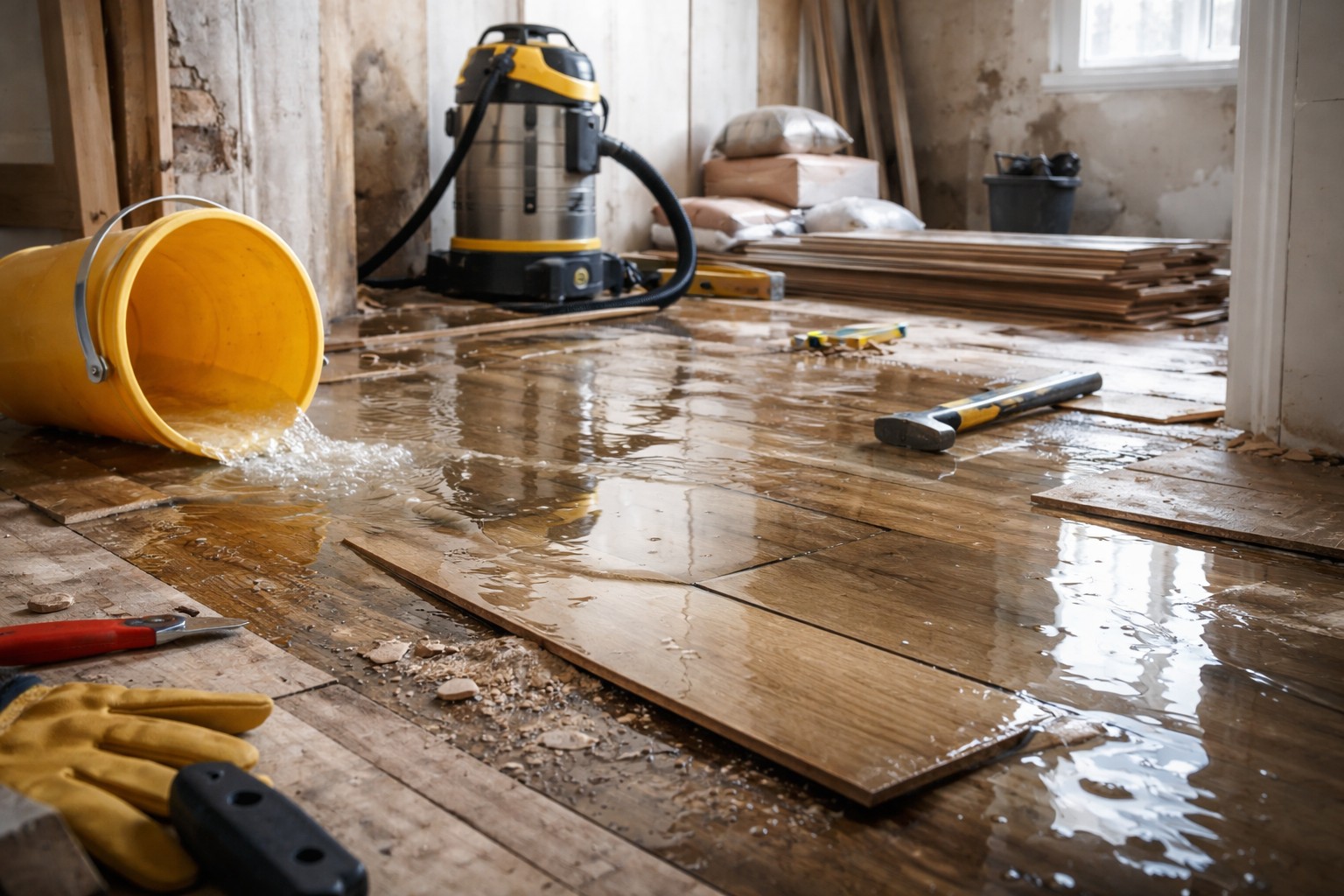
When we wash the floor with a mop that is too wet, water often flows under the baseboards and into the cracks between the boards. There is no air circulation in these hidden cavities, so the moisture does not dry out for hours and sometimes days. This creates ideal microclimate for mold.
Fungus can grow under the flooring without being seen. Over time, an unpleasant musty smell appears, which cannot be removed by airing. In addition, mold spores become airborne, which negatively affects residents’ healthcausing allergic reactions.
Stains instead of shine
Paradoxically, the more water you use, the dirtier the floor may look when dry. With excessive wetting, dissolved dirt and residues of household chemicals remain on the surface. When water evaporates, these particles form cloudy whitish stains and film.
Washing with a well-wrung out cloth (the “fog wetness” method) allows you to collect dirt rather than smear it. The fabric, when slightly damp, acts as a dust magnet due to static and capillary action, leaving the surface perfectly clean and shining.
Proper floor care involves using a spray bottle or squeezing mop that dispenses moisture. This approach extends the life of the repair by years and preserves the original appearance of the interior.
About the Author