The main rule in the fight against such pollution is reaction speed. The sooner you start removing the stain, the higher the chances of saving the pile. Blood contains protein, which when dried tightly adheres to the fibers of the tissue, so you need to act immediately.
The most common mistake that ruins carpets forever is using hot water. Remember: only ice water. The high temperature cooks the protein, and the stain is “sealed” in the structure of the material, after which it becomes almost impossible to remove.
First aid for a fresh stain
If trouble has just happened, take paper towel or a clean white rag. Gently blot the stain, moving from the edges to the center so as not to smear the stain further. Never rub the pile, as this will drive the blood deeper into the base of the carpet.
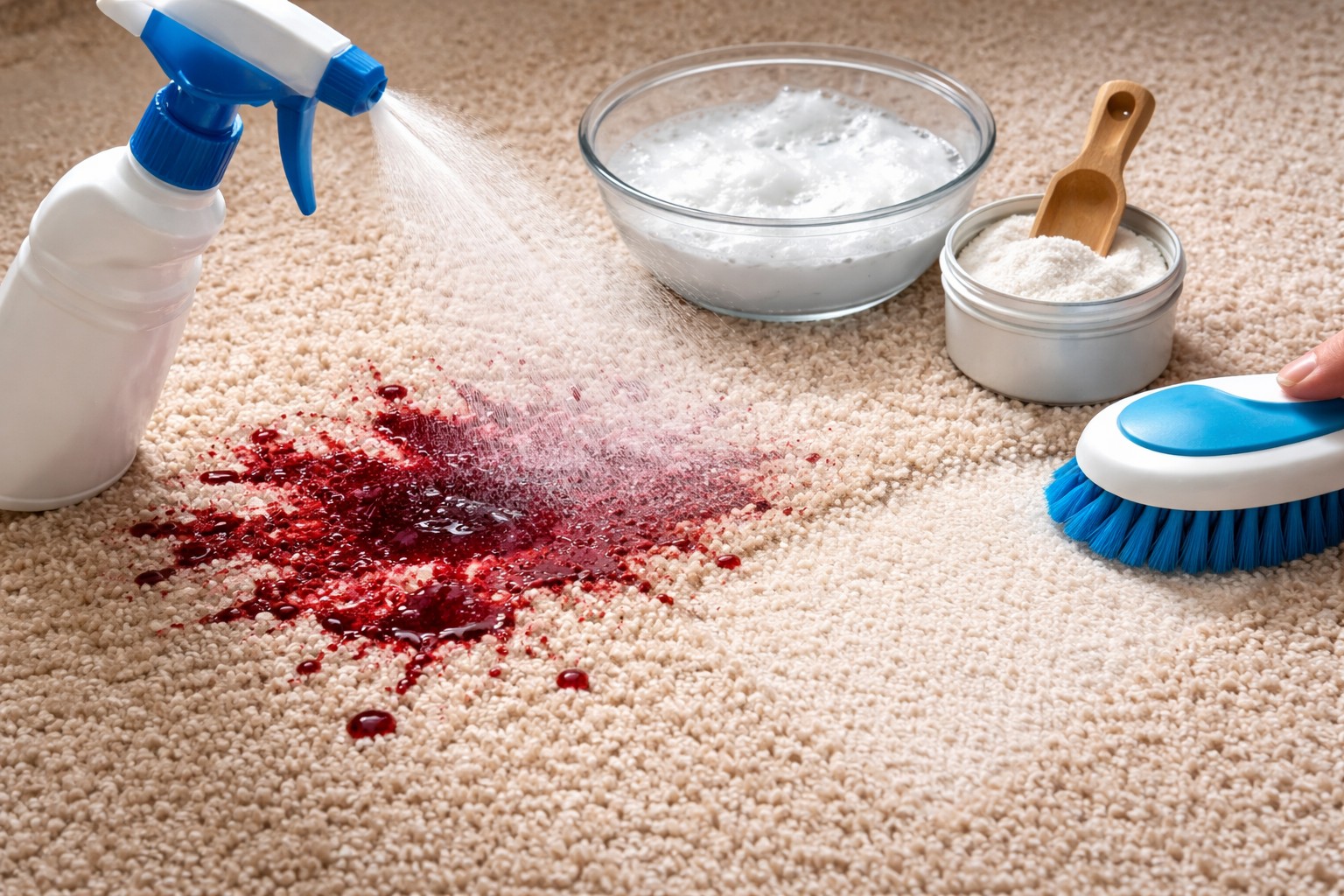
Then fill the spray bottle ice water and spray the affected area generously. Let the water soften the stain for a couple of minutes and then blot again with a dry cloth. Repeat the procedure until the marks become barely noticeable.
Salt method for thick carpets
Regular table salt is excellent at drawing out moisture and pigment. Mix salt with a little cold water until thick paste. Apply the mixture to the stain and leave for 10-15 minutes. The salt will absorb any remaining blood. After this, carefully peel off the dried crust and vacuum the area.
Ammonia solution for stubborn stains
For more complex cases, a solution of ammonia is suitable. Divorce one tablespoon of ammonia in half a glass of cold water. Using a cotton pad or sponge, apply the solution to the pile.
Be careful with colored carpets: ammonia can affect the coloration. Be sure to test the product on an inconspicuous corner of the coating before applying to the main stain.
Hydrogen peroxide
This remedy is effective, but is mainly suitable for light carpetsas it has a whitening effect. Pour some 3% peroxide directly onto the stain. You will see a reaction – the liquid will begin to hiss and foam. This means that active oxygen breaks down protein compounds. After a minute, blot the area with a clean, damp cloth.
Dishwashing liquid
A mild dish gel may also help. Dissolve a teaspoon of the product in a glass of cold water. Whisk dense foam and apply just it to the carpet, being careful not to wet the base too much. The foam will gently push dirt out of the fibers.
After removing a stain using either method, be sure to wipe the area with a clean, damp cloth to remove any remaining cleaning products. Then cover the wet area with a stack of paper napkins and weigh it down with something heavy, such as a book. This will help draw out residual moisture from deep within the pile and prevent streaks.
Timely cleaning and the correct selection of products guarantee the cleanliness of your flooring for many years.
About the Author