It seems counterintuitive to wash equipment that is itself designed to be washed, but it is critical error most owners. An ideal environment is created inside the device for the growth of bacteria and the accumulation of dangerous deposits. If you ignore this process, your equipment will not only fail, but will also begin to harm the health of your family.
The humid and warm environment inside the chamber is a real paradise for mold and fungus. They most often settle in rubber door seals and hard-to-reach cracks. Visually, you may not notice black spots, but a musty smell will be the first signal that your dishes are not being washed with clean water, but with fungal spores.
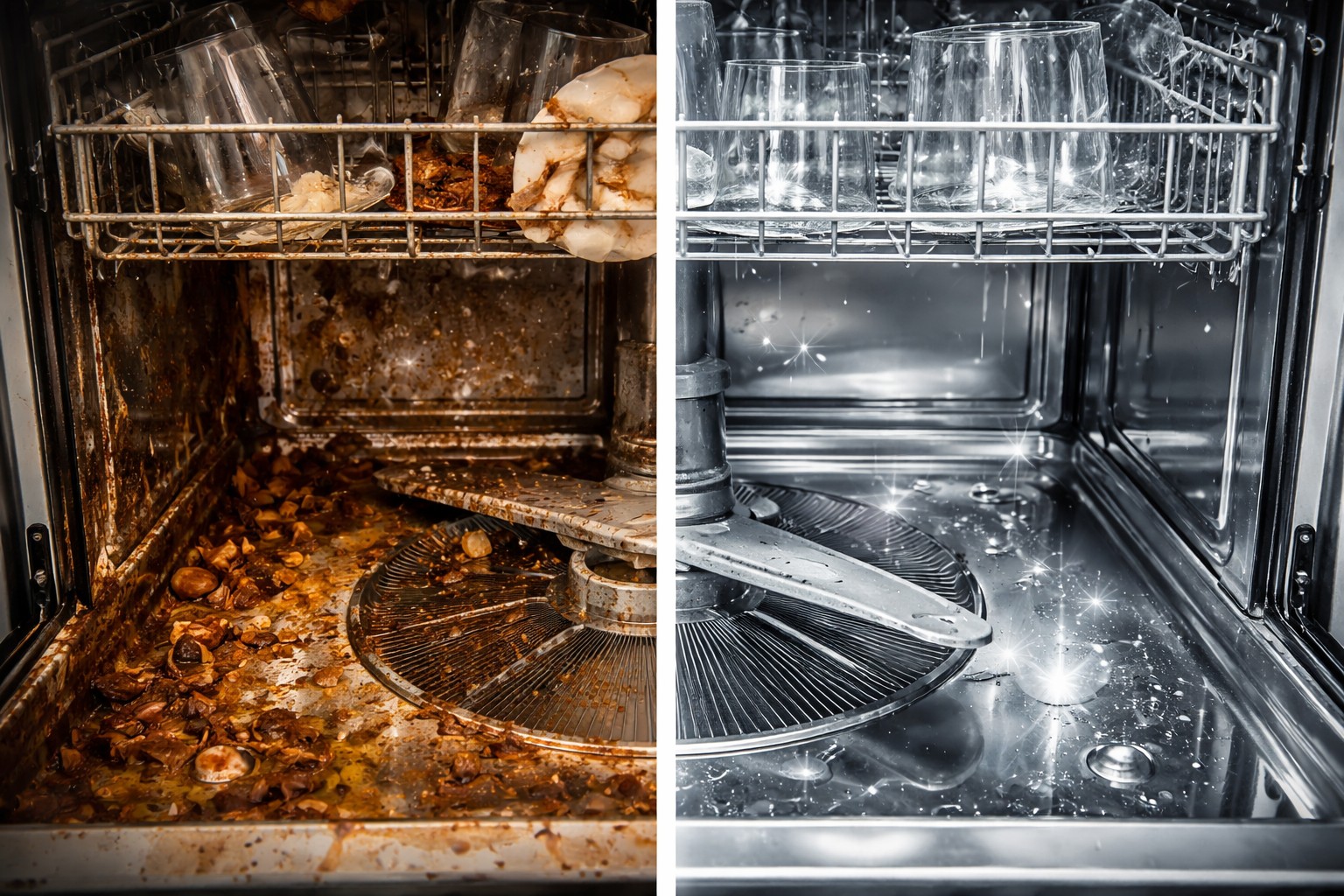
Leftover food and fat are not always completely washed down the drain. Small particles settle in the filter and drainage hole, creating a dense plug. Over time, this leads to poor water circulation and a cloudy residue left on plates and glasses. A dirty filter turns the wash cycle into simply rinsing dishes in dirty water.
Hard water damages internal mechanisms in the form of scale. Limescale clogs the sprinkler nozzles, causing the water pressure to drop. The machine starts to work longer, spends more electricity, but the result only gets worse. Regular cleaning with special products or citric acid dissolves these deposits and returns the equipment to factory efficiency.
Prevention is much cheaper than repairing or purchasing new equipment. Cleaning once a month is enough drain filterwipe the seals and run a self-cleaning cycle with a professional product. This simple step extends the life of the device by several years and ensures that your dishes are hygienically clean.
About the Author