Everyone who has ever cooked dinner has encountered this annoying situation: if you get distracted for just a minute, the bottom of your favorite dishes becomes covered with a black crust. Do not rush to use a hard metal sponge or throw away kitchen utensils. There are proven methodswhich will help restore shine to even the most hopeless case, using what you already have in your kitchen.
The power of boiling and detergent
The easiest and safest method for most coatings is temperature treatment. If food is stuck tightly, do not try to scrape it dry, as you will only damage the surface.
Pour enough water into the pan to cover the burnt areas and add a few drops dishwashing gel. Place the container on the fire and bring to a boil. Let the water boil for 10-15 minutes. During this time, hot soapy water will soften the carbon deposits, and it will easily come off using a regular soft sponge.
Baking soda and vinegar against stubborn carbon deposits
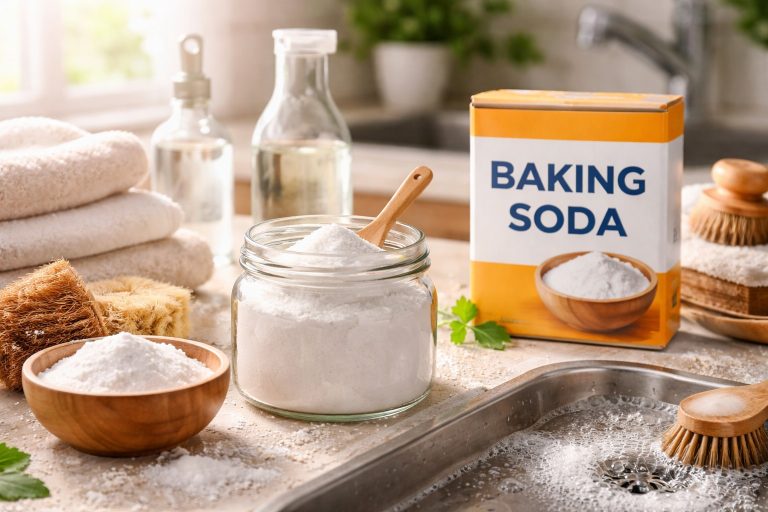
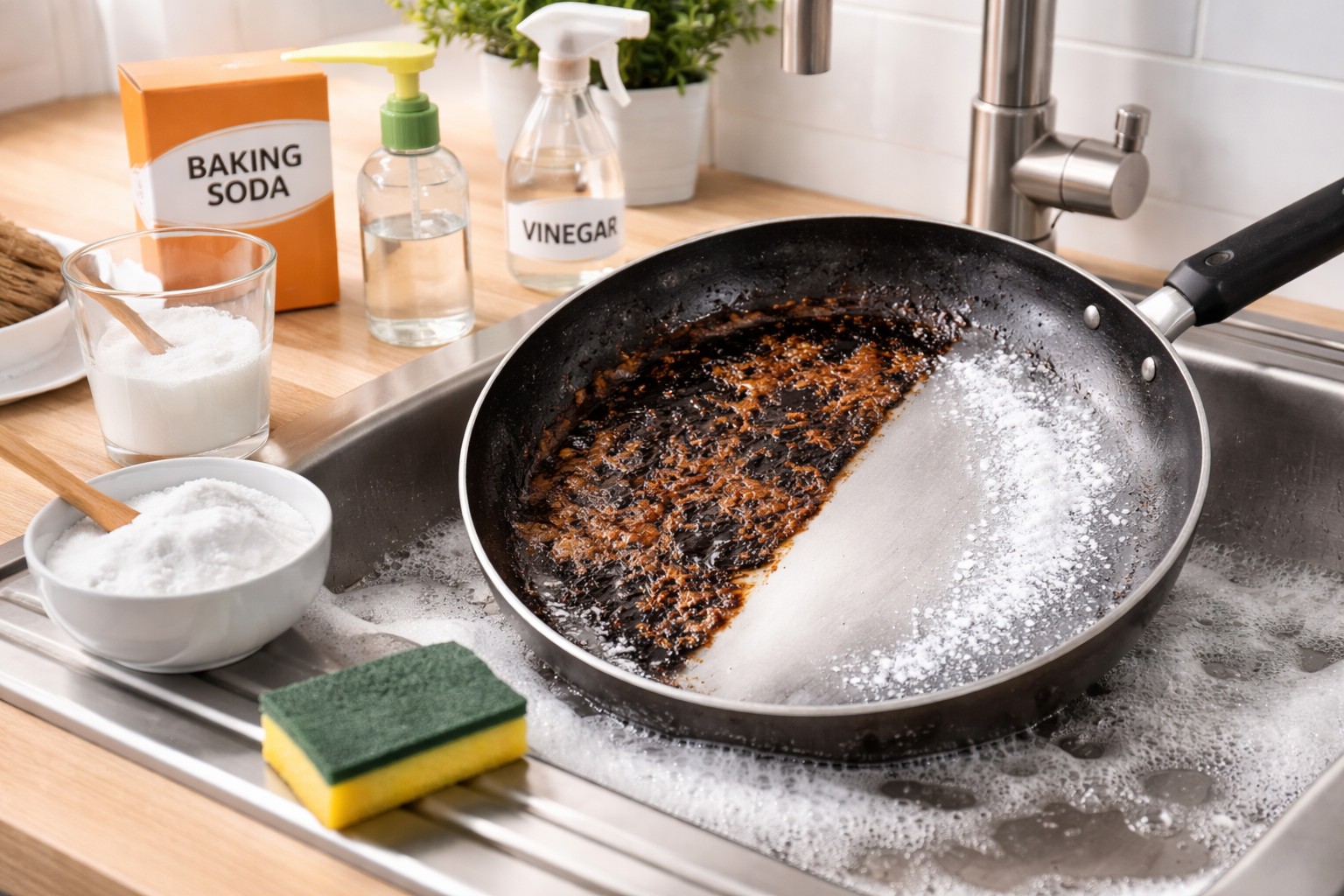
If simple boiling does not help, a classic chemical reaction will come to the rescue, which works better than expensive cleaning products. This duo copes well even with old fat.
-
Sprinkle the bottom of the pan generously baking soda.
-
Pour some on top table vinegar (9%).
-
Wait for the hissing reaction to finish.
-
Leave the mixture to act for 30-60 minutes.
After this, just rinse the dishes with warm water. To enhance the effect, you can slightly heat the mixture, but make sure that it does not boil completely.
Salt frying for cast iron
Cast iron pans and non-stick cookware are great for cleaning table salt. Salt acts as a soft abrasive and absorbent, absorbing fat and fumes.
Sprinkle a thick layer of salt (about 1 cm) on the bottom and place the pan on the fire. Heat the salt for 15-20 minutes, stirring occasionally, until it darkens. Pour out the used salt, let the dishes cool and wipe them with a paper towel. This method not only cleanses, but also disinfects the surface.
Activated carbon for delicate surfaces
If you are afraid of scratching ceramic or Teflon, use activated carbon. Grind 5-7 tablets into powder and sprinkle them on the burnt areas. Add a little water to make a thick paste and leave for an hour. Charcoal perfectly absorbs dirt, allowing you to easily wash it off without rubbing.
Proper care extends the life of any kitchen utensil. The main rule is not to put off cleaning until later, since fresh carbon deposits are much easier to remove than hardened ones. By using these simple tricks, you’ll save time and keep your pans in tip-top condition for years to come.
About the Author