Many people are faced with a paradoxical situation when, even after general cleaning, an unpleasant odor or plaque returns alarmingly quickly. Microorganisms seem to appear out of nowhere, ignoring powerful cleaning agents. In fact, the process of accumulation of bacteria obeys strict biological laws, and the main reason for their survival lies not in dirt, but in way to protect them.
Formation of invisible armor
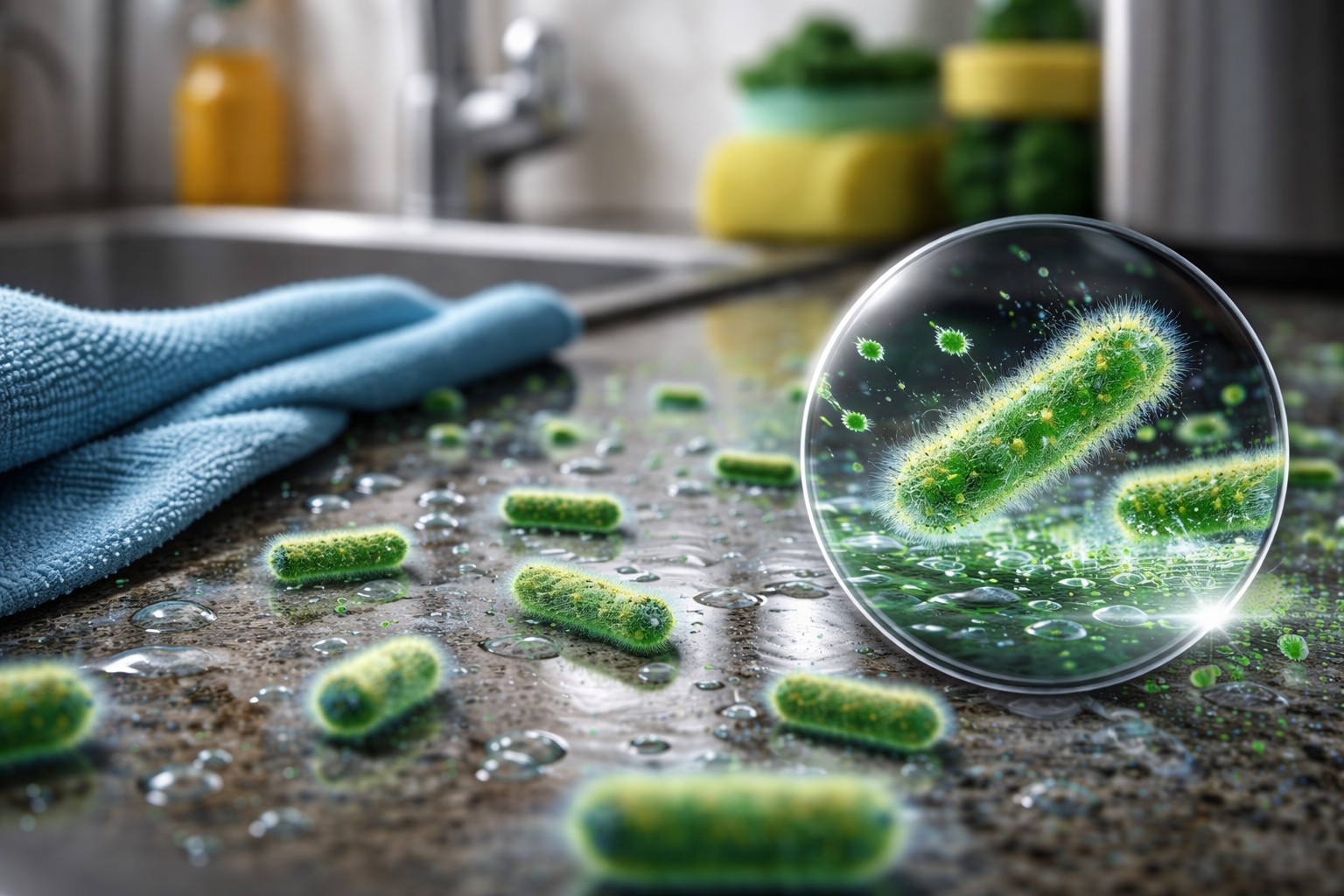
The key factor that allows bacteria to colonize is the creation biofilms. A single bacterium is vulnerable to the external environment and disinfectants. However, when they reach the surface, microorganisms begin to secrete a special mucous substance. This matrix acts as an adhesive and a protective dome at the same time.
Bacteria are safe inside this structure. Household chemicals often washes off only the top layer of this film, leaving the lower levels untouched. As soon as the effect of the product stops, the colony is restored at double the speed. This is why mechanical friction is often more important than simply applying gels or sprays.
The role of porous materials
Bacteria don’t just settle on objects, they look for shelter. Materials with porous structure.
-
Kitchen sponges
-
Wooden boards
-
Plastic containers with micro-scratches
-
Textile
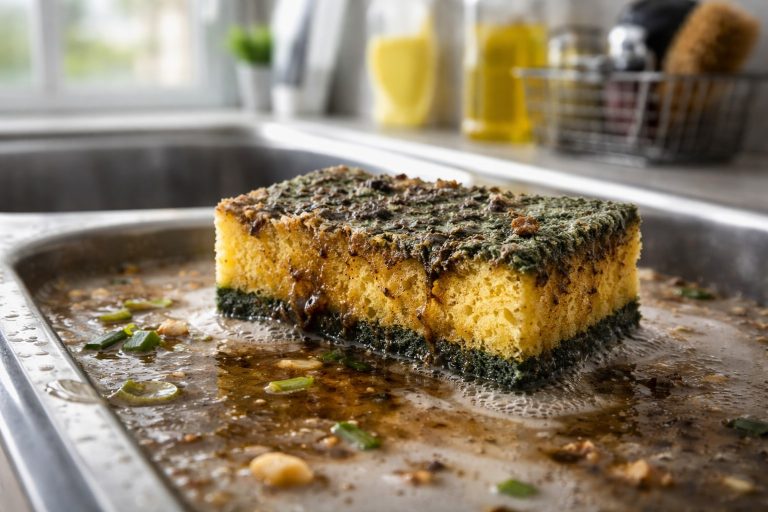
The microscopic recesses of these objects retain organic matter and moisture. This is an ideal incubator for bacteria. Even if the surface appears visually clean, deep in the pores active cell division continues. It is especially dangerous to use old sponges for washing dishes, which, due to their structure, cannot be completely disinfected at home.
Humidity and Temperature Factor
The accumulation of bacteria is directly dependent on the availability of water. A dry surface is destructive for most microorganisms or causes them to go into suspended animation. However, in the bathroom or kitchen it is supported stable humidity.
Combined with room temperature, this triggers an exponential growth process. If a surface remains wet for more than 4-6 hours, the number of bacteria on it can increase millions of times. This explains why wet towels or undried dishes become sources of unpleasant odors much faster than dry items that are simply covered with dust.
Adaptation to an aggressive environment
Another reason bacteria continue to accumulate is their ability to produce resistance. Excessive and improper use of antibacterial agents can lead to the opposite effect. Weak microorganisms die, but free up living space for more resistant strains.
The remaining bacteria pass on survival information to the next generations. As a result, a microflora is formed that is resistant to conventional cleaning methods. This makes it pointless to constantly use aggressive chemicals without alternating products and processing methods.
Understanding the mechanism of biofilm formation and the importance of drying surfaces allows you to more effectively control the cleanliness of your home. Combating the accumulation of bacteria requires not so much an increase in the amount of detergents as timely removal of moisture and regular replacement of porous materials. The main enemy of microorganisms remains a dry and smooth environment, where they have nowhere to gain a foothold.
About the Author