
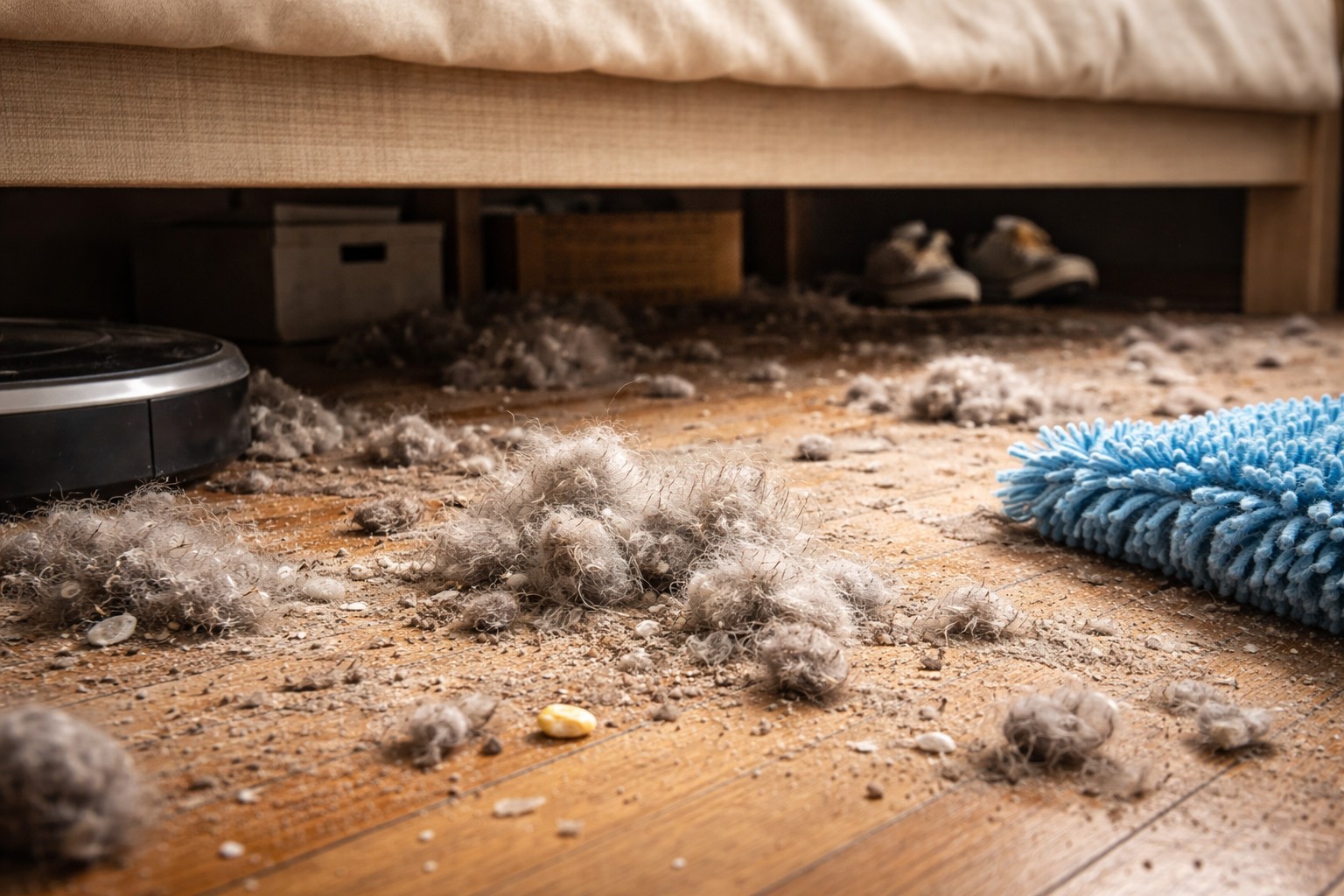
Even with daily cleaning, the space under the bed miraculously attracts dirt. This area seems to take on a life of its own, accumulating gray flakes faster than any other corner in the house. Understanding the physics of this process will help not only calm your nerves, but also deal with the problem more effectively.
Features of air circulation
The main reason for the accumulation of garbage there is air currents. The air in the room is constantly moving: warm air rises, cold air falls down. When we walk or open doors or windows, we create turbulence that lifts microparticles from the floor.
Under the bed the air is often in state of stagnation. This is a kind of “safe haven” for flying particles. Getting there with the general flow, the dust slows down, settles and is no longer blown back out. The so-called aerodynamic trapwhere dense lumps form layer by layer.
Gravity and textiles
A bed is not just furniture, but a giant dust generator. Bed linens, mattresses, blankets and pillows are made of fibers that are constantly broken down by friction. Every movement during sleep causes microscopic particles of tissue and filler to fall down.
In addition, man himself is a source of pollution. keratinized skin particles and the hair inevitably falls to the floor. Since the bed occupies a large area, everything that falls from it ends up in a hard-to-reach area, where it safely accumulates.
Static electricity
Many floor coverings, such as laminate or linoleum, as well as synthetic carpets, are excellent at accumulating static charge. The space under the bed is often dry and dark, which facilitates this process.
Static works like a magnet: it literally attracts dust particles from the air to the surface of the floor and to the bottom of the furniture. Dust mites and pet hair are also more likely to “stick” to electrified areas, forming those nasty clouds we notice when cleaning.
Cluttered space
Often the space under the bed is used to store things: boxes of shoes, suitcases or seasonal clothes. Any objects standing on the floor become air obstruction and an additional magnet for dirt.
The more items there are below, the more difficult it is to clean there and the faster “dust bunnies” form. Things create additional swirls and corners, from which it is almost impossible to sweep away the dirt without carefully rearranging all the contents.
How to reduce dust
It is impossible to completely get rid of dust, but you can reduce the rate at which it appears. Regular ventilation helps reduce the concentration of suspended particles in the air. Usage humidifier makes the dust heavier, preventing it from flying for a long time and getting into far corners.
It is also worth reconsidering the storage system. It is better to use closed drawers on wheels or vacuum bags that can be easily pulled out for cleaning the floor. A robot vacuum cleaner with a wet cleaning function that can go under furniture greatly simplifies the task of maintaining cleanliness. Timely washing of bed linen at high temperatures reduces the amount of organic matter falling on the floor.
Cleanliness under the bed directly affects the quality of the air we breathe while we sleep. Regular wet cleaning of this area prevents the development of allergies and creates a healthier atmosphere in the bedroom.
About the Author