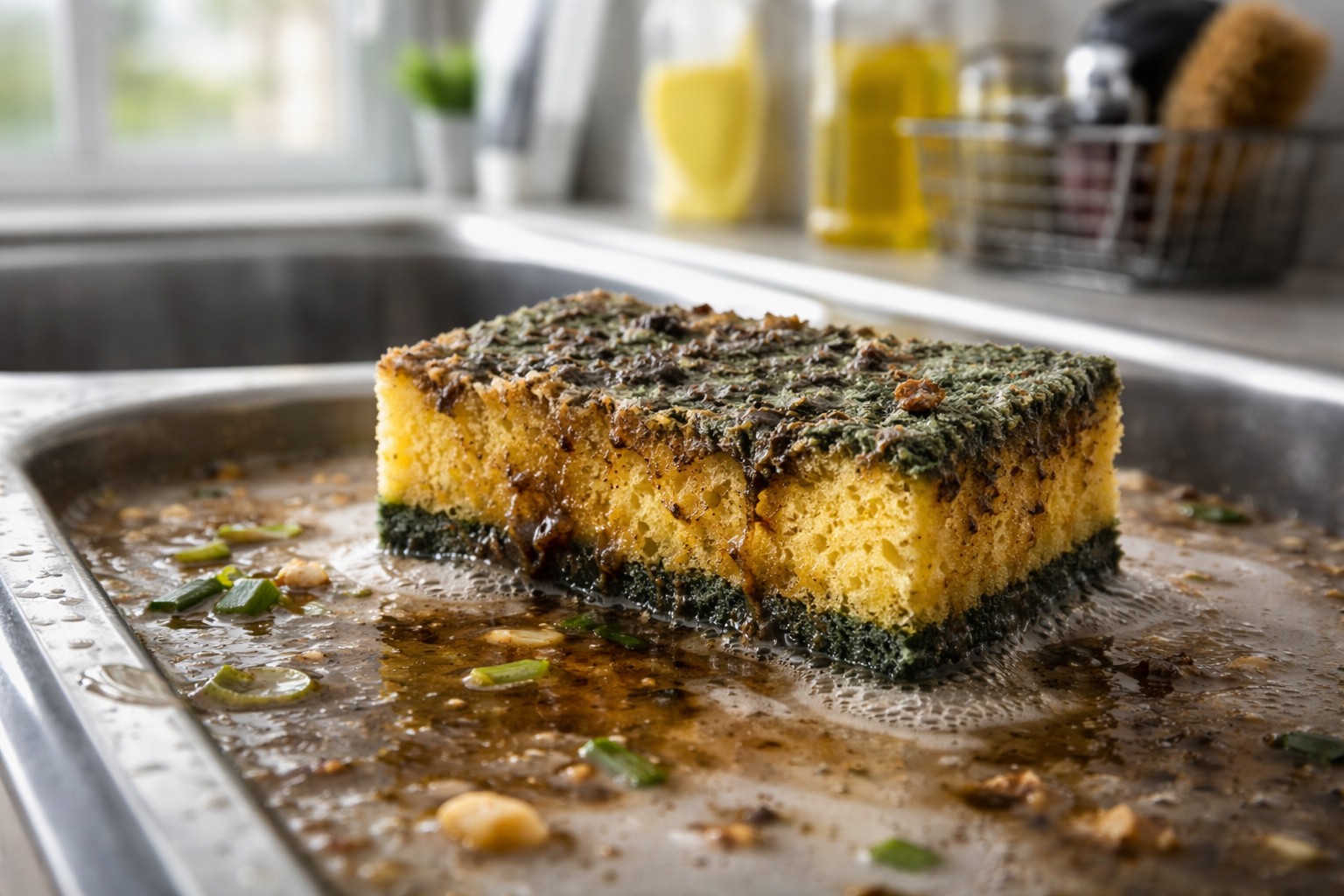
The habit of leaving a wet sponge at the bottom of the sink or in a soap dish without holes seems harmless, but in fact it is a serious mistake. Kitchen utensils that are constantly in a humid environment turn from a helper into a source of biological threat to the whole family.
Moisture is the main catalyst for reproduction pathogenic microorganisms. The porous structure of foam rubber ideally retains water and food debris, creating a favorable microclimate for bacteria. Research shows that a damp sponge can contain higher levels of germs than the toilet rim. If the product is not dried, colonies of bacteria, including coli and salmonella, double every 20 minutes.
The second problem is related to the appearance unpleasant odor. The characteristic musty aroma, which is difficult to wash off even with detergent, indicates rotting processes inside the material. This is the result of the activity of bacteria and mold, which actively develop in warm and damp conditions. Using such a sponge does not clean dishes, but only spreads germs across the surface of plates and cutlery.
Constant humidity also destroys the very structure of the material. Foam rubber begins to crumble and lose elasticity much faster if you do not let it dry between uses. The fibers of the abrasive layer peel off, and the sponge becomes unusable after just a couple of days of intensive use. Dry storage significantly extends the service life of the accessory.
To maintain hygiene, it is enough to follow simple rules. After each dishwashing, you must thoroughly push up product, removing excess water and foam. The sponge should be stored in an upright position or on a special ventilated stand to ensure free access of air from all sides.
Drying your kitchen utensils regularly is key to keeping your kitchen safe and clean.
About the Author