Often household responsibilities fall on the shoulders of one person, turning into a second shift after work. It seems that it is easier to do everything yourself than to persuade your household members. However, the creation atmosphere of cooperation can turn routine into an easy and even fun process that strengthens relationships.
Change your tone from command to partnership.
Instead of directive instructions, try discussing the problem at a family council. Important to use “I-messages”explaining your feelings and fatigue, and not accusing loved ones of laziness. When family members understand that their help is truly needed for the overall well-being, resistance decreases. Agree that cleanliness is not a whim, but a condition for everyone’s comfortable rest.
Turn cleaning into an exciting quest
Works great for children and even teenagers gamification. Boring floor cleaning can be turned into a competition with music or a search for “treasures” (lost toys). Use bright timers: the task of cleaning the room in 15 minutes while your favorite playlist is playing is perceived as a challenge, not as a duty. Excitement overcomes laziness.
Make tools easier to access
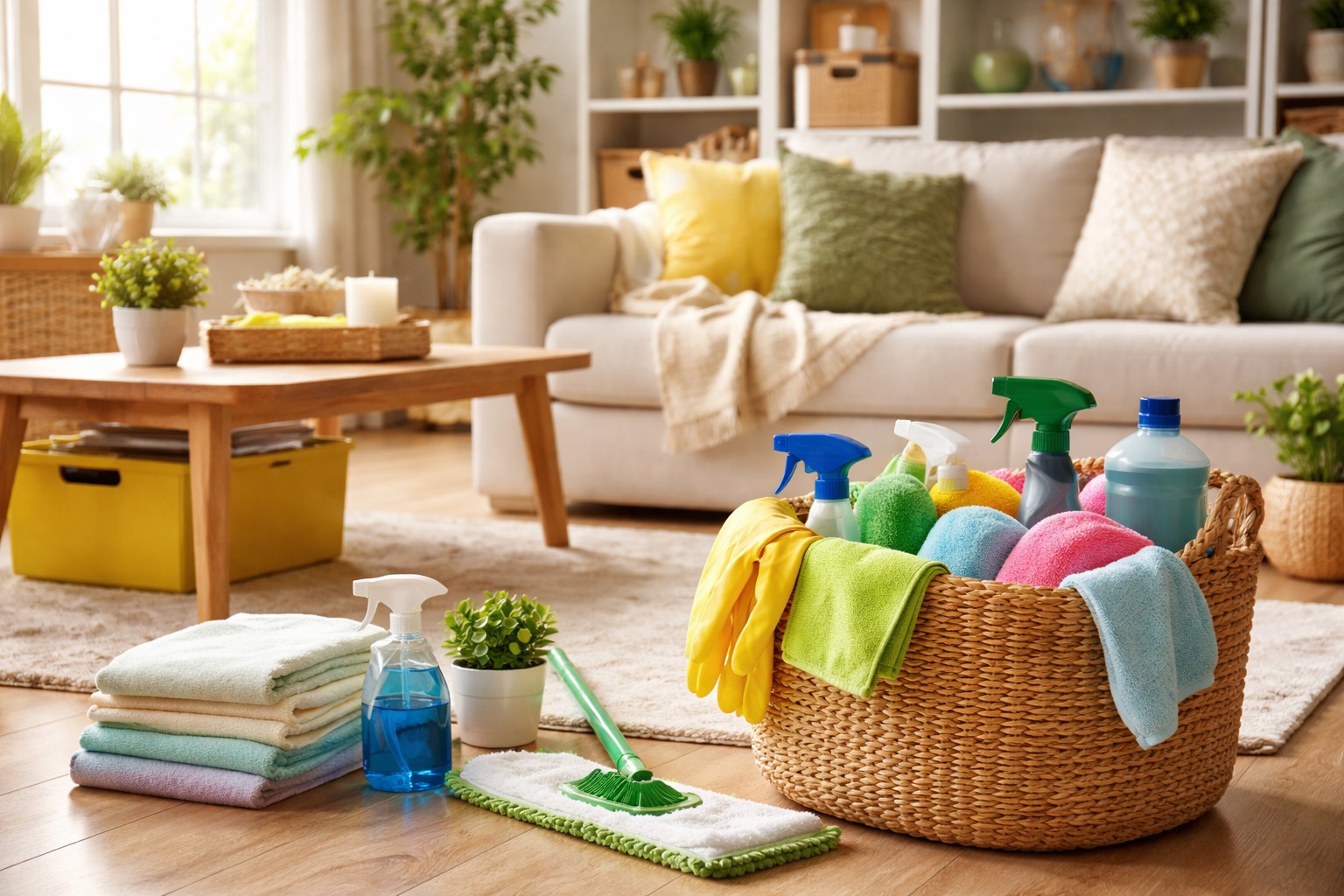
Sometimes the reluctance to clean is due to the complexity of the process. Organize your storage so that mops, rags and cleaning products are in easy access. If a child needs to get a heavy vacuum cleaner from the top shelf, he is unlikely to take the initiative. Buy modern gadgets or bright sponges that are pleasant to hold in your hands. Technical equipment plays a huge role in motivation.
Give up perfectionism
This is the most difficult but important step. If you constantly redo the work for your husband or children, they lose the point of trying. Accept the fact that the bed may not be made perfectly straight, and the books on the shelf may not be tall enough. Trust and praise work better than criticism. Allow them to make mistakes and learn from their experiences.
Introduce pleasant rituals
Connect the end of cleaning with something joyful. Let it be a tradition to order pizza, watch a movie together, or go for a walk in the park right after the house is sparkling clean. The brain will quickly build a neural connection: work follows positive reinforcement. This way, the weekend will no longer be associated only with a rag and a bucket.
Collaborative work, organized competently and without pressure, ceases to be a source of conflict. The main thing in this process is patience and consistency, which over time will form a useful habit for all household members.
About the Author