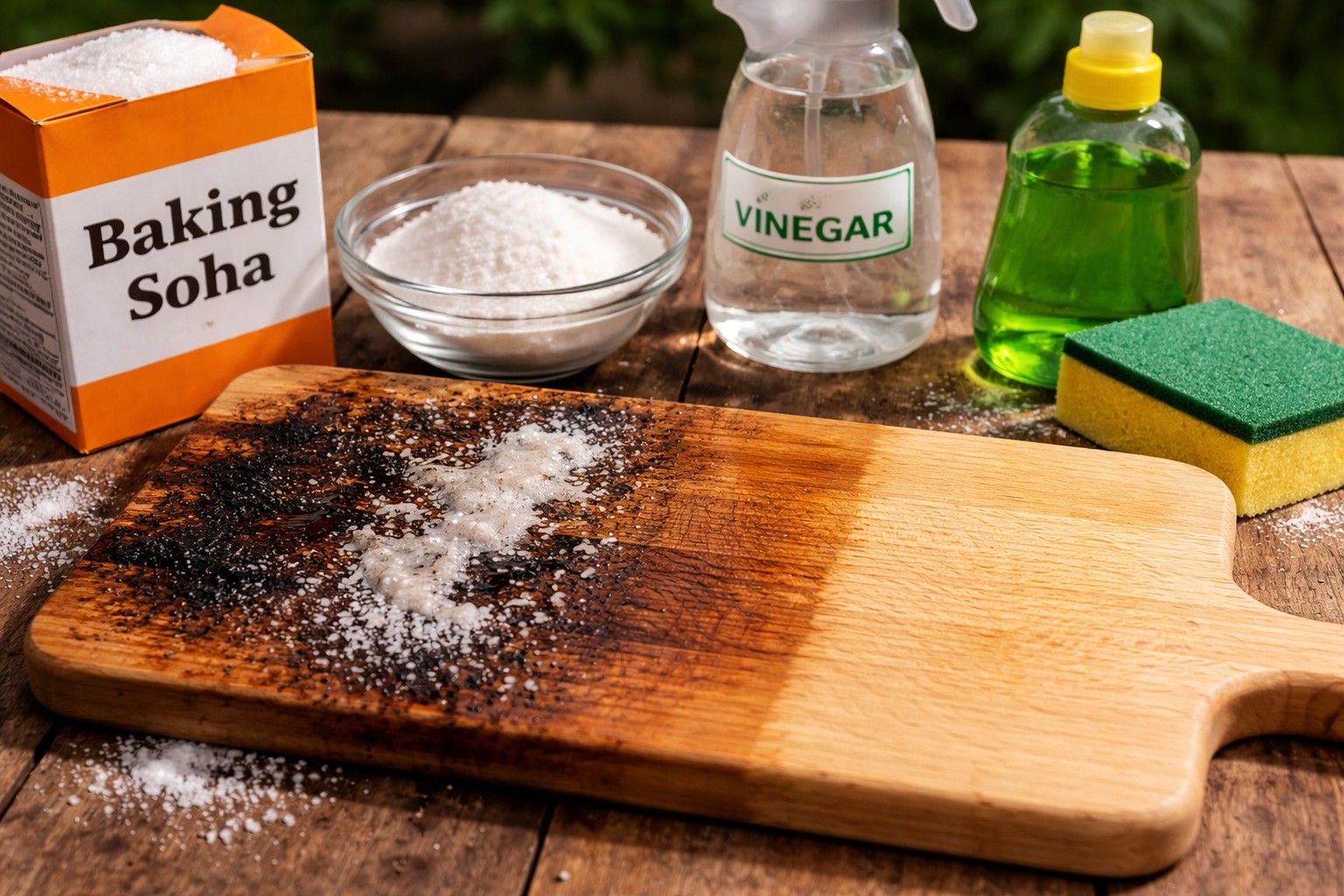
Wooden cutting boards are a kitchen classic that requires a special approach. Over time, the porous structure of the wood absorbs food juices, accumulates bacteria and darkens. Regular washing with detergent is often not enough to remove dirt from deep knife cuts. However, you can return your equipment to its original appearance and hygienic cleanliness using simple components that are found in every home.
Deep cleansing with salt and lemon
This is one of the most effective methods for mechanically removing contaminants and eliminating fish or onion odors. Coarse salt in this case acts as a soft abrasive that draws moisture and bacteria from cracks, and lemon juice Works as a natural bleach and odor neutralizer.
-
Generously sprinkle the dry surface of the board with coarse table salt.
-
Cut the lemon in half and use the half as a sponge, rubbing the salt firmly into the wood in a circular motion.
-
Let the mixture sit on the surface for 10 to 15 minutes until it turns grey, drawing out dirt.
-
Rinse off with warm water and wipe dry.
Disinfection with table vinegar
If the board has been used for cutting raw meat, it requires serious disinfection. Table vinegar copes well with pathogenic flora (salmonella and E. coli) and is safe for food surfaces.
To process, just pour the vinegar into a spray bottle and generously spray the board on both sides. If you don’t have a spray bottle, you can simply dampen a clean cloth and wipe the wood. Acid not only kills germs, but also helps dissolve the fatty film. After treatment, it is not necessary to rinse off the vinegar; the smell will disappear on its own when it dries.
Removing stains with hydrogen peroxide
When dark spots or traces of mold appear on wood, it comes to the rescue hydrogen peroxide. This product works at the molecular level, literally “knocking out” dirt with active oxygen.
The process looks impressive: pour peroxide onto the surface and spread over the stains. You will see the liquid begin to hiss and foam – this is a sign that a reaction is taking place with bacteria and organic residues. After the hissing stops, rinse the board with water. This method is especially good for lightening darkened wood.
Restoring smoothness and protecting with oil
After deep cleaning, the wood becomes vulnerable and overdried, which can lead to deformation and new cracks. To seal the pores and extend the life of the product, you need to soak it in oil.
Use only mineral oil (Vaseline) or special oil for cutting boards. It is strictly not recommended to use sunflower or olive oil – over time, they turn rancid inside the fibers and give the products an unpleasant aftertaste. Apply a thin layer of oil, let it soak in for several hours, and remove excess with a paper towel.
Regular care of wooden utensils prevents the growth of bacteria and maintains the aesthetic appearance of the kitchen. The combined use of salt, lemon and oil once a month ensures the safety of your products. A clean and well-maintained board lasts for years and does not require expensive replacement.
About the Author