Many housewives are faced with a situation where, just a couple of days after a general cleaning, the plumbing fixtures again lose their shine. White, rough stains that are difficult to wipe off with a regular sponge do more than just spoil the appearance of the bathroom. Limescale is an indicator of the chemical composition of water that can tell you a lot. Understanding the nature of this contamination helps not only to effectively combat it, but also to extend the service life of faucets.
Process chemistry and water hardness
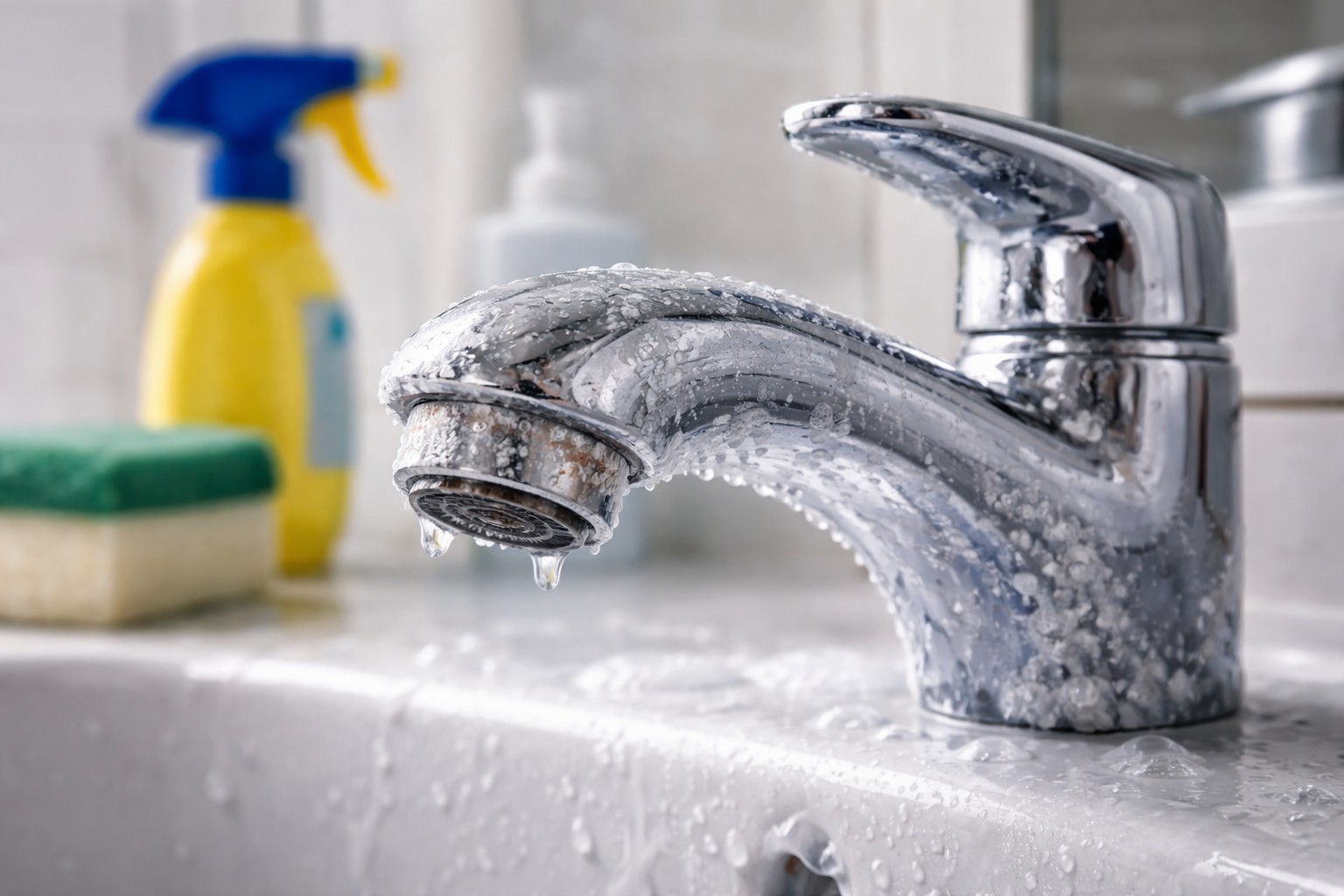
The main culprit behind the appearance of white streaks is hard water. It contains an increased concentration of dissolved minerals, mainly calcium and magnesium salts. While water flows from the tap, these substances are invisible to the eye. The process of plaque formation begins when drops of water remain on the surface of the metal and begin to dry.
Water evaporates, but minerals do not disappear. They crystallize, forming a hard crust, which in everyday life is called water stone. The higher salt concentrationthe faster the mixer becomes coated with a matte layer. This process is especially active on hot water taps, since when heated, hardness salts precipitate much more intensely.
Why regular soap doesn’t help?
A common mistake when caring for chrome surfaces is trying to wash off plaque with a regular soap solution. The fact is that calcium salts react with fatty acids contained in soap. As a result, an insoluble precipitate is formed – the so-called calcium soap. This is a grayish substance that only makes the situation worse by creating an additional layer of dirt on top of the limescale.
That is why, to remove such contaminants, products with acid base. The acid reacts with the alkaline bases of minerals, dissolving them and returning the surface smooth.
Threat to plumbing
Ignoring the problem leads not only to visual defects. Plaque has a porous structure that perfectly traps dirt and bacteria. Over time, mineral deposits become so hard that they begin to erode the faucet’s protective coating.
Mineralization poses the greatest danger to the moving parts of the mixer and aerator – mesh on the spout of the faucet. An aerator clogged with salts begins to spray water in different directions, reduces the pressure and can lead to an increase in pressure inside the mixer, which can lead to gasket leaks and cartridge failure.
Prevention Methods
It is almost impossible to completely get rid of plaque if the water supply is hard without installing a filtration system. Main filters and water softeners can radically change the situation by retaining calcium salts at the entrance to the apartment. This is the most reliable, albeit costly, solution.
If you do not plan to install filters yet, the habit of wiping the faucet dry after each use helps. The absence of drops means the absence of evaporation and, as a result, crystallization of salts. Regular surface treatment with a weak solution citric acid or vinegar prevents the stone from layering, keeping the chrome plating in factory condition for many years.
Timely maintenance of plumbing fixtures and control of water hardness help avoid premature corrosion and costly replacement of faucets.
About the Author