
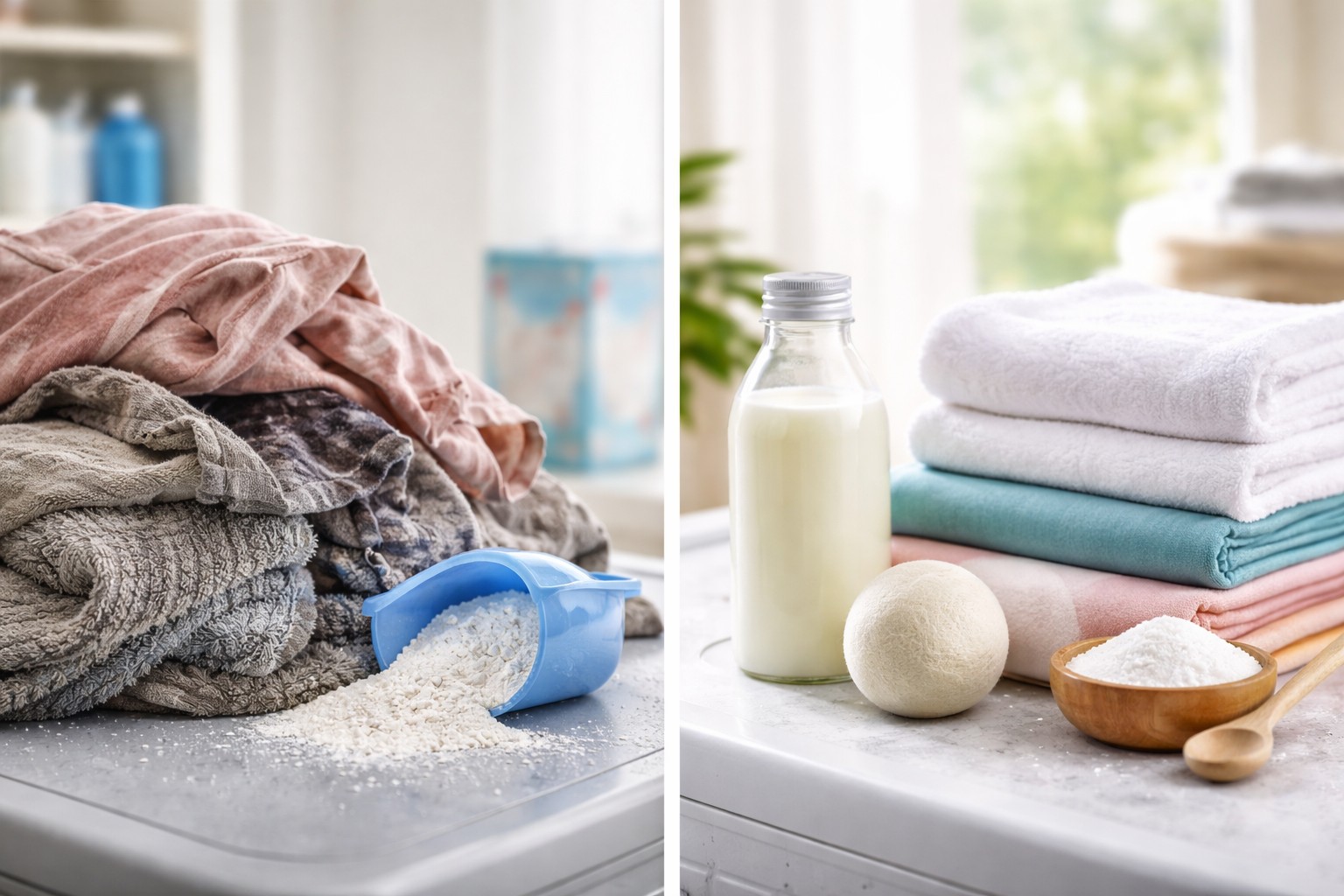
Choosing a laundry detergent often comes down to buying what is currently on sale. However, experienced technologists assure that there is no universal solution. What perfectly washes cotton bed linen can hopelessly ruin your favorite woolen sweater or sports uniform. To make clothes last longer, it is important to understand differences in composition and forms of release of household chemicals.
Washing powder
This is a classic that is gradually losing ground, but is still indispensable in certain situations. Powder contains abrasive particles and often has a high pH, making it the most aggressive but also the most effective solution for removing tough stains.
-
Ideal for washing bed linen and towels at from 60 to 90 degrees.
-
Works well on old stains on thick cotton.
-
The main disadvantage is poor solubility in cold water. The granules can get stuck in fabric fibers, causing allergies and leaving white streaks on dark clothing.
Gels and liquid concentrates
Liquid products are considered a more modern and gentle option. They instantly dissolve even in cool water and are completely rinsed without settling in the fabric. This is the best choice for everyday washing and refreshing things you’ve only worn once.
Soft surfactants (surfactants) in the gels are gentle on the fabric structure and preserve the brightness of colors. For washing down jackets, membrane clothing and delicate fabrics (silk, wool), you should use exclusively liquid forms, as they do not clog the pores of the material.
Laundry capsules
Marketers position capsules as the most convenient solution, but they have significant drawbacks. One capsule contains a fixed amount of product, designed for full drum load (usually 4-5 kg).
If you’re washing a couple of T-shirts, using a whole pod will result in excess chemicals that will be difficult for the machine to rinse out. In addition, capsules often contain stain removers and conditioners in the same shell, which is not always beneficial for all types of fabrics. This is an expensive option for those who value speed and do not want to manually measure the dosage.
Sheets and plates
A new trend on the market is compressed plates. They take up minimal space and are easy to store. Essentially, it is a concentrated gel that has been dried into a sheet. They are great for allergy sufferers and children’s clothing, as they most often have environmentally friendly composition with a minimum of fragrances. However, such products cope worse with very complex, greasy stains than aggressive powders.
The importance of enzymes and bleaches
When reading the label, you should pay attention not only to the release form, but also to the active ingredients.
-
Enzymes – these are biological enzymes that break down organic contaminants (protein, fat, starch). They only work at temperatures up to 40-50 degrees; in boiling water they are destroyed.
-
Optical brighteners – These are luminescent dyes that do not clean the fabric, but only create the illusion of whiteness by reflecting light. They can accumulate in fabric and cause skin irritation.
-
Oxygen bleaches – a safer component that actually removes age spots and disinfects laundry.
The optimal strategy for the household is to have two basic products: a quality powder for white cotton and linens, and an all-purpose gel for colored clothing and delicate fabrics in low temperatures. This approach prevents things from turning gray and premature wear of the fibers.
About the Author