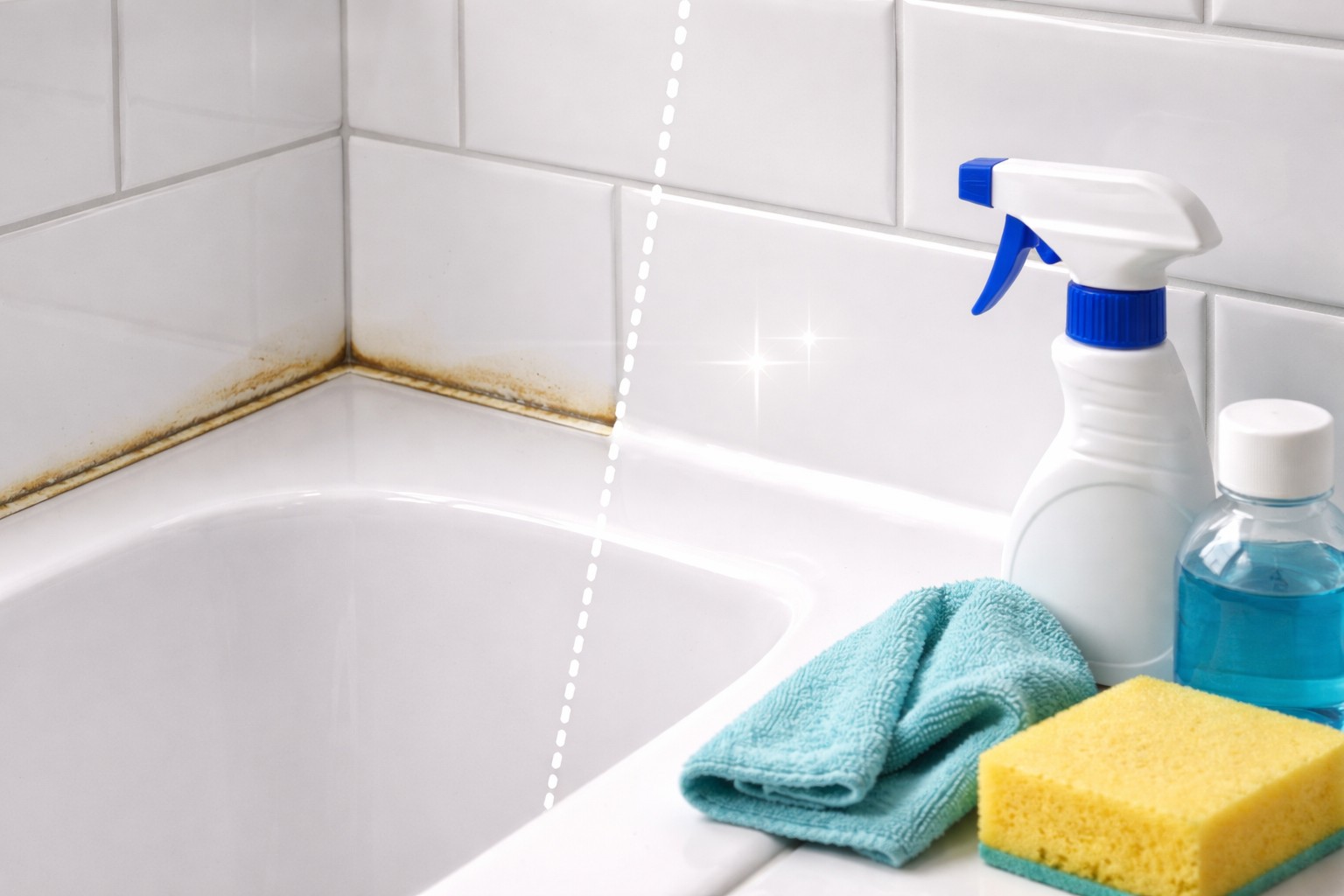
Even the most stylish bathroom renovation loses its look when the silicone seams begin to darken. High humidity and constant contact with water create ideal conditions for the development of fungus and mold. Many people believe that the only way out is to completely remove the old sealant, but there are proven methods restore cleanliness and freshness to the seams using improvised means.
The main reason for blackening is microscopic funguswhich penetrates deep into the porous structure of the material. Regular soap or powder is powerless here, since they only wash away surface dirt. Deep cleaning requires components that can destroy mold spores and whiten the surface.
One of the most effective methods is to use table vinegar and soda. This tandem works as a powerful oxidizer:
-
Apply a layer of baking soda to the wet grout.
-
Spray vinegar on top using a spray bottle.
-
Wait for the fizzing reaction to finish and leave the mixture for 10-15 minutes.
-
Scrub thoroughly with a stiff brush and rinse with water.
If the dirt is old, a “compress” of chlorine bleach. Soak cotton pads or paper towel strands in Whitening or a similar product, apply them tightly to the seams and leave overnight. Chlorine penetrates the silicone, killing the fungus and returning the material to its whiteness. In the morning, just remove the compress and rinse the surface.
To prevent the appearance of new stains, it is important to monitor ventilation. Air stagnation – the main enemy of the bathroom. After water procedures, leave the door ajar, and it is advisable to wipe the seams themselves dry. You can also process joints periodically hydrogen peroxidewhich prevents the growth of bacteria.
Regular maintenance takes only a few minutes, but can extend the life of the sealant for many years. Clean seams not only look aesthetically pleasing, but also guarantee hygienic safety of the room. The simple habit of wiping the corners after a shower will eliminate the need for complex repairs.
About the Author