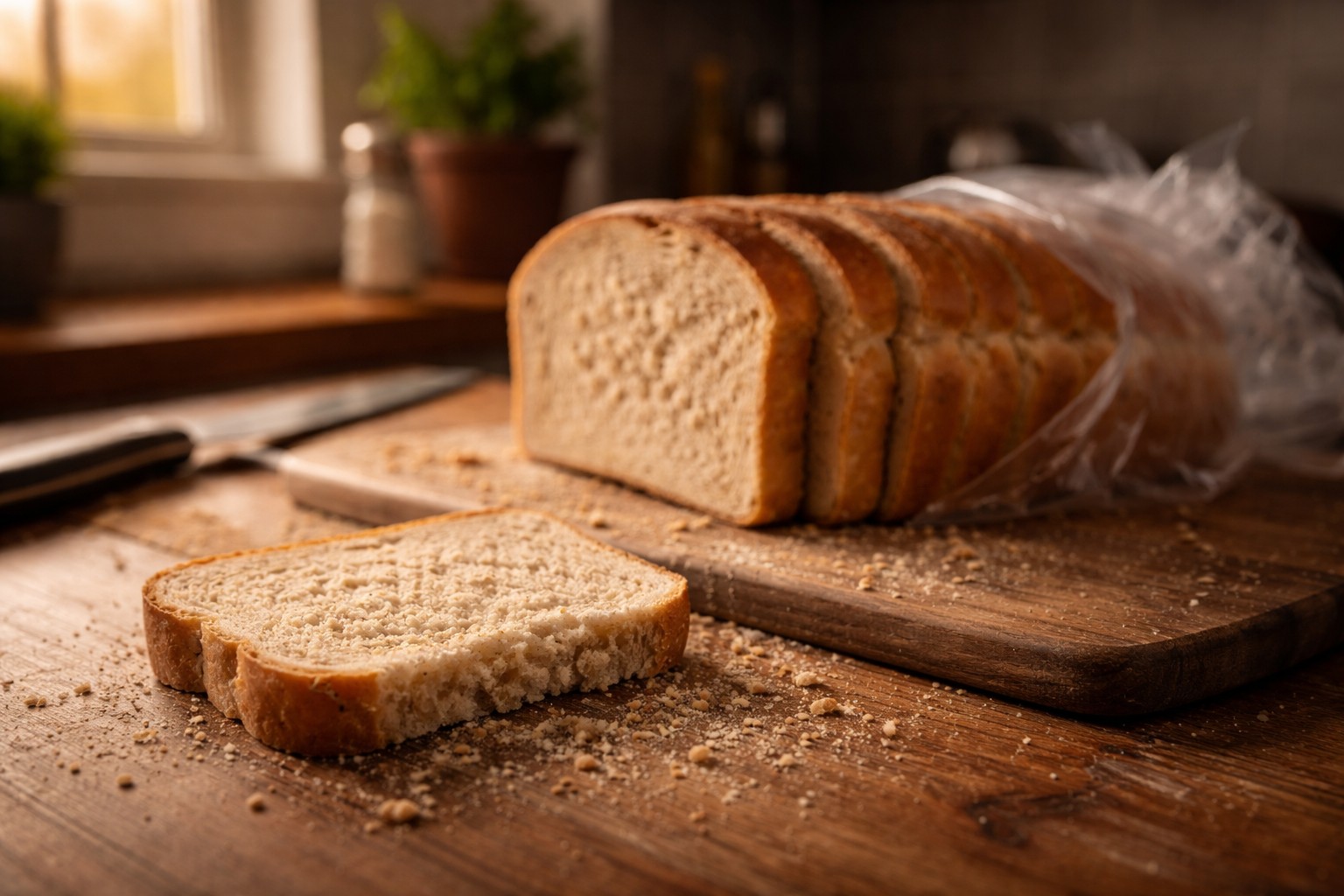
Many have noticed that even the most flavorful loaf can become hard in just a day, even if it is tightly packed. It is generally accepted that bread is simply dries outlosing moisture, but in fact the process is much more complex and interesting from a chemical point of view. The main culprit for the loss of freshness is a change in the structure of the crumb itself, which occurs at the molecular level.
The hidden process inside the loaf
The main reason for staling is starch retrogradation. As bread bakes, the starch in the flour gelatinizes, absorbing water and becoming soft and elastic. This is exactly the state we feel when we eat fresh baked goods. However, as soon as the bread cools, the starch begins to tend to return to its original crystalline state.
The starch molecules rearrange and displace water, which migrates to the crust. As a result, the crumb becomes hard and crumbly, and the crust, on the contrary, loses its crunch and becomes rubbery. This happens even in a sealed bag, since moisture does not evaporate outside, but is simply redistributed inside the product.
Major storage error
A huge number of people store bread in refrigeratorbelieving that the low temperature would extend its lifespan. This is one of the most common misconceptions. In fact, a temperature of +2°C to +5°C (standard for a refrigerator) is ideal for accelerating the crystallization of starch.
Bread goes stale in the refrigerator several times faster than at room temperature. Cold helps starch molecules quickly line up into rigid structures. The only way to keep freshness with cold is to deep freezingwhich completely stops the retrogradation process.
What else does the rate of staling depend on?
Not all types of bread spoil at the same rate. This process is influenced by the composition and production technology:
-
Type of flour. Rye bread stales more slowly than wheat bread due to the structure of starch and the presence of mucus that retains moisture.
-
Fats and sugar. Baking remains soft longer, as fats envelop starch particles and slow down their crystallization.
-
Baking quality. Sourdough bread, which has undergone a long fermentation, retains freshness better than products made with rapid yeast.
How to slow down the process
It is impossible to completely stop staling, but it can be significantly delayed. The best place to store bread that you plan to eat in the next couple of days is bread box at room temperature. It provides the necessary air circulation, preventing mold from developing, but also without drying out the product.
If you buy too much bread, cut it into slices and put it in the freezer. When defrosted in a toaster or oven, the starch will again absorb moisture, and the structure of the crumb will be restored almost to the state of fresh baked goods. This is the only scientifically proven method to return bread to its original properties.
Understanding chemical processes helps you change your habits and stop throwing away food. Staling is a natural and inevitable accompaniment of any natural baked product.
About the Author