
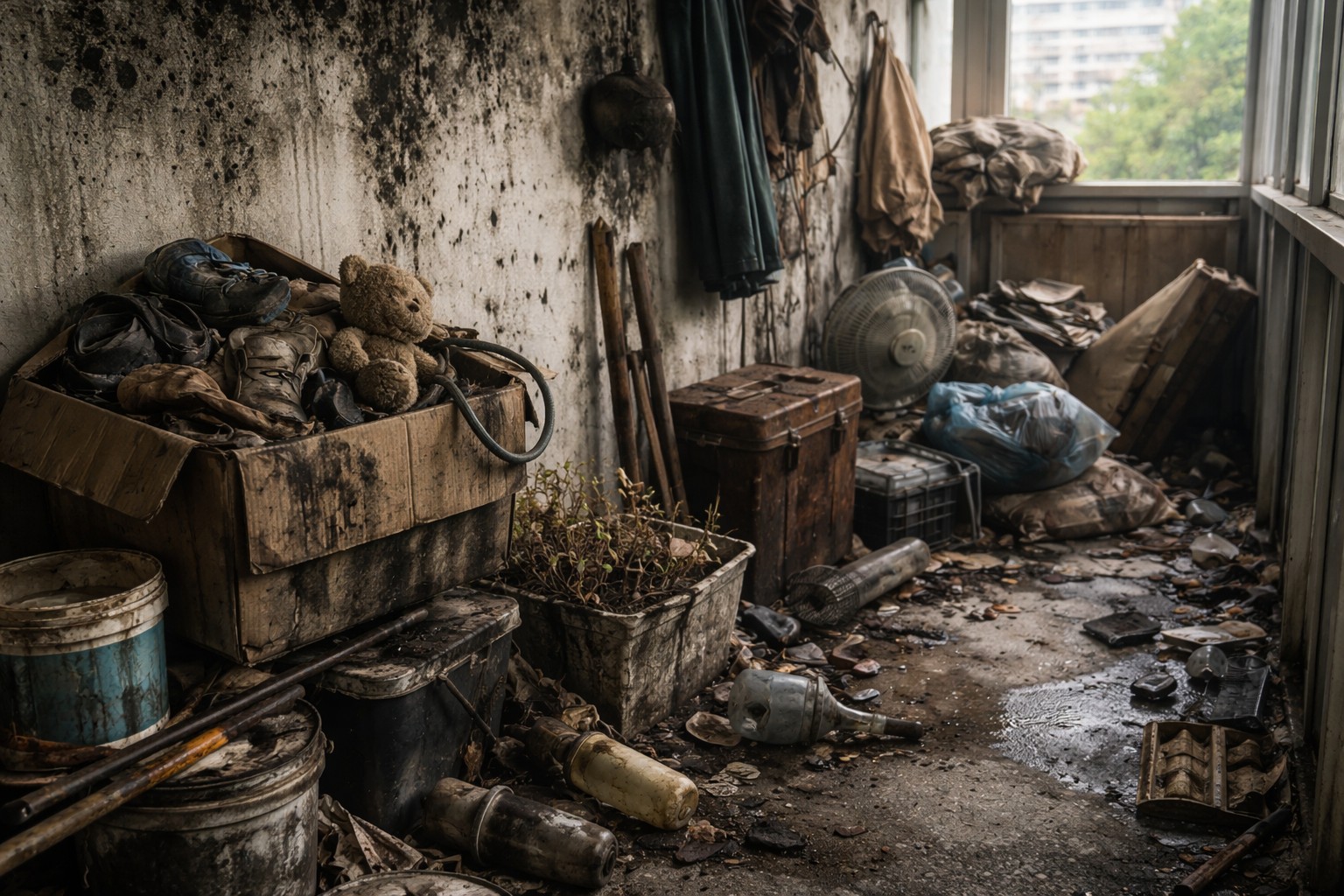
Many of us are accustomed to perceiving a balcony as additional storage room. Skis, old boxes of household appliances, seaming jars and clothes that “may be useful someday” are sent there. However, the habit of storing property on a loggia is not as harmless as it seems at first glance. This is not just a matter of aesthetics, but a real problem that affects the safety and microclimate of the entire home.
Fire threat from outside
The most serious risk of turning a balcony into a warehouse is fire safety. Even if you don’t smoke, danger can come from above. Unextinguished cigarette buttaccidentally falling from the top floor, often causes a fire.
-
Old newspapers, rags, dry wood or plastic catch fire instantly.
-
A cluttered space is difficult to extinguish on your own before firefighters arrive.
-
The fire from the balcony very quickly spreads into the living room through glass that burst from the heat.
Additionally, glass jars or mirrors in direct sunlight may work as optical lenssetting fire to nearby things even without an external source of fire.
Source of mold and allergens
A balcony littered with things disturbs air circulation. Things pressed tightly against walls and corners create stagnation zones where condensation accumulates. This is an ideal environment for development black mold and fungus.
Fungal spores do not stay behind a closed door. With each ventilation, they enter the apartment, settle on furniture and in the lungs of residents. This often becomes the hidden cause of chronic runny nose, allergic reactions and headaches, the nature of which people cannot determine for years.
Load on slab and structures
The balcony slab has its own tensile strength. In old houses, especially in Khrushchev-era buildings, these standards are significantly lower than in new buildings. We rarely weigh what we take out for storage, but stacks of old magazines, bags of cement from renovations, or massive cabinets create a colossal static load.
Overload can lead to microcracks in concrete, corrosion of reinforcement and, in critical cases, to collapse of structures. Regular entry of moisture into the cracks of an overloaded slab accelerates the process of its destruction significantly.
Shelter for pests
Piles of things that have not been sorted out for years are a ready home for insects and rodents. It often starts up in boxes of old clothes moleand in paper rubble – silverfish or cockroaches. If the balcony is not glazed or has cracks, in the fall mice can move into the warm piles of rubbish, which can then easily find their way into the kitchen. It is almost impossible to get rid of pests living in dense rubble without complete pest control and throwing away all contents.
Psychological discomfort and loss of light
A balcony full of things steals from your apartment natural light. Stacks of boxes block the flow of sunlight, making the adjacent room darker and colder. Lack of sun exposure directly affects mood and vitamin D production.
In addition, there is a concept visual noise. Even if you try not to look out the window, the subconscious mind registers the clutter, which increases the level of background stress and interferes with proper rest.
Clearing space of years of accumulated junk not only makes your home safer, but also gives you back the square footage you paid for when you bought your apartment. A clean balcony ceases to be a source of dust and anxiety, turning into a full-fledged area for relaxation and access to fresh air.
About the Author