The use of aggressive detergents to clean the kitchen has become commonplace, however fridge – This is a special place where food is stored. The enclosed space of the chamber creates ideal conditions for the accumulation of volatile substances that can negatively affect the quality of food. Many housewives are switching to environmentally friendly cleaning methods to eliminate the risk of getting toxic residues for food.
The main problem with household chemicals is its composition. Even with thorough rinsing with water, microscopic particles of surfactants and fragrances may remain on the walls and shelves. In a closed cold environment, these components do not erode, but absorbed by productsespecially those stored without sealed packaging. This can change the taste of food and even cause allergic reactions.
In addition, the aggressive components of store-bought products often destroy the interior finishing material itself. The plastic of the refrigerator may turn yellow, become brittle, or become covered with microcracks, in which they will begin to accumulate over time. bacteria and mold.
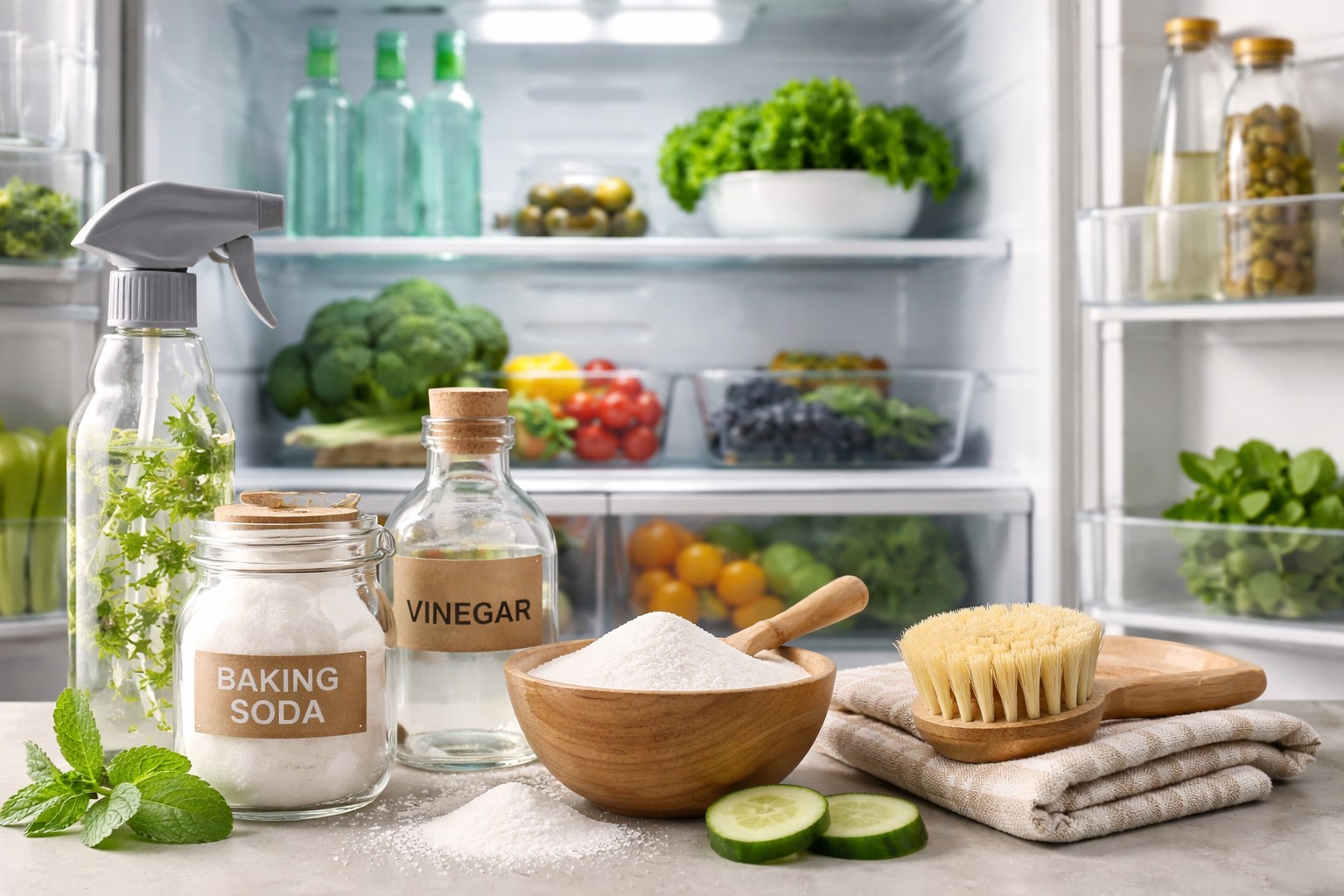
Natural products deal with pollution no less effectively, but are absolutely safe:
-
Baking soda Works great as a soft abrasive, removing dried stains, and at the same time neutralizes unpleasant odors rather than masking them.
-
Solution table vinegar helps disinfect surfaces, destroying germs and fungi, and also restores shine to glass shelves and plastic parts.
-
Lemon juice helps to cope with greasy deposits and leaves a light, natural aroma of freshness that is safe for any product.
Caring for equipment using simple folk remedies allows you to save the family budget and extend the service life of the unit. The absence of strong chemical odors ensures that your dishes retain their natural taste and aroma. Safe cleanliness becomes the key to the health of the whole family and proper storage of food supplies.
About the Author