Books make the home cozy, but at the same time act as powerful magnets for small particles. Regular book dust – this is not just an aesthetic problem, but also a strong allergen in which dust mites and bookworms can grow. To preserve your favorite publications and your own health, it is important to carry out cleaning according to rules that will not damage the paper and binding.
The main rule of library care
The first thing to remember: water is the main enemy of books. Never use wet rags to wipe pages or scraps. Moisture causes deformation of the paper, the appearance of mold and “fox spots” (red stains). With a damp but well-wrung cloth microfiber You can only wipe laminated covers, and then only with great care. For everything else, dry clean only.
Tools for safe cleaning
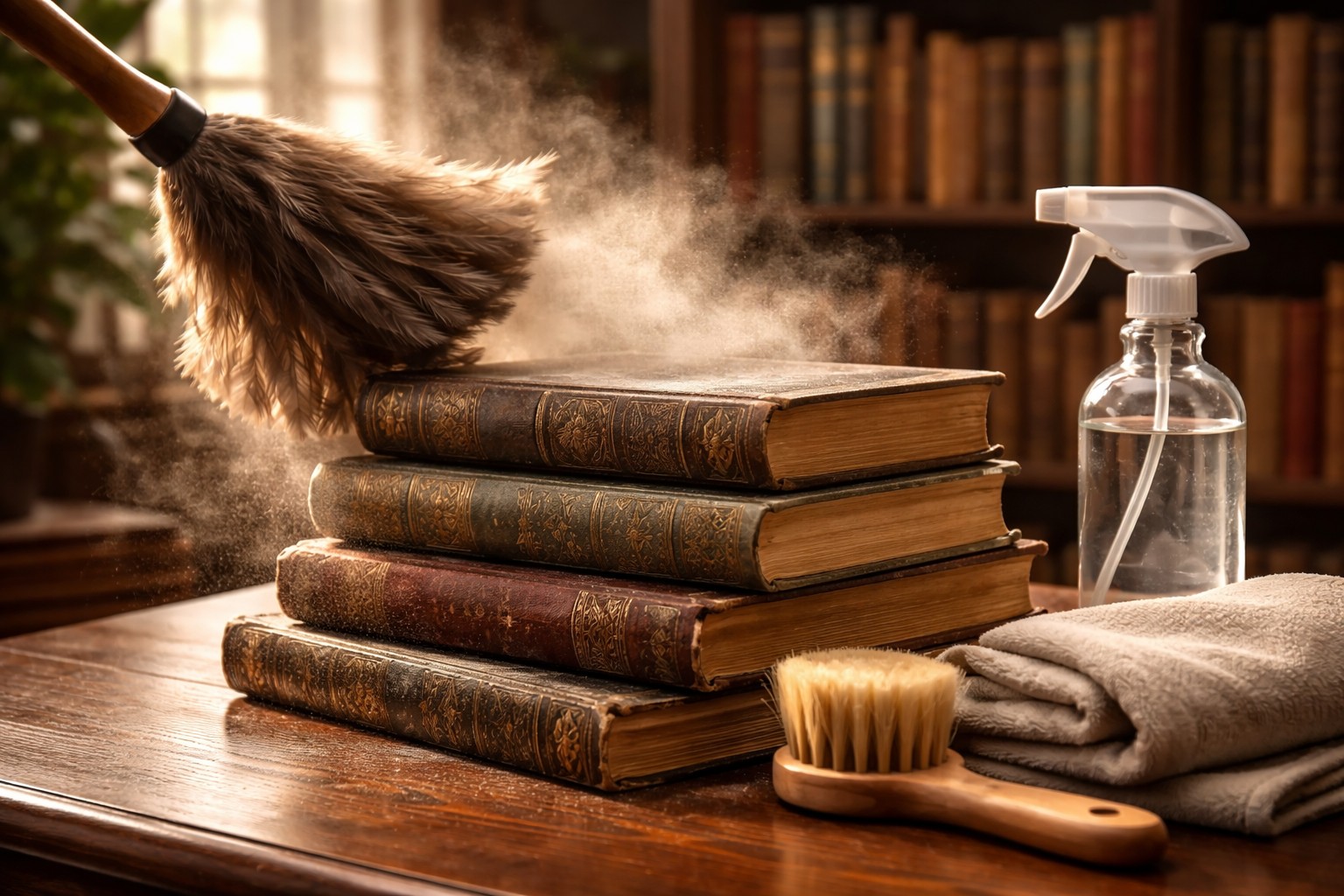
For high-quality dust removal, it is best to use special devices that capture particles rather than disperse them around the room. Ideal for:
-
Vacuum cleaner with soft brush. Use a furniture attachment and turn the appliance on low to avoid tearing fragile pages.
-
Soft bristle brushes. Artist brushes or special dusting brushes can help remove dirt from hard-to-reach areas around the spine.
-
Microfiber cloths. They create a static charge that attracts dust, holding it inside the fibers.
Cleaning technique
The largest accumulation of dirt is always on the top edge of the book. To remove it correctly, you need squeeze the book tightlyso that the pages fit snugly against each other. This will prevent dust from getting inside the unit. Movements with a brush or rag should be directed strictly from the spine to the edges. If you rub in the opposite direction, you will drive the dirt under the cap, where it will be almost impossible to get it out.
Fighting odor and moisture
If books have been left untouched for a long time, they may develop a specific musty smell. In this case it will help baking soda. Place the book in an airtight container or bag along with an open container of baking soda for a couple of days – the absorbent will absorb excess odors and moisture. It is also important to ventilate your cabinets regularly, opening the doors at least once a month to allow air to circulate.
Regular dry cleaning will extend the life of your library by decades. Clean books not only look better on shelves, but they are also safer to read, preserving their structure and value for future generations. By devoting just 15 minutes a week to this process, you will rid your home of allergens and keep your favorite stories in their original form.
About the Author