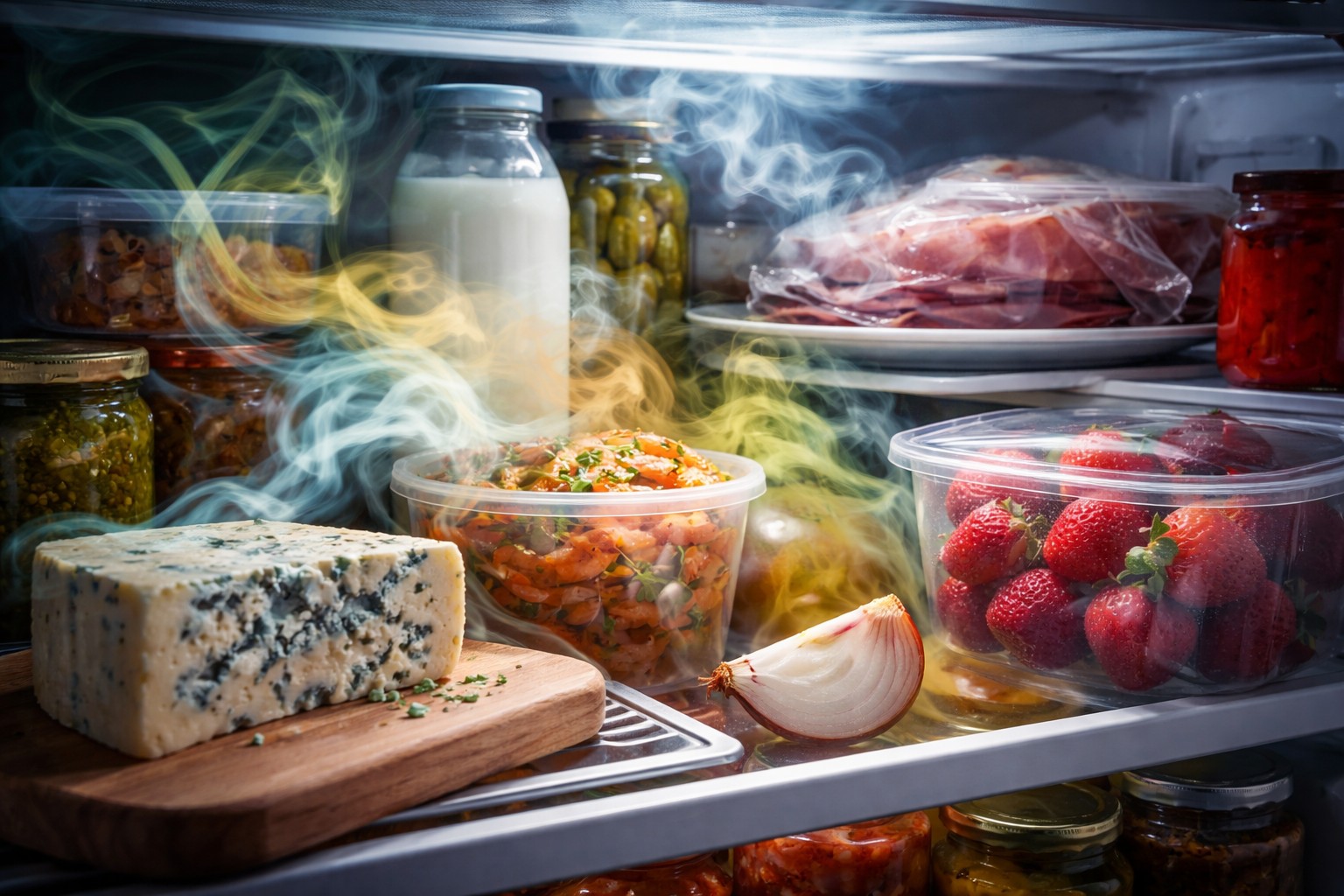
Many people are familiar with the situation when fresh butter suddenly takes on the taste of yesterday’s fish, and cottage cheese begins to taste like onions. This does not occur due to food spoilage, but as a result of natural physical and chemical processes. The main culprit here is diffusion – a process in which molecules of one substance penetrate into another. In the confined space of the refrigerator, volatile aromatic compounds do not disappear, but actively seek a new home.
Products with a high content are especially vulnerable to foreign odors. fat. The fact is that most aromatic molecules are lipophilic, that is, they dissolve perfectly in fats. Butter, cheese, chocolate, cream and fatty meats work like real sponges. They literally pull you in volatile esters from the environment, securely locking them inside its structure. That is why dairy products require the most careful isolation.
The second factor is porous structure some products. Even if food seems solid, at the micro level it may have many voids. A striking example is chicken eggs. Their shell is permeated with thousands of microscopic pores necessary for gas exchange in the embryo. Through these channels, foreign odors easily penetrate inside, changing the taste of the white and yolk. The same applies to cut vegetables and fruits, whose internal structure is exposed and defenseless to the external environment.
A significant role also plays humidity. Water is an excellent solvent for many chemicals. Condensation that forms on the walls of the refrigerator or on the food itself collects aromas and transfers them from one surface to another. This explains why opened drinks or soups quickly change their taste if something strong-smelling, such as smoked meats or citrus fruits, is stored nearby.
To combat this phenomenon, it is not enough to simply close the door. Must be used sealed containers made of glass, since plastic itself is capable of accumulating and releasing odors over time. It also helps to use natural absorbents such as activated charcoal or regular baking soda, which absorb volatile compounds before they are absorbed into your food. Proper storage organization is the only way to preserve the true taste of each dish.
About the Author