It would seem that water is the main tool of cleanliness, but often it is what causes untidy appearance of mirrors, floors or plumbing fixtures. Even if you wipe the surface thoroughly, after drying it may show signs of clear contours or cloudy spots. This is not due to poor cleaning, but due to the physical laws governing the behavior of liquids during evaporation.
The main culprit of this phenomenon is known in physics as “coffee ring effect”. When a drop of dirty water falls on the surface, it spreads out, forming a dome. Evaporation occurs unevenly: moisture leaves most quickly from the edges of the drop, where the water layer is thinner. To compensate for the loss of liquid, water from the center begins to flow to the edges, carrying with it everything dissolved particles.
As a result, dirt, dust and small debris do not remain evenly distributed over the area of the stain, but accumulate around the perimeter. That’s why we see dark bezel along the edges of a dry puddle, while the center may remain relatively clear. This mechanism works for any liquid containing a suspension of solid particles, be it spilled coffee, dirty water after washing the floor, or raindrops on glass.
The second important factor is composition of the water itself. Tap water is rarely chemically pure; it contains dissolved calcium and magnesium salts, which we call hardness salts. When H2O evaporates, it evaporates and these minerals crystallize, leaving whitish traces. If you add to this the remains of detergents that have not been completely washed off, a sticky film is formed that attracts new dust.
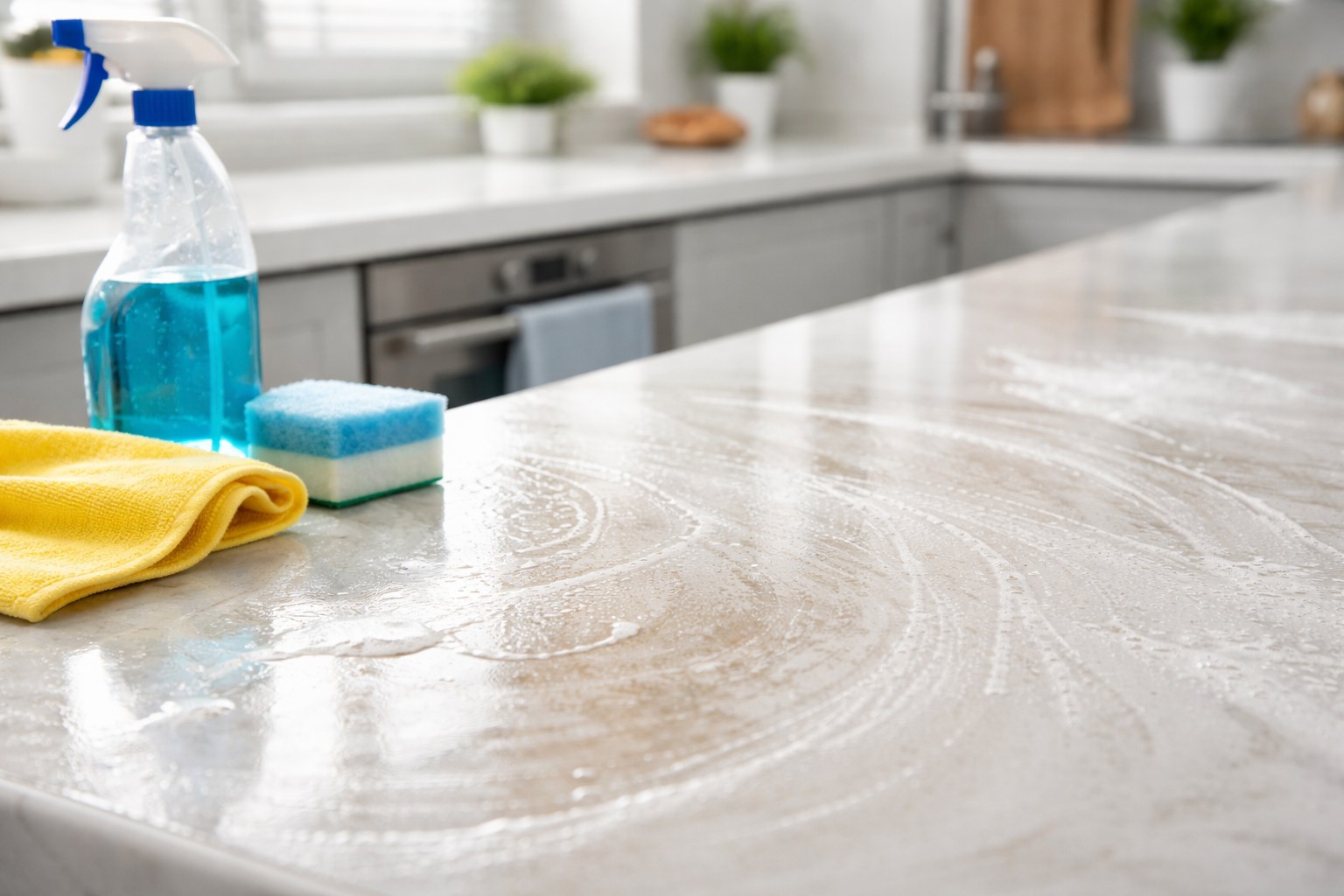
Understanding this physics explains why professional cleaners always use dry wipe immediately after wet cleaning. If the water is not allowed to dry naturally, the process of transferring particles to the edges of the droplets will be interrupted. Mechanical removal of moisture with a rag or a squeegee allows you to collect the dirty suspension before it has time to settle and adhere to the surface in the form of a characteristic pattern.
Also affects the shape and durability of marks surface tension. On hydrophobic (water-repellent) materials, the drop retains the shape of a ball, and the contact area with dirt is minimal. On wetted surfaces, water spreads in a thin layer, increasing the area of evaporation and the number of stains. Therefore, polishing furniture or waxing a car creates a protective barrier that prevents water from clinging and leaving dirty signatures.
Ultimately, the cleanliness of a surface depends not only on how thoroughly you wash it, but also on how quickly you remove the moisture. Water serves as an excellent solvent and vehicle for dirt, but if it is allowed to evaporate on its own, it will inevitably leave all its “cargo” in the most visible place. The physics of the evaporation process turns chaotic dirt into structured stains.
About the Author