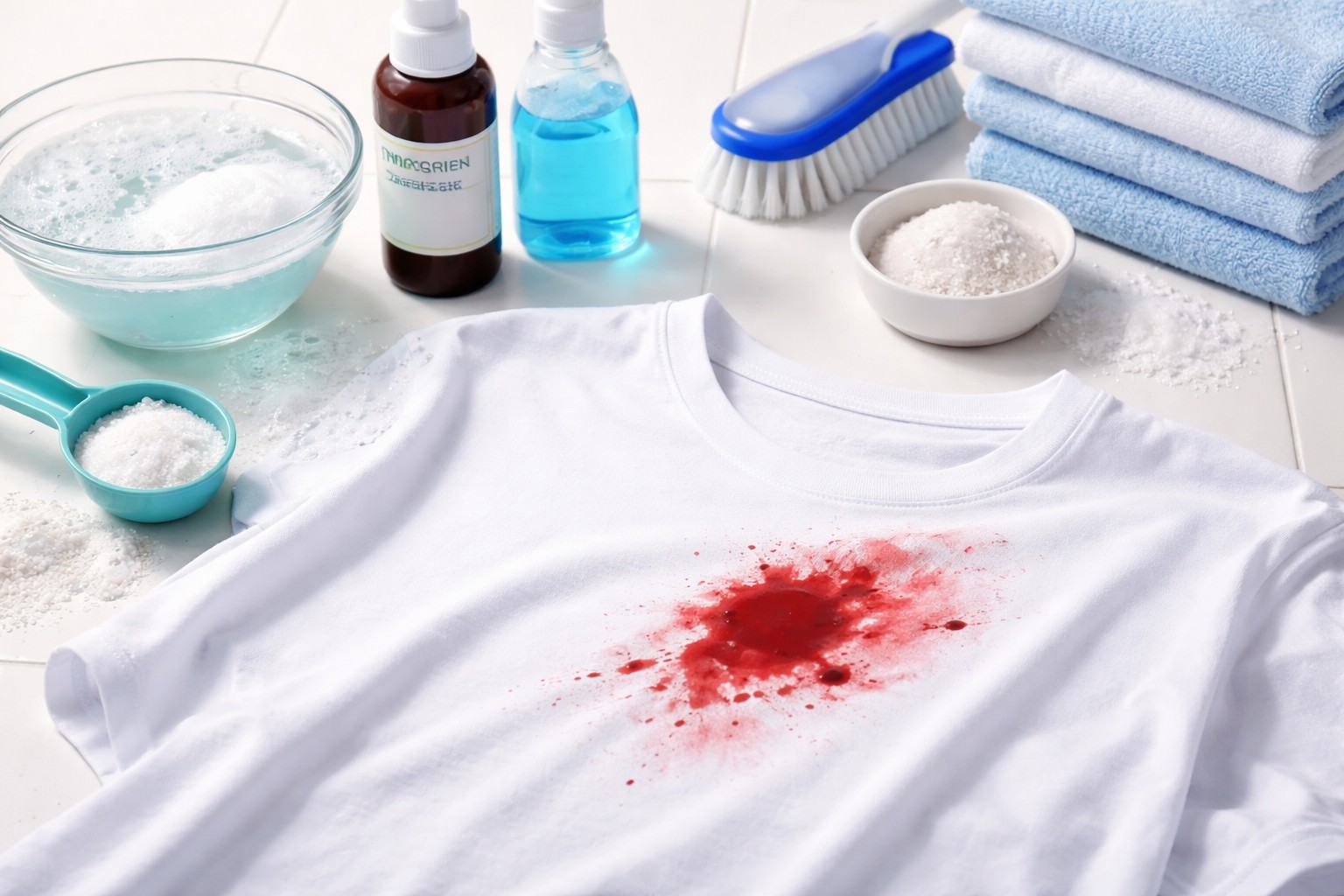
Blood stains are considered one of the most difficult to remove, but there is no need to panic and throw away your favorite item. The main secret of success lies in reaction speed and knowledge of basic chemistry. If you act correctly in the first minutes, not a trace of contamination will remain, but even for dried stains there are proven solutions.
The most important rule
Remember the iron rule: never use hot water. Blood contains protein, which at high temperatures coagulates and becomes firmly embedded in the fibers of the tissue. If you start washing the item in hot water, the stain will turn yellow and will be almost impossible to remove. Always start processing under running water only ice waterwashing the fabric from the wrong side.
How to remove a fresh stain
If trouble has just happened, it is easiest to save the fabric. Often a simple rinse is sufficient, but to ensure results use the following:
-
Laundry soap. This is the classic and most reliable method. Lather the affected area generously with alkaline soap (preferably dark, 72%) and leave for 10-15 minutes. After this, gently rub and rinse in cold water.
-
Hydrogen peroxide. Ideal for bright things. Pour some peroxide directly onto the stain. The liquid will begin to hiss and foam – this is a normal oxidation reaction. Blot with a cotton pad and repeat the procedure until the blood disappears. Be careful with colored fabrics, as peroxide can “eat” the dye.
-
Aspirin. Crush a couple of regular aspirin tablets and mix with water to a paste. Apply the mixture to the fabric and let it dry, then wash the item as usual.
Fighting dried stains
If the blood has already dried, the task becomes more difficult, since the protein is already fixed in the fibers. Pre-soaking methods required here:
-
Saline solution. Dissolve one tablespoon table salt in a liter of cold water. Soak the item for at least 3 hours, preferably overnight. Salt helps break down protein compounds, after which the stain will come off with normal washing.
-
Ammonia. An effective remedy for old stains. Dilute a tablespoon of ammonia in a glass of water and apply to the stain. Leave for an hour, then rinse thoroughly. Please note that this method is not suitable for linen, silk and wool.
-
Dishwashing liquid. Dish gels are excellent at breaking down fats and organic contaminants. Apply a thick layer of gel to the stain, cover with cling film and leave for several hours before washing.
Working with delicate fabrics
Silk, wool and fine synthetics require a special approach, as aggressive friction can damage the structure of the material. For such things it is better to use potato starch. Mix starch with water to form a thick paste, apply to the stain and wait until it dries completely. The starch will absorb blood particles, after which you just need to brush it off with a brush and rinse the product.
Timely processing and correct temperature conditions guarantee the cleanliness of your items without damaging the fabric.
About the Author