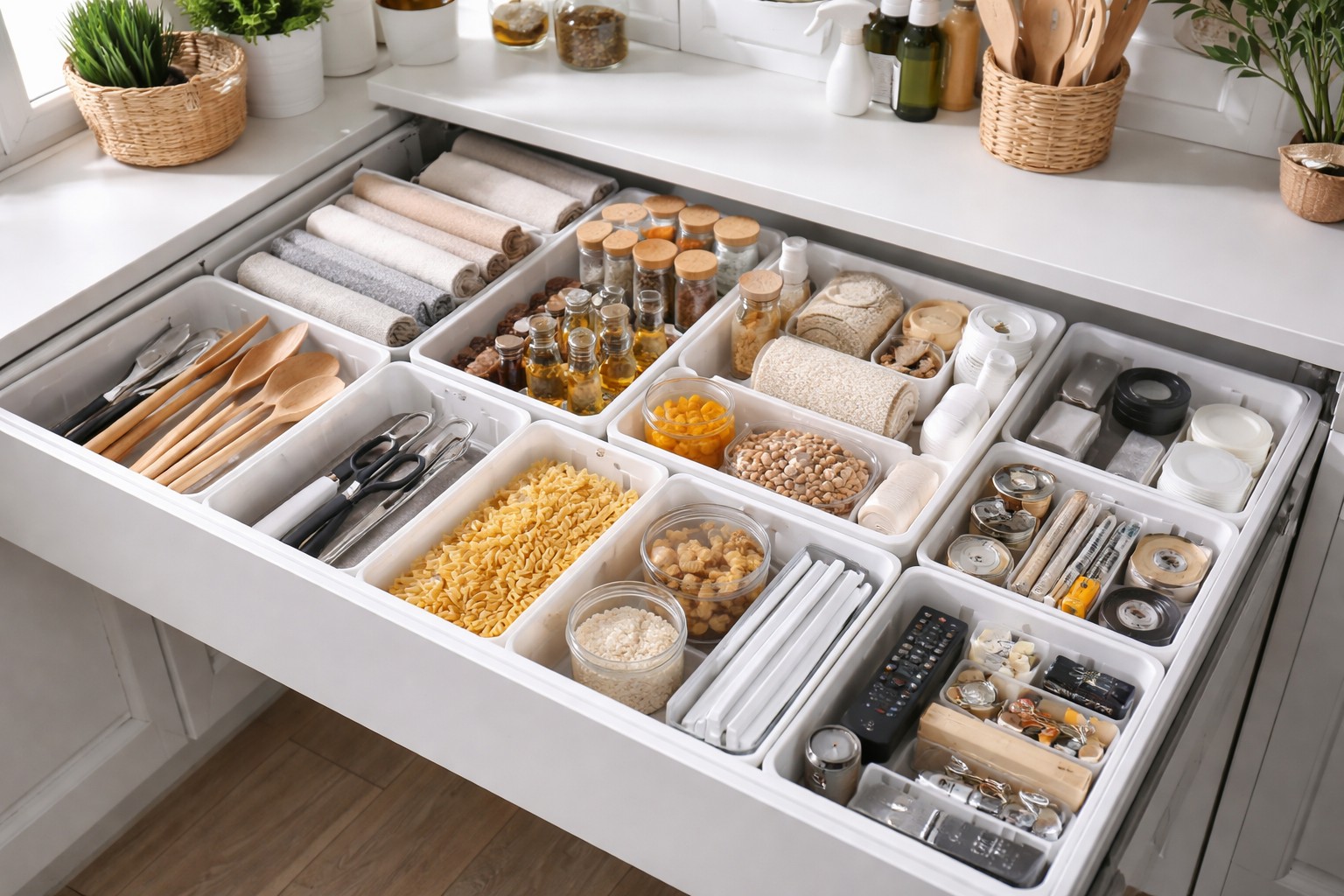
Usage organizers and trays Often perceived as an optional aesthetic touch, it is a fundamental element of a storage system. A simple plastic or wooden container can radically change not only the appearance of your shelves, but also the speed with which you cope with household chores. The main function of the tray is to create clear boundaries for things that otherwise tend to fill all the free space.
The first reason to implement them everywhere is to reduce visual noise. When small items (stationery, cosmetics, spices) are scattered, the eye reads it as a mess, even if the surfaces are clean. The tray collects disparate elements into a single group, which the brain perceives as a whole object. This instantly makes the interior more collected and calm.
Zoning the space inside the drawers helps save time. Without dividers, the contents of the drawers are mixed every time they are opened. As a result, the search for the right thing turns into a quest. Trays fix objects in their places, preventing them from migrating. You stop spending minutes sorting through the contents, knowing exactly in which cell what you are looking for lies.
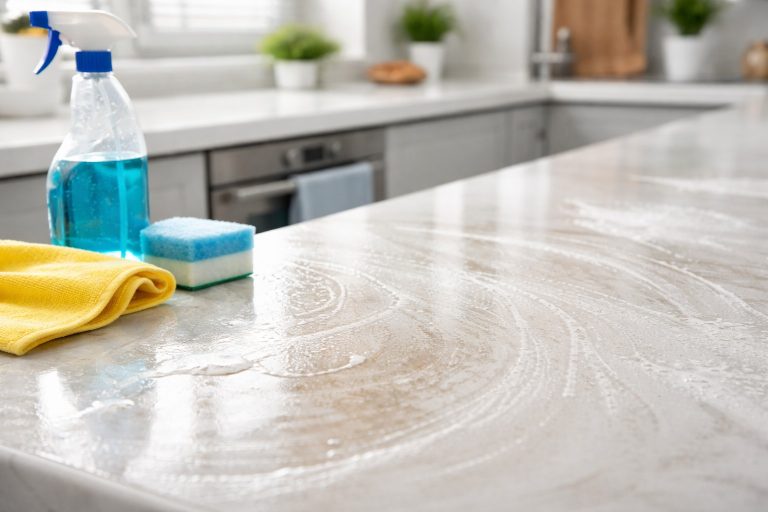
Making cleanup easier is an obvious bonus. It is much easier to take out one tray, wipe the dust underneath it and return it to its place than to take out a dozen jars and tubes individually. If something is spilled or spilled inside the organizer, the dirt is localized within the container without dirtying the furniture. Cleaning one container is faster than washing an entire kitchen drawer or refrigerator shelf.
Psychological comfort from using trays is associated with sense of control. Chaos in things often provokes background anxiety. Structured storage creates a feeling of stability and predictability. When each category of things has its own “home” in the form of a separate tray, maintaining order becomes a natural habit, rather than a time-consuming chore. Proper organization of space frees up attention resources for more important tasks.
About the Author