The habit of tightly closing the bathroom door immediately after water procedures seems logical so that wet steam does not spread throughout the apartment. However, this action creates ideal conditions for the destruction of repairs and the appearance of dangerous microorganisms. Ignoring a simple ventilation rule can lead to significant financial expenses in the future.
Ideal environment for mold
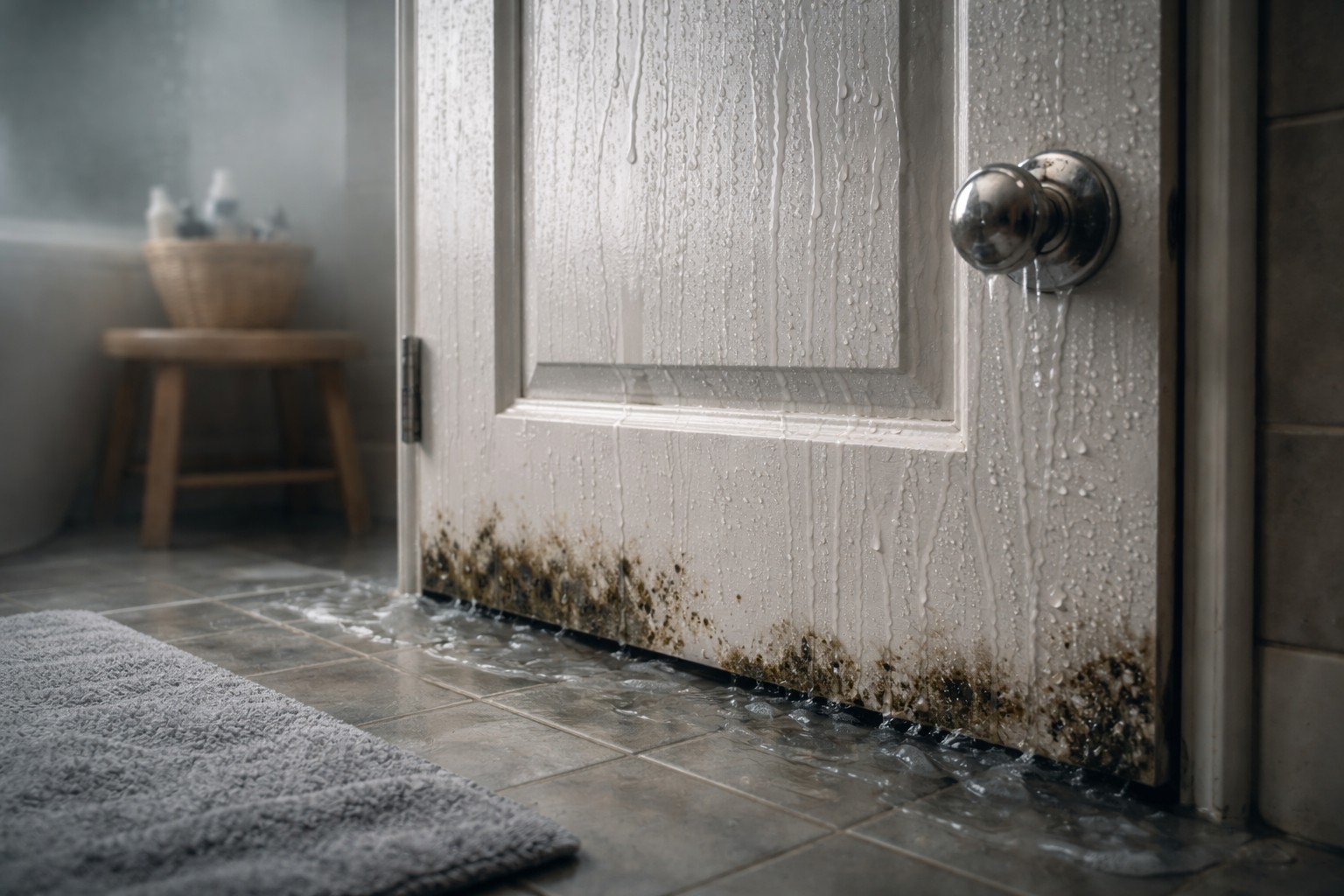
The biggest threat from high humidity is black mold. Fungal spores are almost always present in the air, but they require warmth and dampness to actively reproduce. A closed door turns the bathroom into thermostatwhere the fungus instantly affects silicone sealants, seams between tiles and ceiling corners. It is extremely difficult to get rid of ingrained mold, and its spores can cause allergies and breathing problems.
Destruction of furniture and decoration
Even moisture-resistant materials have their own strength limits. If moisture does not evaporate, but settles on surfaces, it occurs furniture deformation. MDF or chipboard countertops begin to swell, edges peel, and veneers crack. Mirrors also suffer: due to constant condensation, they are destroyed amalgamwhich leads to the appearance of black spots along the edges of the mirror surface that cannot be removed.
Unpleasant odor and bacteria
Without air circulation, towels and washcloths do not have time to dry. They begin to actively multiply in their fibers pathogenic bacteriawhich causes a musty, heavy odor to appear in the room. It is unhygienic to use such accessories, as it can cause skin irritation.
How to properly ventilate
To preserve the microclimate, it is not enough to simply turn off the water. It is necessary to ensure fresh air supply.
-
Leave the door ajar for at least 15 to 20 minutes after each shower.
-
If there is a forced hood, do not turn it off immediately – let it work for a while.
-
Wipe dry surfaces where the most water accumulates.
Following this simple ritual will help keep your bathroom fresh and extend the life of your renovation.
About the Author